


Europe’s Grand Illusion: Star Power, Global Capital, and a French Enigma in Madrid’s Crosshairs
POLICY WIRE — Madrid, Spain — The grand tapestry of European football isn’t just about athletic prowess; it’s a cold, hard projection of capital and influence. One day, a rising star...

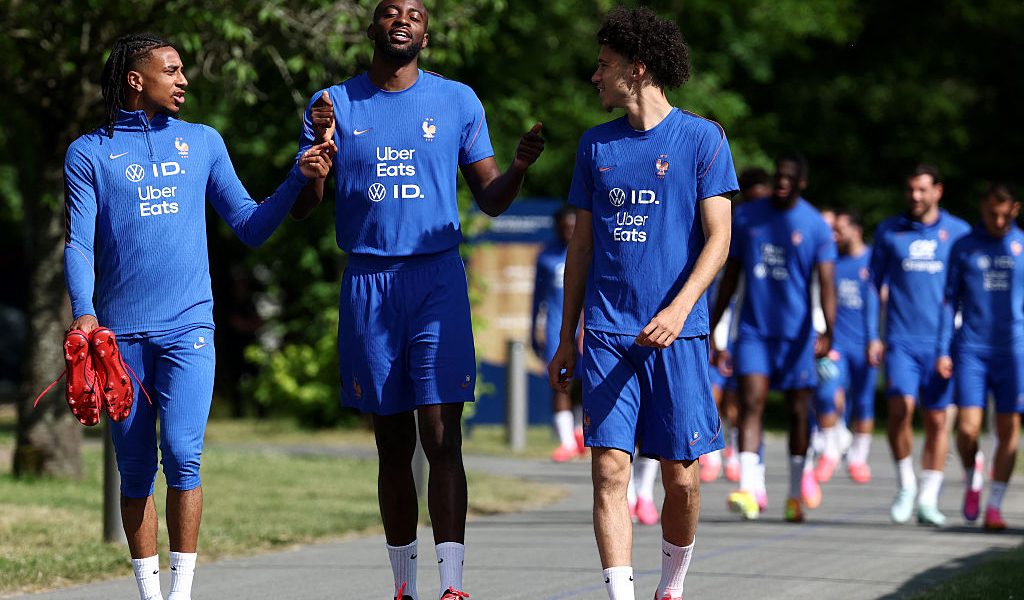
POLICY WIRE — Madrid, Spain — The grand tapestry of European football isn’t just about athletic prowess; it’s a cold, hard projection of capital and influence. One day, a rising star catches the eye; the next, an industrial-scale economic machine begins to churn, often grinding against the declared intentions of lesser powers. This summer’s most compelling economic narrative seems to coalesce around Michael Olise, a French international whose alleged leanings toward Spain’s Real Madrid have sent ripples through the sport’s high-stakes market. It’s not just a transfer—it’s a declaration of who calls the shots, and it’s usually not the seller.
It began as a murmur. Reports emerged, fueled by ‘The Madrid Zone,’ suggesting Olise, a dazzling talent primed for the 2026 World Cup squad, has set his sights firmly on the Spanish capital. He’s reportedly “ready” to commit, a phrase that carries the weight of a non-negotiable personal ultimatum. This despite Bayern Munich’s previous, somewhat quaint, declaration that the player wasn’t for sale. Ah, the beautiful naiveté of resisting the inevitable pull of gravity that’s Real Madrid.
For years, European football’s upper echelons have functioned like an insatiable maw, consuming the brightest talents, particularly from smaller leagues and nations that simply can’t compete with the financial might of behemoths like Madrid. It’s a game of Monopoly played with real-world billions, where the Boardwalks and Park Places are perpetually out of reach for all but a select few. The proposed €150 million price tag for Olise isn’t merely a fee; it’s a geopolitical statement about economic dominance. According to Deloitte’s Annual Review of Football Finance, the cumulative transfer spend by European clubs in 2023 surpassed €7.3 billion, a new record, underscoring the relentless escalation of prices for elite talent.
Jean-Pierre Dubois, the veteran Technical Director for the French Football Federation, didn’t mince words recently when pressed on the brain drain from French clubs. “It’s a constant battle, isn’t it? We develop these magnificent athletes, invest in their futures, and then the sirens of Madrid or Manchester start to sing,” Dubois remarked, his voice tinged with a familiar weariness. “We’re proud of our exports, yes, but we also dream of retaining more of them for our own league’s prosperity. But economics… well, economics has its own national anthem, doesn’t it?” He’s not wrong; you can’t argue with the lure of a 15-time Champions League winner. But it’s also about national pride.
And these sagas aren’t confined to European news wires. In vibrant, football-mad nations stretching from Istanbul to Jakarta, and critically, across Pakistan and other parts of the Muslim world, the drama of European transfer windows is followed with a fervor that often eclipses interest in local sports. Satellite dishes across Karachi’s rooftops aren’t just tuned into Bollywood, they’re showing Real Madrid’s triumphs. The allure of clubs like Madrid, often fueled by their massive global marketing machinery and superstar players, creates a profound cultural resonance. Olise moving to Madrid isn’t just a Spanish football story; it’s a global spectacle, influencing brand loyalties and fan allegiances thousands of miles away, where a significant Muslim population often identifies passionately with Europe’s major teams.
📄 POLICY WIRE WHITEPAPER PUBLISHED: PAKISTAN'S NATIONAL SECURITY POLICY PRIORITIES
👉 READ BY CLICKING HERE“We’re witnessing a restructuring, a consolidation of power, really,” explained Dr. Elena Petrova, CEO of EuroFootball Holdings, an influential sports investment group, during a recent Berlin summit. “The market dynamics ensure that the very top clubs will always outbid and outshine, particularly for young, explosive talent. It’s less about whether a player *wants* to move, and more about when his current club’s economic resistance reaches its breaking point. Because, frankly, at these price points, refusing an offer often becomes fiscally irresponsible.”
But there’s an unseen tension here. While Europe’s traditional powerhouses continue to hoard talent, there’s an undercurrent of concern about the long-term competitive balance within European leagues, and the capacity of smaller nations to retain even a sliver of their burgeoning star power. The rich get richer, sure. It’s capitalism in hyperdrive, playing out on astroturf — and amidst fervent crowds.
What This Means
The Michael Olise saga isn’t just another footballer switching clubs; it’s a stark demonstration of the asymmetrical power distribution within global sports economics. For Madrid, it solidifies their strategy of collecting elite young talent, ensuring perpetual competitive advantage and brand dominance. For Olise’s current club, should the move materialize, it represents a substantial financial windfall, but also a loss of competitive stature, effectively rendering them a high-end feeder club—a familiar tale in Europe’s ever-evolving economic landscape. The broader implication touches upon the soft power dynamics at play. Clubs like Real Madrid aren’t just sporting entities; they’re global cultural ambassadors. Their ability to attract and deploy the world’s most exciting players directly translates into massive media reach and geopolitical influence, often extending into developing markets where football serves as a powerful unifying force. This transaction, if it goes through, signals that the era of resisting the gravitational pull of football’s economic giants is all but over for most, reinforcing a stark hierarchy where ambition often correlates directly with cash. And this pattern will only intensify, impacting everything from national team competitiveness to youth development pipelines globally.