


Brazilian Blitz: Young Canarinhas’ Global Ascent Echoes Shifting Power in Women’s Football
POLICY WIRE — Aveiro, Portugal — While the broader world obsesses over the theatrics of senior international football, a more subtle, yet profoundly impactful, revolution is quietly unfolding on...

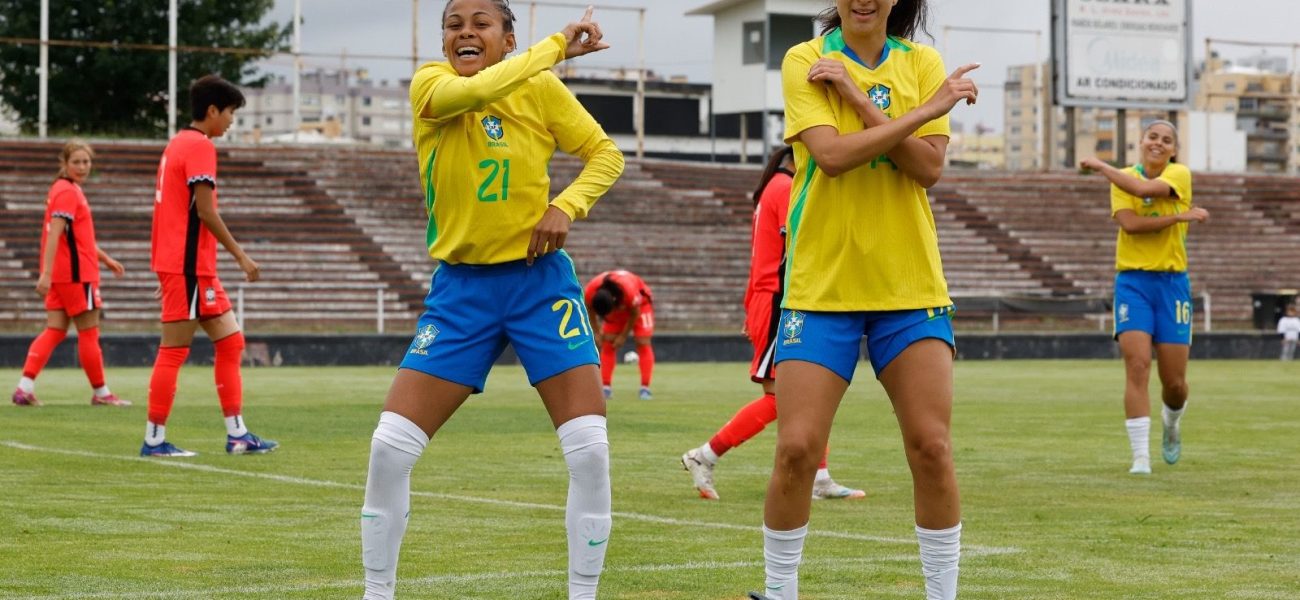
POLICY WIRE — Aveiro, Portugal — While the broader world obsesses over the theatrics of senior international football, a more subtle, yet profoundly impactful, revolution is quietly unfolding on pitches far from the glare of massive stadia. In Portugal, on a Saturday that felt like just another fixture, Brazil’s Women’s Under-20 National Team didn’t just beat South Korea 3-0; they dispatched them. And that margin, though seemingly straightforward, whispers of larger geopolitical currents and surging national ambitions echoing across the globe, reaching even the most traditional corners.
It wasn’t a World Cup final, not even a major qualifier, just a friendly at Estádio Conde Dias Garcia. But these young Brazilian women, often dubbed the ‘Young Canarinhas,’ played with a certain swagger—a confidence that suggested more than just individual talent. They scored through Carioca, Ana Bia, and Nogueira, an early blitz that settled matters before the halfway mark, underscoring a ruthlessness not always associated with youth football, certainly not in casual international friendlies.
Brazilian head coach Camilla Orlando, often seen pacing the sidelines with an intense focus, didn’t mince words after the match. “This isn’t about just winning a friendly; it’s about refining our philosophy,” she stated, a slight tremor of pride in her voice as she addressed reporters post-game. “We’re building something here—a system, a belief, and an understanding of how to impose our style, regardless of the opponent. The World Cup in Poland? It’s on the horizon, absolutely, but every pass, every tackle, every goal is a brick in that foundation.” It’s a vision, one gathers, that transcends a single game.
The strategic deployment of these U-20 friendlies—a recent defeat against Finland’s U-23s and an upcoming tussle with Portugal—reflects a modern approach to national team development. Gone are the days when a nation’s sporting success relied solely on an innate, almost mythical, pool of talent. No, this is scientific, analytical, — and relentless. It’s an investment, a calculated gamble on future supremacy. Dr. Lee Jeong-min, a prominent sports development academic from Seoul’s Hanyang University, observed, “South Korea knows the stakes. Our technical game is improving, our resilience too. But Brazil—they simply bring a different dimension of individual artistry, even at this level. This loss isn’t a setback; it’s a data point, showing us the standard.”
Because, make no mistake, women’s football is no longer a niche. It’s a rapidly expanding frontier for national soft power, an arena where traditional sporting hierarchies are being challenged and, in some cases, completely upended. Consider the raw numbers: FIFA reported that the 2023 Women’s World Cup alone generated a record revenue of over $570 million, showcasing an unprecedented surge in commercial viability and global viewership. That’s real money, translating into serious political interest.
📄 POLICY WIRE WHITEPAPER PUBLISHED: PAKISTAN'S NATIONAL SECURITY POLICY PRIORITIES
👉 READ BY CLICKING HEREThis match, seemingly minor, illustrates a broader global dynamic. Nations like Brazil are pushing hard, understanding that dominance in women’s sports is not just about medals, but about representation, equality, and global branding. And where Brazil leads, others will inevitably follow, or at least try to. From the established powers to emerging nations like Pakistan—which, despite myriad challenges, saw its women’s national team return to international competition after an eight-year hiatus in 2022—the ripples of this shifting tide are felt everywhere. It’s a slow burn, but women’s football is irrevocably altering perceptions and providing a powerful platform for advocacy and social change.
What This Means
The comprehensive victory of Brazil’s U-20 women against South Korea isn’t just a footnote in a busy football calendar; it’s a harbinger. Economically, this increased competitiveness and visibility in women’s youth football suggest a further expansion of talent pipelines, drawing more investment from sponsors and governing bodies alike. Teams capable of sustained success at this level will find it easier to attract funding and resources, reinforcing a positive feedback loop for national programs. Politically, consistent performance in women’s sports—especially for nations with high public interest in football—serves as a tangible display of national progress and gender empowerment on an international stage. It bolsters national pride, yes, but also quietly promotes values of equality and meritocracy to a global audience, irrespective of whether the intent is explicit. It’s a soft power play, a quiet but effective way to project a modern image.
the continuous development shown by teams like Brazil puts pressure on other nations to step up their game, lest they fall behind in an increasingly competitive landscape. Nations that have traditionally lagged in women’s sports, particularly those in the South Asian or Muslim world where societal norms might historically pose additional hurdles to female athletic participation, face an accelerated imperative. They must invest more, adapt faster, or risk being completely left behind in a global phenomenon that shows no signs of slowing down. This particular result might just be 90 minutes in Portugal, but its implications stretch far beyond the pitch, hinting at shifts in national policy, resource allocation, and even cultural perceptions about women’s place in competitive arenas. It’s serious business, these ‘friendly’ matches.