

The Orange Tsunami: New York’s Historic Hoops Fever Ignites City Streets
POLICY WIRE — New York City, USA — When the last, desperate arc of the opposition fell short—a moment forever etched in the annals of civic euphoria—it wasn’t just a basketball game ending. No,...

POLICY WIRE — New York City, USA — When the last, desperate arc of the opposition fell short—a moment forever etched in the annals of civic euphoria—it wasn’t just a basketball game ending. No, it was a half-century’s worth of suppressed shouts, dormant dreams, and the heavy burden of expectation detonating across America’s most demanding metropolis. They’ve seen elections, parades, and plenty of chaos, but for Knicks faithful, Friday night wasn’t just a win; it felt like a liberation. And the city responded in kind.
Minutes after the buzzer, spontaneous eruptions, previously contained by flickering screens in packed bars and living rooms, surged onto asphalt. Flag poles in Midtown became makeshift ladders, makeshift altars. Pedestrians, typically focused on getting somewhere, anywhere else, instead wielded their belts, not as restraints, but as instruments of joy. From Sutphin Boulevard to the iconic shadow of Madison Square Garden, Knicks supporters let their presence be known across the city, their collective roar a cacophony that simply couldn’t be ignored. It’s an energy that, for outsiders, might seem bewildering; for New Yorkers, it’s just home. [QUOTE_PLACEHOLDER]
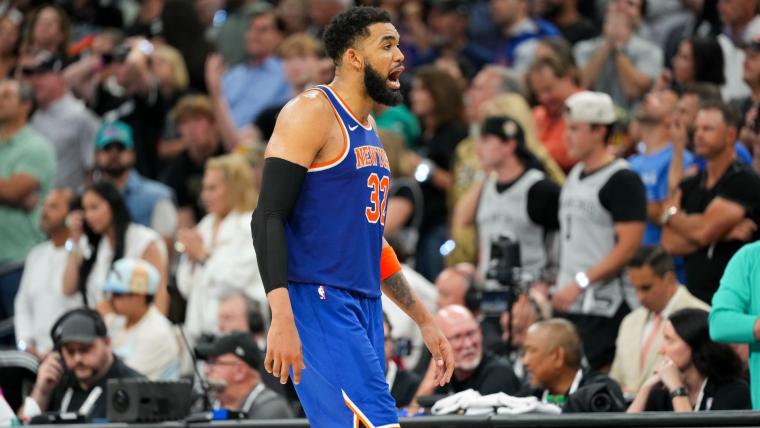
The instigator of this mass awakening? The New York Knicks, who, by securing a precarious 105-104 victory over the San Antonio Spurs, now find themselves up 2-0 in the NBA Finals. But it wasn’t easy. The team survived a late Spurs onslaught in Game 2, keeping their dream — and the city’s — very much alive. Karl-Anthony Towns shined in the fixture, producing a a game-high 21 points and 13 rebounds as he staked his claim as Finals MVP frontrunner. His heroics, though momentarily overshadowed by the final clank, were the engine of this burgeoning hysteria.
It’s been a minute since this kind of belief pulsed through the city’s veins regarding its beloved hardwood warriors. The last time the city’s basketball team gripped the Larry O’Brien trophy was in 1973, when it downed the Lakers in five games. That’s an era defined by dial-up phones, Cold War anxieties, — and far fewer mega-celebrity sports dynasties. Think about it: an entire generation has lived — and died without witnessing this exact spectacle. Because of this, it’s not just a championship pursuit; it’s an historical correction, a realignment of urban sporting identity. But let’s be real, New York doesn’t just expect; it demands. This isn’t just about winning; it’s about reclaiming what feels like a birthright.
That demanding New York spirit isn’t confined by municipal boundaries either. Just imagine, the celebration extended well beyond the five boroughs. Even in San Antonio, deep in the heart of Texas, the orange-and-blue brigade made their presence felt, turning rival territory into temporary annexes of pure New York fandom. They’re travelers, our fans, always have been. And they celebrated loud. And you can bet that this raw, untamed passion, expressed so publicly and without inhibition, echoes far beyond the US coastline. In Pakistan, for example, the sheer collective identity forged around a cricket team’s success often mirrors this intensity; it’s a universal language of shared fervor, regardless of the ball involved. Sports provide that connection.
The sounds ringing from the Big Apple’s arteries were almost symphonic in their joyous chaos. A familiar hymn fell upon the Knicks faithful as their orange-and-blue outfits billowed in the summer wind: ‘Faneto’ by Chief Keef. It’s a defiant, visceral track, perfect for the moment, not some sentimental old standard. It spoke to the grit, the determination, the sheer unadulterated relief of being on the precipice of something truly grand.
📄 POLICY WIRE WHITEPAPER PUBLISHED: PAKISTAN'S NATIONAL SECURITY POLICY PRIORITIES
👉 READ BY CLICKING HEREBut the work isn’t done. The city — and its faithful hold their breath, two wins from erasing decades of drought. But one thing is for sure: New Yorkers are soaking up the prospect of a title win, ready for what comes next.
What This Means
This 2-0 lead for the Knicks isn’t merely a statistical advantage in a playoff series; it represents a significant, if not yet conclusive, jolt to New York City’s economic and civic pulse. A championship run in a major market like New York triggers an immediate surge in local spending—tickets, merchandise, hospitality—which, for an organization like the Knicks, translates into a windfall. The city itself, a perpetual engine of commerce — and culture, benefits from the global spotlight. It’s an almost perfect scenario for local businesses.
On a less tangible but equally weighty note, this run has coalesced civic pride in a way few other events can. It’s a unifying force in a city often defined by its myriad divisions. Shared triumphs like these provide a momentary, glorious distraction from the grinding realities of urban life, boosting morale and fostering a collective identity that transcends neighborhood, income, or political leaning. Politically speaking, a successful sports franchise creates positive buzz, a perception of a vibrant, thriving city—which can only benefit municipal leadership. It’s cheap, effective public relations, a narrative of triumph that reinforces New York’s ‘we can do anything’ ethos. Because when the Knicks win, everyone, it seems, feels a little bit better about being from New York.