


Divine Revelation or Delayed Justice? Decades-Old Murder Haunts Georgia, Faith Triggers Confession
POLICY WIRE — Atlanta, Georgia — Thirty years melted away in a whisper, not a shout, when a phone call—a hesitant, quiet one—jarred an otherwise uneventful Tuesday afternoon for veteran homicide...

POLICY WIRE — Atlanta, Georgia — Thirty years melted away in a whisper, not a shout, when a phone call—a hesitant, quiet one—jarred an otherwise uneventful Tuesday afternoon for veteran homicide detective Marcus Thorne. The voice on the other end wasn’t a deathbed confession, not precisely, but something closer to a spiritual awakening. It was the unburdening of a soul, ostensibly spurred by newfound conviction, finally laying bare a truth that had been buried deeper than any grave.
It’s not everyday you get closure from a murderer who’s been living an ordinary life in plain sight for three decades. But then, justice often operates on its own peculiar clock, doesn’t it? The case of Amelia Hayes, a young college student whose brutal killing mystified investigators in the late 1990s, had long since been relegated to the archives, a cold, forgotten file gathering dust in a Georgia precinct.
No forensics. No witnesses. Just a body, a small-town nightmare, — and a killer who, by all accounts, simply vanished. For years, the police force chased ghosts, tips drying up faster than the Chattahoochee in a drought. Family anguish festered, hopes dimmed, and the collective memory of a bright life extinguished prematurely became just another sad local legend.
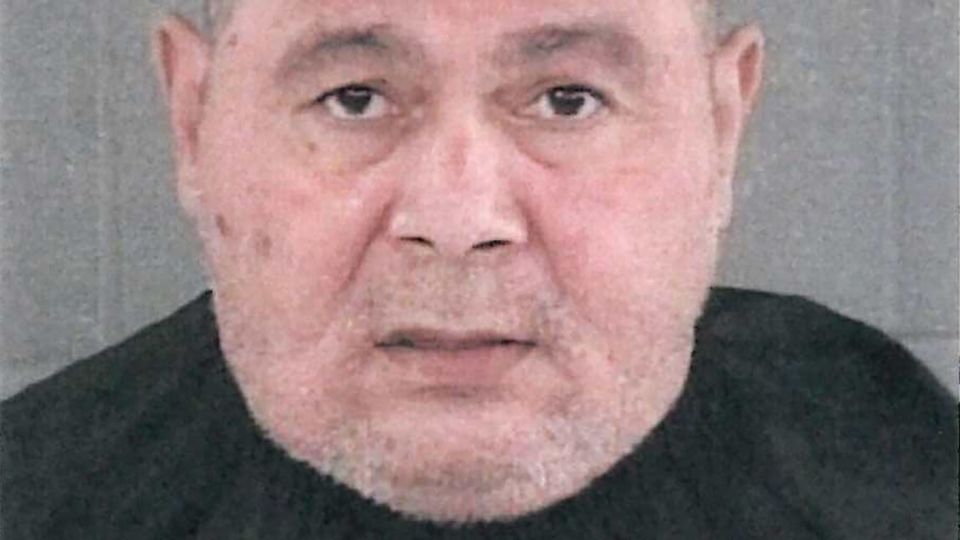
But the tides of morality, sometimes, take unexpected turns. The man now identified as the perpetrator, Clyde Donovan, was reportedly not tracked down by any groundbreaking forensic evidence or meticulous detective work. Nope. Instead, it was the heavy weight of conscience, supercharged by what friends described as a profound religious experience, that supposedly compelled him to seek absolution. He walked into a small-town church one Sunday, listened to a sermon, and decided that peace wouldn’t come until he spoke his truth. That’s a powerful motivator, wouldn’t you say?
Because, really, how do you live with that? Years ticking by, birthday cakes, Christmas lights, children growing—all while a secret, dark and terrible, festers beneath the surface. It forces us to squint a little, doesn’t it, at the neatly packaged lives around us. How many more quiet monsters are out there, seeking redemption, or simply biding their time? Donovan’s alleged confession, still unconfirmed by specific police statements beyond the acknowledgment of an ongoing investigation, highlights the fragile nature of long-held secrets.
The official word from the Georgia Bureau of Investigation remains guarded. A spokesman for the GBI stated simply, [QUOTE_PLACEHOLDER]. They’re not exactly doing victory laps yet, not until all the T’s are crossed — and I’s dotted. And let’s be frank, legal processes can be maddeningly slow. What takes a moment to confess can take years to adjudicate. The district attorney’s office is also playing it close to the vest, releasing only that they’re reviewing the information [QUOTE_PLACEHOLDER].
But Donovan’s family, — and what remains of Amelia Hayes’s, are facing a storm of complicated emotions. One source, close to Hayes’s aging mother, confirmed that [QUOTE_PLACEHOLDER]. Thirty years. Think about the erosion that causes. Not just of evidence, but of human spirit.
📄 POLICY WIRE WHITEPAPER PUBLISHED: PAKISTAN'S NATIONAL SECURITY POLICY PRIORITIES
👉 READ BY CLICKING HEREThis episode serves as a stark, if rare, reminder of the role of spirituality—for good or ill—in societal dynamics, even extending to the gritty world of criminal justice. In many parts of the world, particularly in devout regions of South Asia, the concept of divine retribution or religiously motivated confession holds significant cultural sway. Pakistan, for instance, a nation grappling with its own complex legal and moral landscape, frequently sees matters of personal honor and spiritual guidance intertwine with formal jurisprudence, sometimes to the bewilderment of Western legal observers. While US courts don’t generally treat religious epiphany as direct legal proof, its psychological impact can be undeniably profound. A 2022 study by the Pew Research Center found that 45% of American adults say they’ve experienced a moment of divine guidance or a religious experience, a factor that can have unseen societal ripple effects, even impacting long-dormant criminal investigations. Spain’s secular soul may approach these matters differently, but the human quest for absolution seems universal.
It’s almost a biblical narrative, isn’t it? Sin, concealment, eventual confession. You can’t help but wonder how many more such stories are out there, waiting for a conscience to crack.
What This Means
This late-stage development in a decades-old murder case has fascinating implications, particularly at the intersection of justice systems and socio-religious dynamics. Economically, prolonged cold cases drain public resources; the initial investigation, repeated reviews, and now, the likely renewed prosecution will incur substantial costs, however justifiable. But it’s also a stark reminder of the long-tail economic — and social burden that unresolved crimes place on communities. Politically, a high-profile cold case resolution, especially one stemming from such an unusual catalyst, could spur renewed interest in funding for cold case units or even programs addressing community trauma from unsolved violence.
Culturally, the influence of a religious conversion as a trigger for justice offers a different lens on accountability. While a suspect’s confession is critical, the motivation behind it — especially divine inspiration — could lead to public discourse on faith’s role in rehabilitation versus punishment. It might not reshape legal frameworks overnight, but it certainly stirs conversations in conservative, faith-oriented communities about forgiveness and personal atonement. the very public nature of this confession-by-faith could encourage similar disclosures in other cold cases, or, conversely, prompt cynicism from those who view such acts as manipulative attempts to lessen sentencing. For jurisdictions like Georgia, where religious belief often holds considerable sway, this development subtly re-emphasizes that sometimes, the most effective detective work isn’t always human; it’s something less tangible that makes an old wrong suddenly right itself. And it provides a strange, almost mythic echo of justice sought across continents, from a courthouse in Atlanta to the spiritual plains of Lahore.