


Beyond the Checkered Flag: How ‘Gentleman Ned’ Defined an Era in Racing’s Complex Legacy
POLICY WIRE — NEWTON, N.C. — It wasn’t just the roar of 426 Hemi engines that Ned Jarrett ultimately became known for, not entirely. But the quiet composure, the sort of unshakeable dignity in...

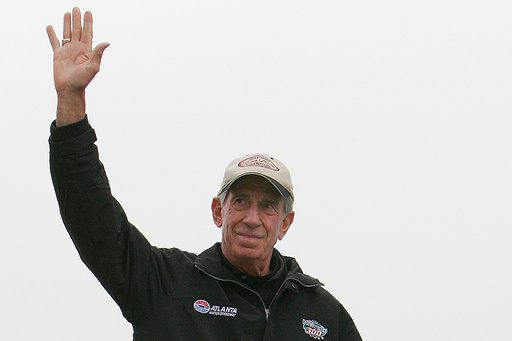
POLICY WIRE — NEWTON, N.C. — It wasn’t just the roar of 426 Hemi engines that Ned Jarrett ultimately became known for, not entirely. But the quiet composure, the sort of unshakeable dignity in a sport built on controlled chaos, that’s what truly defined “Gentleman Ned.” Now, at 93, Jarrett — the two-time Cup Series champion who became an unlikely household voice for a generation — has parked it for good. He’s left behind a legacy less about pure speed and more about how one carries oneself across six decades in the public eye. His family confirmed his peaceful passing on Thursday, a gentle exit befitting the man who spent a lifetime in the fast lane without ever truly losing his cool.
This wasn’t just some local hero, mind you. Jarrett was inducted into the NASCAR Hall of Fame back in 2011, having bagged 50 career wins on the premier circuit, seizing championships in ’61 and ’65. He was part of that second elite class, firmly cementing his name among the titans of stock car racing. And because his track exploits occurred in an era before sports broadcasting went hyper-kinetic, his fame arguably exploded later, when he traded his helmet for a headset, lending his Southern drawl and sage insights to races he no longer ran.
Many a younger fan probably remembers him best from the broadcast booth, perched above the fray, his voice narrating epic battles. He had this incredible moment at the 1993 Daytona 500 — pure, unadulterated passion erupting from the booth — when his son, Dale Jarrett, held off Dale Earnhardt for the win. You just couldn’t fault him for rooting. It’s tough not to, really, when your kid’s on the line like that. Dale, following in dad’s tire tracks, snagged a Cup Series championship in 1999, making them only the second father-son duo to claim the sport’s top prize. It’s a lineage that speaks to more than just talent; it hints at an entire family culture, an almost monarchical succession that makes even royal families in places like, say, Pakistan, nod in recognition at the force of inherited public life. But it’s also a different kind of monarchy, rooted in raw skill, not birthright alone.
But the changing face of sports, well, it sometimes struggles with actual gentlemen. They’re a harder sell in an age demanding controversy — and gladiatorial angst. “Ned Jarrett was, in many ways, the sport’s conscience,” remarked Rusty Wallace, a fellow Hall of Famer and contemporary driver, in a statement today. “He didn’t just compete; he upheld a standard. And honestly, it’s a standard we often find ourselves searching for in this era of scorched-earth competition and social media brawls.” NASCAR CEO Steve O’Donnell wasn’t mincing words either, saying Jarrett was “as fierce a competitor as NASCAR has ever seen,” despite that calm demeanor. But O’Donnell quickly pivoted, insisting “it was his off-the-track persona that separated Ned from his peers.” And that persona, polite and professional, truly broadened NASCAR’s appeal beyond its immediate fanbase.
This reach, often dismissed as merely regional Americana, actually resonates globally, if you think about it. The pursuit of sporting glory, the drama of human endeavor — it’s a language understood everywhere, from dusty villages in the subcontinent glued to cricket matches, to massive stadiums in the United States. Just look at the global pull of individual athletes today. NASCAR, an industry now reportedly churning out around $3.1 billion annually from media rights and corporate sponsorships, according to industry analyses from 2023, is a sophisticated commercial behemoth far removed from the dirt tracks of Jarrett’s early days. The ‘gentleman’ racer may have gone, but the economic machine he helped build keeps rolling.
📄 POLICY WIRE WHITEPAPER PUBLISHED: PAKISTAN'S NATIONAL SECURITY POLICY PRIORITIES
👉 READ BY CLICKING HEREWhat This Means
Jarrett’s passing isn’t just a somber note in the annals of motor sports. It marks, in subtle but undeniable ways, the close of an era, a sort of inflection point for American masculinity within sports. He embodied a particular brand of dignity that sometimes feels increasingly quaint in today’s high-stakes, hyper-commercialized athletic landscape. Sports figures, particularly in niche but fervent sectors like NASCAR, operate as cultural diplomats, representing an idea of American character — the stoic, polite, yet fiercely competitive individual. As that image shifts, so too does a facet of how the world, especially regions often critical of American cultural exports, perceives the U.S. There’s a subtle but palpable policy implication here, reflecting not only the evolution of how we venerate athletes, but also the commodification of their personal brand in a way that “Gentleman Ned” arguably preceded but wasn’t entirely defined by. And the challenge, for any sporting organization today, remains: how do you honor a legacy of character when the market increasingly rewards spectacle?
This dynamic impacts everything from local economic development, especially in states hosting big races, to how sponsorships are allocated and even to the broader national identity projected abroad. You see this kind of negotiation between tradition and commerce playing out everywhere, whether it’s in stadium deals driven by raw greenbacks or the rebranding efforts of entire leagues. The integrity Jarrett brought to NASCAR served as a form of social capital that can’t be easily replicated, much less bought. It’s a commodity increasingly in short supply, one suspects, especially as sports continue their seemingly inexorable march toward maximalist entertainment, wherever on the globe that might be happening.