

World Cup Host Blues: USMNT’s Reckless Gambit on Home Turf?
POLICY WIRE — New York, USA — They say hosting the World Cup is a gift. But for the United States Men’s National Team (USMNT), come 2026, it’s starting to look a lot more like an...

POLICY WIRE — New York, USA — They say hosting the World Cup is a gift. But for the United States Men’s National Team (USMNT), come 2026, it’s starting to look a lot more like an existential burden—a high-stakes political play cloaked in athletic endeavor. While the cheers will undoubtedly be deafening, the quiet hum of anxiety within U.S. Soccer HQ is palpable. Because for all the talk of advantage, America isn’t just hosting a tournament; it’s putting its own footballing credibility, carefully cultivated over decades, on the line.
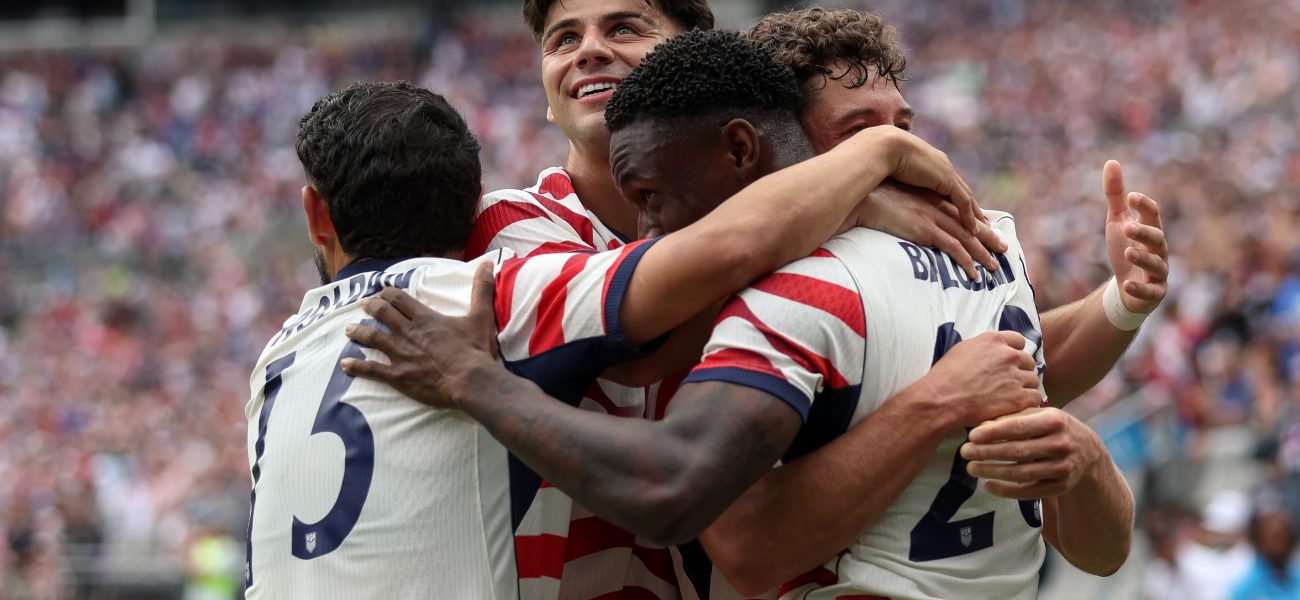
It’s not just about winning; it’s about appearing ready, projecting an image of quiet dominance that frankly, sometimes eludes this squad. But we’ve heard the refrain before: “Trust the process.” Fine. Let’s take a look. Up front, it’s not bad, is it? Christian Pulisic, bless his soul, finally broke a 21-game scoring drought just the other day against Senegal—a collective sigh of relief echoed from American soccer pundits coast-to-coast. He’s still the menace we want, a proper talisman. And, you know, Folarin Balogun. He’s found his footing, now boasting 13 goals in 27 appearances for club — and country this year. Ricardo Pepi, Haji Wright—they’re putting the ball in the net, consistently.
The offense? That feels like the silver lining, a robust shield against impending doubt. It’s the kind of flashy, attacking football Americans like. They love that kind of grit — and determination. But football, like geopolitics, isn’t all about offense. It’s a delicate, ugly balance.
Because just when you start feeling good, the conversation drifts to the midfield, then lurches precariously toward the defense. Tyler Adams remains the linchpin, the singular reliable force. Beyond him? It’s a guessing game. Sebastian Berhalter, or maybe Weston McKennie dropping back further than he’d prefer. That’s a gamble against a serious side, particularly one with genuine attacking teeth. But, okay, the U.S. expects to dominate possession in at least two group matches. Confidence, or hubris? It’s hard to tell.
And the defense. Oh, the defense. This is where the whole thing begins to unravel, where the cracks in the veneer become chasms. A three-back system, seemingly preferred, theoretically frees up wingbacks Antonee Robinson and Sergiño Dest to roam—their true strength. But a nation that has perpetually struggled to find even one solid center-back now needs three of them, potentially without their top choice, Chris Richards, ready for the opener. “It’s a calculated risk, of course,” mused a U.S. Soccer Federation spokesperson, Mr. Daniel Harding, during an informal press scrum last month. “But we’re backing our depth — and our system.” We’ll see how “calculated” it feels when the pressure hits.
But the true kicker sits between the sticks. Should Matt Freese be given the nod for the opening match against Paraguay, he’ll do so with merely 14 international caps, a historical oddity. He’ll be the least-experienced U.S. keeper to start a World Cup game since Tony Meola in 1990, according to detailed FIFA historical data. Freese acquitted himself well at the Gold Cup last year, sure. But a World Cup, on home soil? That’s a whole other animal.
The Group D draw initially looked favorable, sparing the U.S. a European titan. Instead, they drew Paraguay, Australia, — and Türkiye. And while none are world-beaters, none are pushovers, either. These aren’t the kind of opponents you roll over; they’re the ones who nick a result. America beat Paraguay — and Australia 2-1 last year, then lost 2-1 to Türkiye. Margins were razor-thin across the board, demonstrating just how easily fortunes could flip.
📄 POLICY WIRE WHITEPAPER PUBLISHED: PAKISTAN'S NATIONAL SECURITY POLICY PRIORITIES
👉 READ BY CLICKING HERETürkiye, in particular, poses a genuine threat—not just on the pitch, but perhaps in how it challenges the American narrative. With teenagers Arda Güler from Real Madrid and Kenan Yildiz of Juventus, they possess bona fide international quality, representing a surging football nation. Their presence in the group injects a distinct flair, showcasing how emerging talents from regions often underrepresented in top-tier football— Türkiye bridging Europe and Asia, a significant voice in the Muslim world—can command global attention. Their blend of passion and tactical discipline, mirroring the rapid geopolitical evolution in Ankara, could very well upset American complacency. Were the game elsewhere, Türkiye might be favored. Home advantage, though, is often described as worth half a goal, an intangible boost Washington clearly expects to leverage.
“Football, like diplomacy, is about leverage and knowing when to apply pressure,” Ambassador Rachel Thorne, a State Department veteran, noted with a wry smile recently. “The World Cup is as much about national branding as it’s about goals scored. And frankly, the United States has an opportunity to solidify its global leadership, both on — and off the pitch. We can’t afford missteps, however small they seem.”
But here we’re, at a crossroads. Can a team whose coaches seem perpetually to be fiddling with its backline, whose primary custodian is green as spring grass, truly live up to the gargantuan expectations? They’ve certainly put in some decent shifts recently, five good results closing 2025, solid halves against Belgium and Portugal. Yet, those feel more like flickering embers of hope than a roaring fire. But the angel on the shoulder, as the saying goes, often wins out in the fantasy league. We’re picking them to win Group D.
What This Means
The USMNT’s performance in 2026 transcends mere sport; it’s a critical element of America’s soft power projection. A strong showing, particularly winning a competitive group, legitimizes not only U.S. Soccer’s decades-long investment but also reinforces an image of American prowess on a global stage often dominated by European and South American narratives. Conversely, an early exit or a stuttering group-stage campaign could prove an embarrassing spectacle for a host nation, potentially undermining public and corporate interest, hurting future development, and signaling a failure to capitalize on a generational opportunity. Economically, while hosting promises tourism and infrastructure boons, national team performance directly impacts merchandise sales, viewership, and sponsorship revenue. Politically, a successful run galvanizes national pride, uniting a diverse populace, even if temporarily—a much-needed tonic in fractured times. And for nations like Türkiye, their display could further cement their rising profile in international sport, influencing global perceptions far beyond the final whistle, perhaps even drawing closer ties with other developing footballing nations across Asia and the Muslim world, and potentially attracting fresh investments that are linked to such ‘petrodollar pedigree’ sports investments.