

Oklahoma’s unlikely slugger: French Canadian export finds voice, power amid cultural crosswinds
POLICY WIRE — Norman, USA — The sweltering Oklahoma diamond often rings with the familiar crack of the bat, a symphony of Americana. But few, perhaps, imagined a French accent narrating that...

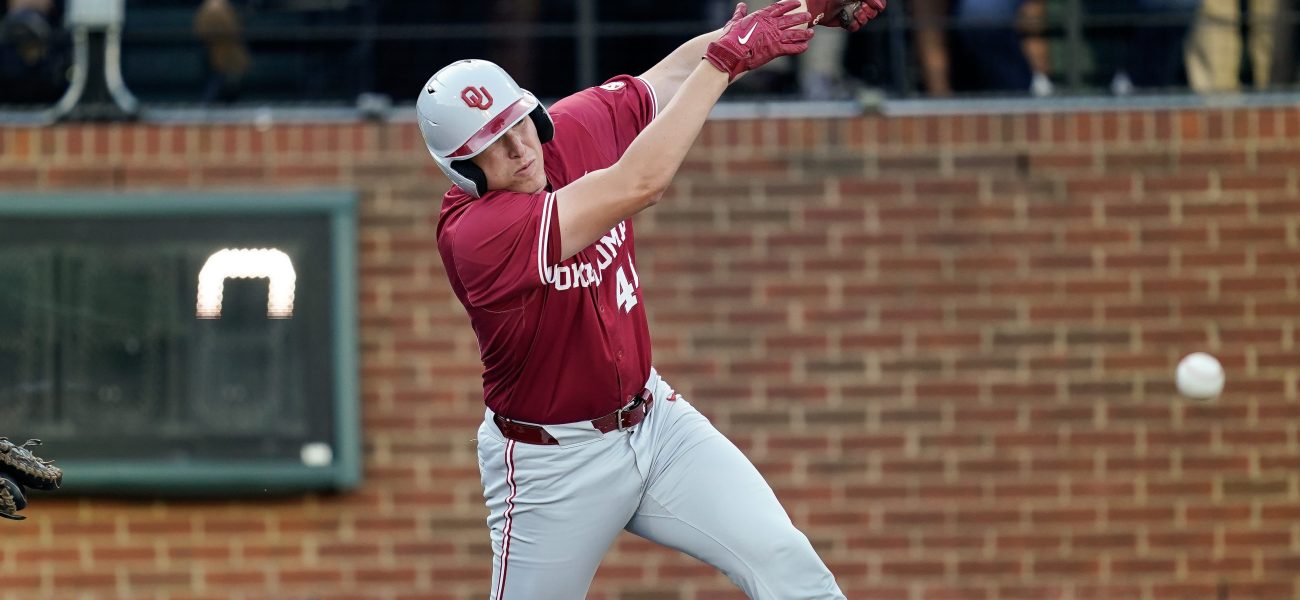
POLICY WIRE — Norman, USA — The sweltering Oklahoma diamond often rings with the familiar crack of the bat, a symphony of Americana. But few, perhaps, imagined a French accent narrating that symphony’s most powerful crescendos. Yet, there stands Deiten Lachance, catcher for the Oklahoma Sooners, an unlikely export from Sherbrooke, Quebec, whose journey across linguistic and cultural divides now powers one of college baseball’s most electrifying offenses.
It wasn’t a smooth transition. Far from it. When Lachance first touched down in the American collegiate system, specifically at McLennan Community College in Waco, Texas, the language barrier wasn’t just a hurdle; it was a wall. An entire wall of bewildered silence, actually. In his hometown, where 86% of residents speak French, the nuances of Texan English might as well have been Martian. “When I came there, I was barely talking English, I didn’t understand nothing at all,” Lachance recalls with characteristic bluntness, now a junior at Oklahoma. “It was terrible. Class — and baseball was too much at a time. I wanted to quit after a month there.”
Many would’ve packed it in, taken their raw talent, — and headed back north. But a keen eye from then-McLennan coach Tyler Johnson saw past the linguistic struggle to the immense power coiled within the six-foot-plus frame. Johnson, the son of current OU coach Skip Johnson, didn’t just recruit a ballplayer; he became an unwitting cultural attaché. He enrolled Lachance in speech classes, practically forcing the kid to converse. Talk about an aggressive on-boarding strategy. But, it worked. Johnson’s subtle yet firm mentorship provided more than just batting practice.
“Nothing really special that we did, just wanted him to be comfortable and feel at home,” Tyler Johnson stated, downplaying his role, a gesture characteristic of mentors who’ve truly invested. “And obviously seeing him go on and do this stuff makes all of us super happy.” It’s the sort of understated pride you hear from someone who knows they planted a good seed, watered it, and watched it bloom – despite the initial existential crisis. Lachance’s trajectory then becomes less about natural athleticism — and more about sheer, stubborn grit.
But the battles weren’t over. After two stellar years at McLennan, where he logged a .380 average and an astounding .704 slugging percentage as a sophomore, moving to Division I Oklahoma brought a new kind of pressure. The power, that mythical attribute, seemed to evaporate. Zero home runs in his first 31 games as a Sooner. It felt like starting all over again, only with bigger crowds — and more demanding expectations. Because, you know, D-I ball isn’t for the faint of heart.
📄 POLICY WIRE WHITEPAPER PUBLISHED: PAKISTAN'S NATIONAL SECURITY POLICY PRIORITIES
👉 READ BY CLICKING HERETyler Johnson, clairvoyant from afar, wasn’t fazed. “I told the staff there at Oklahoma,” he’s quoted saying, “‘as soon as he hits his first one, he’s going to hit a lot.'” And like some pre-ordained prophecy, the dam broke. Since that elusive first dinger, Lachance has unleashed a barrage of bombs, 14 in total, leading the Sooners in RBIs (58) and OPS (1.030). His recent tear? Nine home runs in his last 14 games, transforming him into one of the hottest hitters nationwide. They needed a spark. He brought the gasoline. He was even named the Atlanta Regional’s Most Outstanding Player, a title that would’ve seemed utterly alien to the confused kid from Quebec not so long ago.
It’s not just the stats; it’s the narrative arc. It’s the silent battle against feeling out of place, followed by an almost cathartic explosion of talent once equilibrium is found. “I was looking for myself for the first 31 games. I couldn’t hit a homer,” Lachance admits. “It was hard for me, I’ve always been the power guy. But I took some time off — and did a refresh in the middle of the season and things started clicking. I knew when I hit one, things were going to start rolling.” And roll they’ve, right into the NCAA Super Regionals, leaving a trail of scorched earth where opposing pitchers once stood.
What This Means
Lachance’s story isn’t just a feel-good sports piece; it’s a telling microcosm of how talent navigates globalization – and the silent human infrastructure required to support it. From a policy perspective, this underscores the growing importance of cultural literacy and adaptive mentorship in any competitive international arena, be it sports or business. What Tyler Johnson provided was more than coaching; it was an accidental integration program, easing the friction points for a newcomer whose value might otherwise have been lost to bureaucratic or cultural oversight. This phenomenon isn’t exclusive to North America; consider how many promising athletes from the cricket-mad nations of Pakistan or other parts of South Asia face similar—albeit sport-specific—challenges when adapting to Western sporting cultures or academic systems. The subtle art of cross-cultural assimilation, it turns out, often happens one struggling English sentence, or one patient coach, at a time. Policies fostering global athletic exchanges or even regulations around transfer students in athletic programs, could do well to recognize the profound, human element in these transitions.