


Germany’s Quiet Atonement: Bureaucratic Redress Decades After Nazi Expropriation
POLICY WIRE — Berlin, Germany — The mail delivery in Germany doesn’t typically rewrite history, but for tens of thousands across the globe, a thick envelope from the Federal Office of...

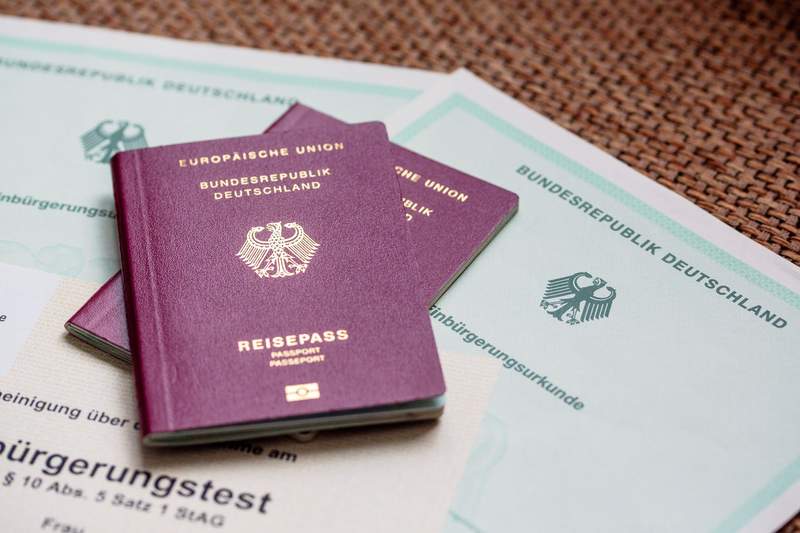
POLICY WIRE — Berlin, Germany — The mail delivery in Germany doesn’t typically rewrite history, but for tens of thousands across the globe, a thick envelope from the Federal Office of Administration has quietly begun to do just that. No ticker-tape parades, no grand pronouncements — just the slow, steady hum of bureaucracy attempting to mend a rupture nearly a century old. More than 50,000 individuals, direct descendants of those systematically stripped of their German nationality under Nazi terror, have had their citizenship quietly restored.
It’s a peculiar twist of fate, isn’t it? That the very state apparatus responsible for expelling and attempting to erase an entire people now finds itself diligently, almost clinically, reversing the paper trail of that barbarism. This isn’t some fresh wave of policy, mind you, but the culmination of amendments to Article 116, Section 2 of Germany’s Basic Law. Originally interpreted too narrowly, leaving out descendants born to German mothers and foreign fathers, and others, recent changes have expanded its reach considerably.
“We can never truly heal the wounds of the past, but we must tirelessly work to acknowledge and rectify its injustices,” stated German Interior Minister Nancy Faeser, whose office has overseen the application process. “This measure is a long overdue testament to our constitutional commitment to human dignity and historical responsibility. It’s for every one of those individuals whose families were targeted; it’s a small, tangible way to say: you belong.” It’s a pragmatic admission, a nod to the lingering moral stain that a rising economic and political power can’t just sweep under the rug. And, it’s not just about identity. Because, these are real people with very real, personal connections to a horror often taught in history books, not lived family lore.
The numbers themselves speak volumes about the scale of the past atrocities and the international dispersion of survivors and their progeny. Since 2019, applications surged, turning what was once a trickle into a substantial flow. By late 2023, data from Germany’s Federal Administration Office indicated that well over 50,000 individuals had received German citizenship through this provision. Many of these recipients reside in countries far removed from Europe, places like the United States, Israel, and even Australia—some of whom whose families might have passed through the bustling ports of Karachi or Colombo decades ago, symbols of distant, desperate refuge at the time, before finding a new, permanent home elsewhere.
“For my grandmother, it would’ve been everything. She never forgot where she came from, even as she fled for her life,” recounted Gideon Fruchter, a representative of the World Jewish Congress, commenting on the expansion of citizenship rights. “For her descendants today, it’s about reclaiming a small piece of a heritage violently stolen, a gesture towards recognition—even if it comes long after the primary victims have gone.” He wasn’t wrong. For many, it’s a symbolic restoration, perhaps too late for their elders, but a closing of a legal and emotional loop nonetheless.
📄 POLICY WIRE WHITEPAPER PUBLISHED: PAKISTAN'S NATIONAL SECURITY POLICY PRIORITIES
👉 READ BY CLICKING HEREThe process itself can be a genealogical Odyssey. Applicants must prove direct lineage to someone who was deprived of their German citizenship on political, racial, or religious grounds between January 30, 1933, and May 8, 1945. It’s a bureaucratic needle-in-a-haystack operation, involving old records, scattered families, and the ever-present shadow of loss. But for those navigating it, it’s not merely a legal right; it’s a profound, if belated, act of justice. It’s complicated, messy, and exactly the kind of process that a state, for all its immense power, sometimes takes too long to get right.
What This Means
This citizenship rectification program, while laudable, offers a sobering reflection on historical accountability. Politically, it shores up Germany’s carefully constructed image as a nation confronting its past—a crucial soft power asset in a tumultuous Europe. It also reinforces the bonds with global Jewish communities and nations like Israel, reaffirming Germany’s commitment to an historical responsibility that transcends borders and generations. Economically, the direct impact of 50,000 new citizens is marginal, though it symbolizes an investment in the human capital of memory and conscience.
But the ramifications stretch further. For nations across the Global South grappling with unresolved historical injustices—colonial legacies, ethnic cleansing, mass displacements—Germany’s sustained effort provides a blueprint, or perhaps a challenging benchmark. Think about stateless Rohingya communities in Bangladesh and Myanmar, or Kashmiris wrestling with ambiguous national allegiances. How do you quantify generations of loss, — and what mechanisms truly constitute restorative justice? This German move isn’t about mere policy; it’s a nuanced dance between remorse and pragmatism, a nation attempting to put paper back together when the memories of those affected are still so vivid. It shows that even with decades of separation, the wheels of justice, though slow, can eventually turn.