

The Calculus of Silence: How Celebrity Tribulation Morphs Into Public Discourse
POLICY WIRE — New York City, United States — For those of us accustomed to the cacophony of daily headlines — diplomatic scuffles, economic tremors, the grinding gears of state — the recent murmurs...

POLICY WIRE — New York City, United States — For those of us accustomed to the cacophony of daily headlines — diplomatic scuffles, economic tremors, the grinding gears of state — the recent murmurs from the celebrity ecosystem can often seem like mere static. But sometimes, even the most ostensibly personal events involving public figures aren’t just noise. They’re finely tuned orchestrations, deliberate silences, and carefully worded unveilings that speak volumes about power, perception, and the brutal politics of narrative control.
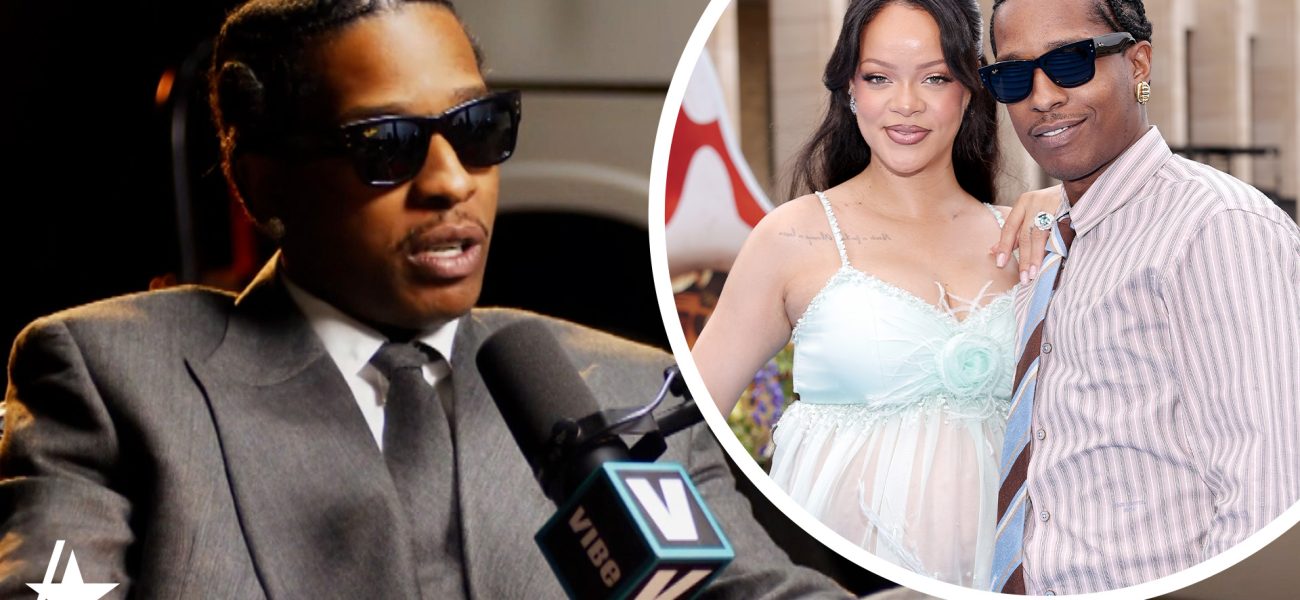
It’s precisely this strategic absence of information that often creates its own gravitational pull. A$AP Rocky, the genre-bending rapper whose life alongside global icon Rihanna frequently dominates social feeds, has finally spoken. Not about policy frameworks or international accords, mind you, but concerning a personal trauma: an alleged shooting incident that, for weeks, remained shrouded in speculation. His belated comments, though framed as a personal update, serve as a stark reminder of how celebrity lives, whether by design or default, often become the unsuspecting battlegrounds for public anxiety and media exploitation. They’re doing all right, apparently. One might almost hear a collective sigh of relief emanating from distant corners of the internet.
For weeks, the public, ravenous for details, found themselves grappling with an opaque veil of silence surrounding the alleged altercation and its aftermath. In the vacuum of hard facts, conjecture blossomed—a predictable consequence when fame collides with fragility. One could say it’s an art form, this careful deployment of reticence. It generates mystique. It allows narratives to harden or soften, depending on whose interests are served. But that very silence is a powerful tool, particularly in an era where every pixelated detail of a public figure’s life can be weaponized or monetized.
And because the news cycle respects no personal boundaries, this lack of immediate disclosure becomes, itself, a story. The initial reports of the incident, sparse and unsettling, fueled an intense cycle of speculation across online platforms. From late-night talk show monologues to breathless tabloid spreads, the absence of official pronouncements created a canvas onto which every rumor and armchair theory was projected. This period of deliberate non-engagement wasn’t just a personal choice; it was a masterclass in modern public relations, shaping expectation before a single word was officially uttered. A calculated quiet, if you will. Its duration alone suggests the meticulous thought that goes into managing such a high-stakes personal brand.
Globally, the impact of such high-profile incidents isn’t confined to Hollywood’s gilded cage. Consider the broader implications: when such an event involves individuals of international renown, it doesn’t just register as local crime statistics. In countries like Pakistan, where public morality and celebrity culture often engage in a delicate, sometimes confrontational dance, a Western celebrity’s brush with violence can become a flashpoint for entirely different societal conversations. It can be framed as Western decadence, as evidence of pervasive urban dangers, or as a cautionary tale within deeply conservative circles. The echo chamber of social media ensures that these interpretations — both celebratory and condemnatory — quickly proliferate across diverse cultural landscapes. Don’t forget, these figures are cultural exports, willingly or unwillingly carrying implications far beyond their individual experiences.
But when the silence broke, it did so with a carefully calibrated message. There was no explicit political declaration, no groundbreaking economic insight, just the bare-bones assurance: they’re good. [QUOTE_PLACEHOLDER]. One can’t help but wonder about the delicate dance of privacy versus transparency, especially when immense commercial empires hinge on these very individuals. The modern celebrity is not merely a person; they’re a global enterprise, a micro-economy unto themselves, complete with stakeholders and image consultants aplenty.
What This Means
The A$AP Rocky situation, a fleeting headline in the vast sea of information, offers a granular look into the contemporary geopolitics of personal brand management and public trust. The incident itself, devoid of granular detail for an extended period, underscored a profound truth: in the information age, controlling the narrative around trauma, even personal trauma, isn’t just about emotional well-being; it’s a strategic imperative with political and economic ramifications.
📄 POLICY WIRE WHITEPAPER PUBLISHED: PAKISTAN'S NATIONAL SECURITY POLICY PRIORITIES
👉 READ BY CLICKING HEREFrom an economic standpoint, the ability of high-profile figures to manage perceptions directly impacts their marketability and brand longevity. Delays in addressing crises, or perceived missteps, can translate into tangible losses for endorsements, media projects, and global tours. And that’s not small potatoes; the global entertainment market, heavily reliant on star power, is projected to reach approximately $2.6 trillion by 2030, according to PwC’s Global Entertainment & Media Outlook. The decisions made regarding a celebrity’s public persona are, therefore, implicitly tied to immense economic interests that span continents.
Politically, such events, particularly those involving violence, also highlight systemic issues that extend far beyond personal plight. In the United States, debates surrounding urban crime and gun violence frequently leverage individual anecdotes to shape public opinion and policy. When a celebrity is involved, the amplification is exponential, injecting private drama into the public policy discourse. It isn’t always about a direct link; often it’s about the subconscious influence on voter sentiment, reinforcing or challenging prevailing ideas about safety and societal breakdown.
the way such events are communicated — and received can reflect deep cultural differences. In nations like Pakistan, where societal values around individual privacy and public scandal often diverge sharply from Western norms, a celebrity’s journey through trauma is filtered through a very different lens. Media management that might seem pragmatic in the West could be perceived as evasiveness or insincerity in other contexts, impacting the reach of cultural diplomacy and brand affinity. And it isn’t just about a rap artist; it’s about the pervasive nature of information, its interpretation, and its political utility.
So, while the primary focus has been on A$AP Rocky and Rihanna’s personal well-being — a concern certainly justified on a human level — the wider implications extend into the delicate ecosystem of global public relations, media manipulation, and the persistent interplay between private lives and public policy. Sometimes, the most compelling stories aren’t in what’s said, but in what’s strategically withheld.