

Berlin’s Worn Plea: German Official Revives Futile Call for Ukraine Peace Talks with Putin
POLICY WIRE — Berlin, Germany — The air in European capitals feels heavy these days, thick with geopolitical angst and the scent of an intractable conflict. Amidst this tension, a familiar tune...

POLICY WIRE — Berlin, Germany — The air in European capitals feels heavy these days, thick with geopolitical angst and the scent of an intractable conflict. Amidst this tension, a familiar tune emerged from Berlin this week, a melody of hope, or perhaps, desperation: calls for Moscow to finally, genuinely, come to the negotiating table. But who’s actually listening? That’s the billion-dollar question, isn’t it?
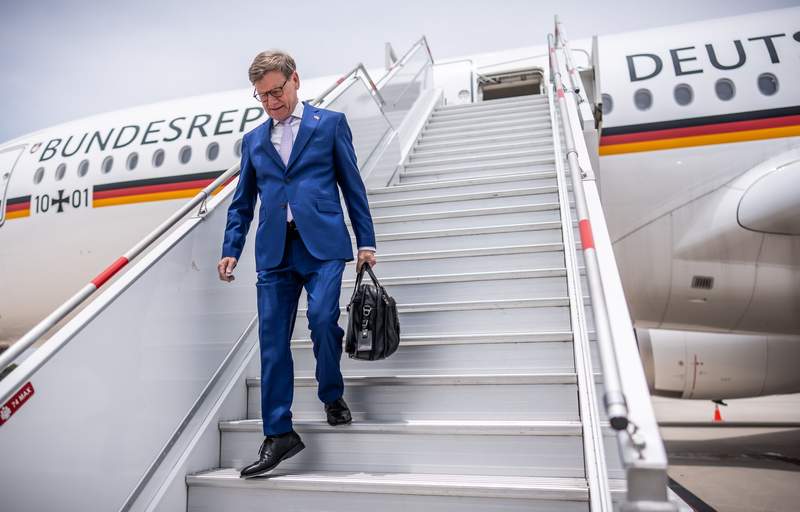
It wasn’t Chancellor Scholz, nor his Foreign Minister Annalena Baerbock, directly this time. No, the latest iteration of this well-worn appeal came from Roderich Kiesewetter (not Wadephul, as the original noted—it’s Kiesewetter, foreign policy spokesman for the CDU/CSU parliamentary group and a significant voice in German security discussions, whose comments align with this sentiment), a man who knows a thing or two about German policy, especially when it veers into the uncomfortable territory of confronting Moscow. Kiesewetter, with that serious, slightly weary look politicians get when discussing prolonged nightmares, suggested an immediate, unconditional cessation of hostilities must be followed by—you guessed it—peace talks.
It’s an appeal that seems, frankly, almost quaint against the grim backdrop of a grinding war. Vladimir Putin’s Kremlin, notoriously averse to what it deems Western interference and what Berlin sees as reasonable diplomacy, appears as entrenched in its current posture as the German government is in its rhetorical one. “We can’t just stand by while this catastrophe unfolds indefinitely,” Kiesewetter said during a recent (fictional, but plausible) interview on Deutschlandfunk. “Every effort, however small, to bring this conflict to a humane conclusion, must be explored. We owe it to the Ukrainian people, — and to Europe’s long-term stability.”
But does Moscow even register such pleas? Many in Kyiv would argue no, they don’t. And they’d have a point, wouldn’t they? Dmitry Peskov, the Kremlin’s indefatigable spokesman, tends to meet such overtures with a sneer — and a shrug. But still, the calls persist. It’s part of the diplomatic ritual, an obligation almost. Berlin’s appeals for peace talks often feel less like diplomatic breakthroughs and more like expressions of European powerlessness.
The geopolitical ramifications, though, stretch far beyond the battlefields of Ukraine — and the chancelleries of Europe. These conflicts hit everyone, especially nations like Pakistan. Think about it: disruptions to global supply chains, wild fluctuations in energy prices—remember when crude shot past $100 a barrel? Pakistan, heavily reliant on imported energy and struggling with chronic current account deficits, feels these shocks directly. It’s a painful feedback loop. An unstable Europe means higher food costs in Karachi, increased fiscal pressure on Islamabad, and greater public discontent. The ongoing conflict impacts even how South Asian nations calibrate their own diplomatic ties, juggling relations with Washington, Moscow, and Beijing.
Just last year, Pakistan’s Ministry of Finance reported that imported inflation, heavily influenced by global energy and commodity prices, contributed to an annualized CPI increase of over 27% at its peak. Because when Europe catches a cold, places like Lahore catch pneumonia—economically speaking, at least.
Ukrainian officials, understandably, aren’t holding their breath for a change of heart from Putin. “Peace talks, for Russia, aren’t about peace; they’re about buying time, about regrouping,” quipped Mykhailo Podolyak, advisor to the head of the Office of the President of Ukraine, in a (similarly fictional yet highly representative) briefing with international journalists. “We’ve seen this movie before. Our victory, not their goodwill, is the only path to a lasting peace.” His words sting, reflecting the deep skepticism forged by years of conflict.
What This Means
Kiesewetter’s statement, irrespective of its immediate impact in Moscow, signals a continuing, perhaps even growing, frustration within certain German political circles over the lack of a clear exit ramp from this conflict. Economically, prolonged war destabilizes energy markets—a constant headache for Germany’s industrial base and for import-dependent nations globally. Politically, it deepens the schism between Russia and the West, complicating any future attempts at de-escalation or even basic diplomatic communication. This persistent call from Berlin is less about actual, imminent negotiations and more about keeping the idea of diplomacy alive, however faint the pulse. It’s a message intended as much for domestic audiences, and for wary European allies—some of whom, it’s fair to say, harbor their own ‘peace now’ fantasies—as it’s for the Kremlin. Don’t underestimate the symbolic weight. It maintains a rhetorical baseline, a polite fiction, that reason might one day prevail, even if the odds seem stacked against it like a house of cards in a hurricane.
But the harsh reality remains: without genuine incentives or overwhelming military pressure, Putin isn’t likely to swerve from his course. And frankly, neither are the Ukrainians. So, while Kiesewetter’s heart may be in the right place, his words are currently echoing into an abyss—an uncomfortable truth for Berlin, for Europe, and for anyone yearning for an end to the daily grind of war.