


Albuquerque’s Perpetual Grind: I-25 Resurfacing Reveals Deeper Infrastructure Cracks
POLICY WIRE — Albuquerque, United States — For commuters traversing New Mexico’s largest city, the month of June offers yet another testament to the impermanence of modern infrastructure, a familiar...

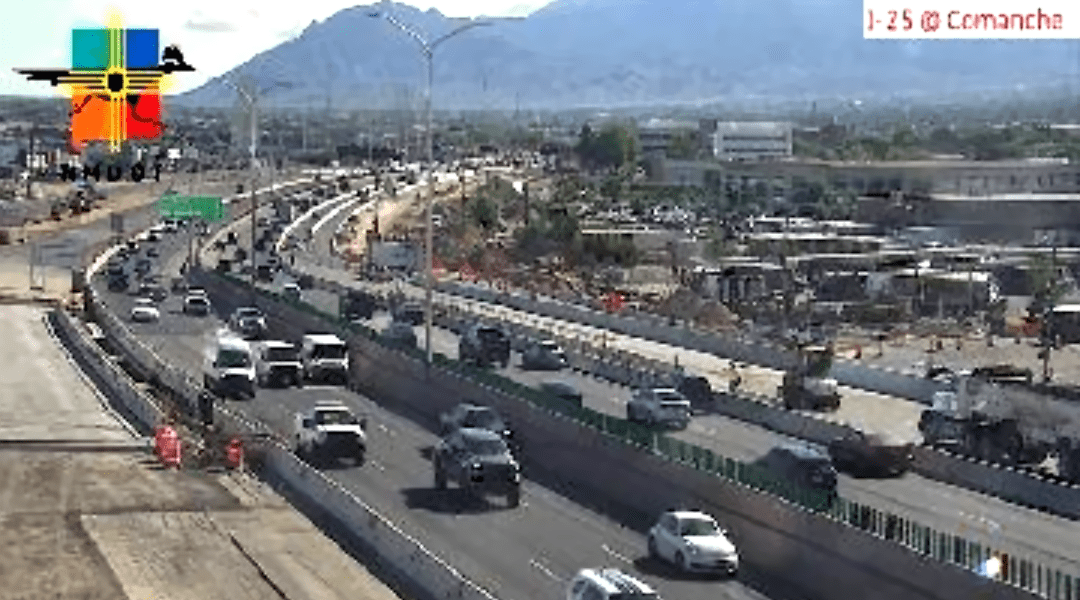
POLICY WIRE — Albuquerque, United States — For commuters traversing New Mexico’s largest city, the month of June offers yet another testament to the impermanence of modern infrastructure, a familiar narrative spun repeatedly along the concrete ribbons of Interstate 25. Forget any illusion of stability; Albuquerque’s main artery is poised for a dance with progress, or perhaps, perpetual motion sickness. The latest act in this ongoing saga involves freshly laid asphalt and an implicit nod to the Sisyphean nature of maintaining a vital transport corridor.
It’s not just a minor inconvenience; it’s a re-sculpting of daily routines for tens of thousands. This week, an immediate change is impacting northbound traffic. Specifically, traffic will shift yet again on Interstate 25 in Albuquerque to put the northbound lanes on to new pavement first before the southbound lanes. For anyone expecting a smooth commute through the northern reaches of the city, they’ve been promptly disabused of that notion. Northbound traffic will shift on to new pavement Thursday and Friday, June 4-5, between Candelaria Road and Montgomery Boulevard. Commuters should prepare for this evolution of their transit. This isn’t a temporary detour; it’s the highway itself undergoing a brief, intense metamorphosis. [QUOTE_PLACEHOLDER]
But the road show doesn’t end there. Oh no, it’s a staggered affair. Then, southbound traffic will shift on to new pavement the following Friday, June 12. This approach—northbound first, then southbound—suggests a meticulous, if agonizingly drawn-out, engineering choreography designed to mitigate total gridlock. One might wonder if the planners have ever actually driven during rush hour here. Nighttime lane — and ramp closures will be in place from 8 p.m. to 6 a.m. during both traffic shifts. That’s the reprieve, they tell us, the designated time for major surgical procedures on the urban landscape.
And drivers, the stoic protagonists in this unfolding drama, are offered boilerplate advice: If you’re a driver, expect delays, slow down in the work zone and follow posted signage. It’s the standard refrain, a polite acknowledgment that their time will be forfeit at the altar of progress. Currently, an existing bottleneck further exacerbates matters; The southbound Montgomery Blvd on-ramp remains closed while crews continue reconstruction work in the area. Once it reopens, reconstruction of the southbound Montgomery off-ramp is set to begin as early as June 17. One marvels at the precision of the scheduling, even as the cumulative effect translates into widespread frustration. It’s a delicate ballet of logistics.
This endless cycle of roadwork is more than just asphalt — and cones. It’s an unspoken statement about the nature of urban development in the American West—always playing catch-up. While nations like Pakistan are grappling with massive infrastructure deficits, often attempting to build foundational road networks in rapidly expanding megacities like Karachi or Lahore, established U.S. cities find themselves mired in a continuous, expensive process of repairing — and updating existing, aging systems. It’s the difference between laying the groundwork and constantly repainting the cracks. Consider Karachi’s ongoing BRT projects, which, despite massive disruptions, aim to revolutionize public transit. Albuquerque, by contrast, is meticulously ensuring the integrity of individual interstate segments.
Because ultimately, these aren’t isolated incidents. They’re symptomatic of broader trends in national — and local infrastructure investment. A 2019 report by TRIP (National Transportation Research Group) indicated that driving on roads in disrepair costs New Mexico motorists $1.8 billion annually in the form of extra vehicle repairs and operating costs. That’s not pocket change. It’s a substantial, recurring drain on household budgets — and regional productivity. And every small shift, every closure, adds to that burden, accumulating unseen costs and frayed nerves.
📄 POLICY WIRE WHITEPAPER PUBLISHED: PAKISTAN'S NATIONAL SECURITY POLICY PRIORITIES
👉 READ BY CLICKING HEREMore info is available at i25improved.com, should anyone wish to track the latest chapter in this epic tale of urban renewal. It’s a testament to transparency, perhaps, or merely an acknowledgment that information, however granular, provides a veneer of control over an uncontrollable reality. It’s almost quaint.
What This Means
This seemingly localized traffic adjustment on I-25 in Albuquerque carries subtle, yet significant, political and economic undertones. Politically, the constant state of road repair can erode public trust in government efficiency, creating a breeding ground for discontent with local and state leadership. Every delayed commute is a minute lost, a frustration added, which translates into political capital that can be spent or squandered by elected officials responsible for infrastructure budgets. It’s not just about getting to work on time; it’s about a government’s perceived competence in managing daily life. Because if they can’t fix the roads, what can they do? That’s the political calculus.
Economically, the impact is multifaceted. The $1.8 billion annual cost to New Mexico motorists due to poor road conditions is a staggering figure, directly hitting consumer wallets through higher maintenance costs and increased fuel consumption from stop-and-go traffic. But it’s not just the individual driver. Businesses suffer from increased freight costs, supply chain delays, and decreased employee productivity due to longer commutes. This sustained erosion of efficiency acts as a drag on economic growth, discouraging investment and potentially contributing to urban flight. In a city like Albuquerque, reliant on commercial thoroughfares and commuter traffic, anything that slows movement inevitably slows the economy. It’s a silent tax on every transaction.
And, viewed from a global perspective, Albuquerque’s constant roadwork echoes broader challenges faced by developed nations struggling with aging infrastructure against the backdrop of rapid technological change and shifting urban populations. While developing countries often contend with basic infrastructure deficits, the West grapples with a different beast: maintaining what exists while attempting to modernize without completely disrupting daily life. It’s a delicate balance, one that often seems to tip towards disruption, and it certainly highlights the immense financial and logistical burden of merely keeping things running in the 21st century.