

The Weight of the Jersey: A Patriot’s Lonely Battle Against the Echoes of Defeat
POLICY WIRE — Boston, MA — Some defeats just fester. They crawl under the skin, leave a scar on the collective memory, and pin themselves firmly to an individual’s career arc. For...

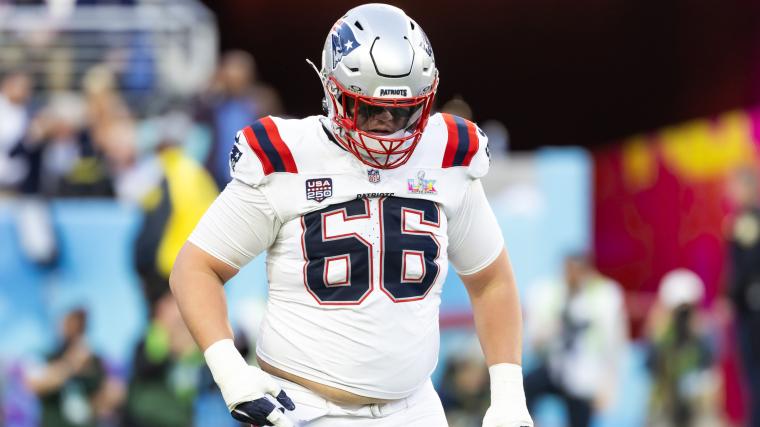
POLICY WIRE — Boston, MA — Some defeats just fester. They crawl under the skin, leave a scar on the collective memory, and pin themselves firmly to an individual’s career arc. For New England Patriots offensive lineman Will Campbell, last season’s Super Bowl loss wasn’t just a tough game; it was an indictment, a referendum on a rookie year marred by a knee injury and the brutal, unforgiving scrutiny of professional sports.
It wasn’t supposed to go down like that. Fourth-overall pick, supposed to be the bulwark protecting a franchise quarterback — that’s the dream. But then, as it always does, reality hit. A partially torn MCL sidelined him for a good chunk of his inaugural run. And despite gutting it out for the playoffs, pushing through pain, his effectiveness tanked. Badly. Think of a fortress cracking, allowing marauders right to the king.
Because, make no mistake, when your quarterback, Drake Maye, took more sacks during that Super Bowl run than any other signal-caller in postseason history, according to NFL analytics firm Opta, fingers tend to point. And they landed squarely on Campbell, the then-21-year-old left tackle. Fans, notoriously fickle beasts, turned on him quicker than you could say "dynasty." The chatter wasn’t just critical; it questioned his very right to wear the uniform going forward.
And now, a new season dawns, or at least its preparatory grind does. Campbell has spent his entire offseason — every single day for five days a week until April 20 — immersed in physical therapy. A punishing, monotonous ritual aimed at rebuilding what was broken. "Just trying to rebuild the strength in my knee to get it back to where it was previously," Campbell recently confided to reporters. "And I feel like I did a good job with that." He sounds resolute, though perhaps a little worn around the edges.
It’s a familiar story in the high-stakes world of athletic spectacle, where bodies are investments and injuries are public balance sheet liabilities. Consider the weight carried by cricketers in Pakistan, for instance, whose individual performances can ignite national euphoria or despair, often far removed from their personal health struggles. But for Campbell, the focus remains Foxboro, where past mistakes hang heavy in the air. This ain’t just about getting back to form; it’s about escaping the shadow of that Super Bowl debacle.
Patriots General Manager Alex Koster isn’t exactly showering him with accolades yet. "Will’s dedication is noted, yes," Koster offered in a brief statement through the team’s media relations department. "But results are the only currency in this league. We expect to see tangible improvement, a full return to his draft potential. There are no participation trophies at this level." And Koster — well, he’s never been known for sugar-coating.
The sentiment from the league’s top brass isn’t much softer, albeit couched in more empathetic terms. "The grind for these young men, especially post-injury, is immense," stated Dr. Lena Shah, the NFL’s Executive Vice President of Player Development. "They’re navigating incredible physical and mental pressures, often with the entire sporting world watching and dissecting their every move. We work to support them, but ultimately, personal accountability for performance is paramount." No slack cut there either, is there?
📄 POLICY WIRE WHITEPAPER PUBLISHED: PAKISTAN'S NATIONAL SECURITY POLICY PRIORITIES
👉 READ BY CLICKING HEREBut the young man, now 22, insists he’s got a longer view. "Nobody’s a finished product," Campbell argued. He’s trying to make that point stick, hoping the baying critics will actually listen. "I’ve worked at everything every day. I’m 22, I’m a long way from where I’m going to be in the future. It’s not like I’m great at everything — and here’s one little thing. I’m building everything, every day. And trying to make everything as a whole better." A logical enough defense, even if logic often goes out the window during the offseason hysteria.
His words are an open challenge, a declaration of intent to silence the critics by the most undeniable means possible: performance. And, frankly, for a team still grappling with its identity post-Brady, a fully restored, dominant left tackle isn’t just a luxury; it’s an absolute necessity. His individual battle is intertwined with the franchise’s collective quest for relevancy. Maybe, just maybe, this exhaustive comeback will be more than just a personal triumph; it might be the unwritten prologue to a new, unexpected chapter for New England football. After all, every contender faces a gauntlet, physical or otherwise.
What This Means
Campbell’s rehabilitation isn’t merely a physical journey; it’s a potent illustration of the intense economic and social pressures exerted upon modern athletes. In professional sports, a player’s body is quite literally their capital, a highly valued asset for both the individual and the multi-billion-dollar franchise that employs them. A significant injury, particularly to a high draft pick like Campbell, represents a substantial threat to both future earnings and existing investment.
The public’s swift condemnation of Campbell post-injury, juxtaposed with the almost heroic narrative demanded by his arduous rehab, highlights a societal expectation of relentless excellence and sacrifice. It’s a phenomenon seen across high-profile, high-reward sectors, where a temporary dip in ‘output’ or ‘performance’ can ignite disproportionate outrage from consumers (fans). Politically, this reflects the often unforgiving court of public opinion, where individual failings, however temporary or circumstance-driven, are magnified and scrutinized.
Economically, Campbell’s situation is a micro-narrative within the broader human resources management challenges of industries dependent on highly specialized, physically demanding labor. The cost of rehab, the pressure to return, and the subsequent performance clauses in contracts all point to a complex negotiation between human well-being and market demands. For the Patriots, Campbell’s full recovery isn’t just about winning games; it’s about safeguarding an investment, maintaining franchise value, and placating a customer base hungry for consistent, dominant product.