


Munich’s Defensive Gambit: A US Export, Global Capital, and Unseen Fan Bases
POLICY WIRE — Munich, Germany — There’s a subtle rumble across the grandstand, not from chanting fans, but from the relentless gears of global commerce. It’s a sound that says professional...

POLICY WIRE — Munich, Germany — There’s a subtle rumble across the grandstand, not from chanting fans, but from the relentless gears of global commerce. It’s a sound that says professional football isn’t just about athletic prowess anymore; it’s a massive, intricately wired engine of capital, talent arbitrage, and—yes—soft power. Big clubs aren’t merely chasing goals; they’re meticulously mapping new market territories, chasing eyeballs and allegiances from Karachi to California.
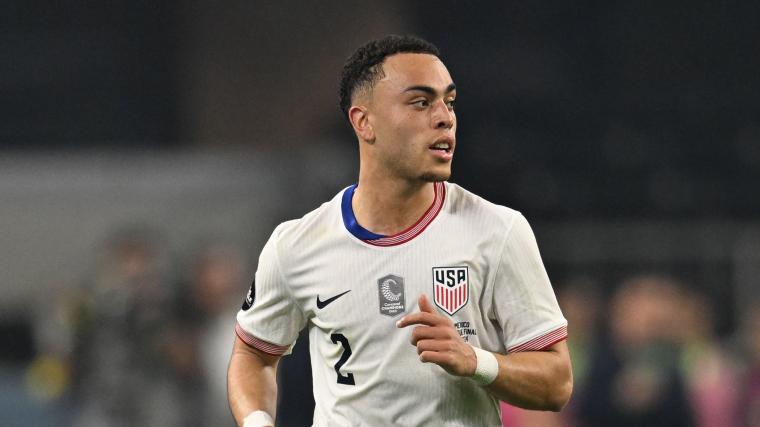
It’s against this backdrop that news trickles out of the European transfer rumor mill, a perpetual churn of speculation and strategically leaked intelligence. Bayern Munich, the German football juggernaut, a club as much a global brand as a sports team, isn’t just idly window-shopping. Reports suggest they’ve cast their gaze across the Dutch border to PSV Eindhoven, eyeing Sergino Dest, a United States Men’s National Team fullback. It’s an interesting pivot, perhaps reflecting a calculated gamble on a player whose market value isn’t just tied to his tackles and assists, but also his national origin—and the burgeoning American soccer market.
But this isn’t just a simple swap of dollars for talent. Bayern Munich isn’t just adding a defender. They’re navigating a post-pandemic financial landscape, one where astute investment in global talent has become paramount. Their past season, as reliable as German engineering, still contained a minor flaw: while [QUOTE_PLACEHOLDER] Not bad, obviously. But not good enough for an institution accustomed to continental supremacy.
Hence, the pursuit. The official word, or at least the reliably reported word, is that [QUOTE_PLACEHOLDER] And why Dest? Well, for one, he’s not exactly a rookie. [QUOTE_PLACEHOLDER] That’s a CV with some heft. It’s an interesting track record, hinting at consistent performance in a respectable European league.
Dest’s recent stats aren’t pedestrian either. [QUOTE_PLACEHOLDER] These numbers, it seems, catch a scout’s eye. Because [QUOTE_PLACEHOLDER] They aren’t looking for raw potential, apparently; they want a proven quantity, someone who’s weathered the bright lights of European club football.
“All of this has put a price tag in the region of € 25 million, as reported by ESPN.” Twenty-five million Euros. That’s a sum that means business. And it’s not his first time on the radar; [QUOTE_PLACEHOLDER] Talent, it seems, gets spotted, even if the timing isn’t always right for an immediate swoop. It’s a testament to the player’s enduring appeal in Europe.
But the real interesting bit? [QUOTE_PLACEHOLDER] World Cup aspirations often delay, or complicate, big club switches. Because players aren’t just contracts — and statistics; they’re also national assets, temporary cultural envoys.
What This Means
This potential transfer, much like many in modern football, offers a lens into shifting geopolitical and economic landscapes. On one hand, you’ve got a major European power-club, Bayern, seemingly committing serious resources to acquire a US national team player. It’s a nod to the growing legitimacy and market strength of American soccer, moving beyond mere participation to producing talent recognized at the sport’s highest echelons. For Germany, it’s about staying competitive, maintaining their footballing brand, and potentially tapping into new sponsorship avenues tied to US markets. But it also exposes how clubs operate on a global scale now. They aren’t just selling tickets in Bavaria; they’re broadcasting games, merchandising products, and cultivating fandom in regions thousands of miles away.
And that’s where the subtler implications for places like Pakistan — and the broader Muslim world come in. While cricket has historically dominated South Asia, football’s gravitational pull, powered by mega-clubs like Bayern, is expanding. These transfers—players from the US moving to Europe—signal an interconnectedness. They amplify the narrative that football is a truly global sport, and even if Pakistan isn’t producing talent at this level just yet, their youth watch, they play, and they follow these high-profile moves with increasing fervor. A player like Dest joining a titan like Bayern isn’t just about tactics; it’s a global marketing event. It subtly shapes aspirations, influences commercial partnerships, — and slowly, irrevocably, shifts cultural interests. This sort of activity generates enormous interest from the Muslim world, where global viewership numbers for the Bundesliga and Champions League are always climbing, creating fresh fan bases and future consumer markets for these clubs.
Because ultimately, these high-stakes transfers, these millions changing hands, are about more than just a right-back; they’re about consolidating brand power, expanding market reach, and influencing global cultural narratives. It’s business, certainly, but it’s business with vast, understated political — and economic ripples.