
False Calm: New Mexico’s Dry Skies Mirror Geopolitical Volatility
POLICY WIRE — Albuquerque, N.M. — It’s easy to dismiss a local weather report, especially one predicting merely higher temperatures and some evaporating storms. But here in the high...

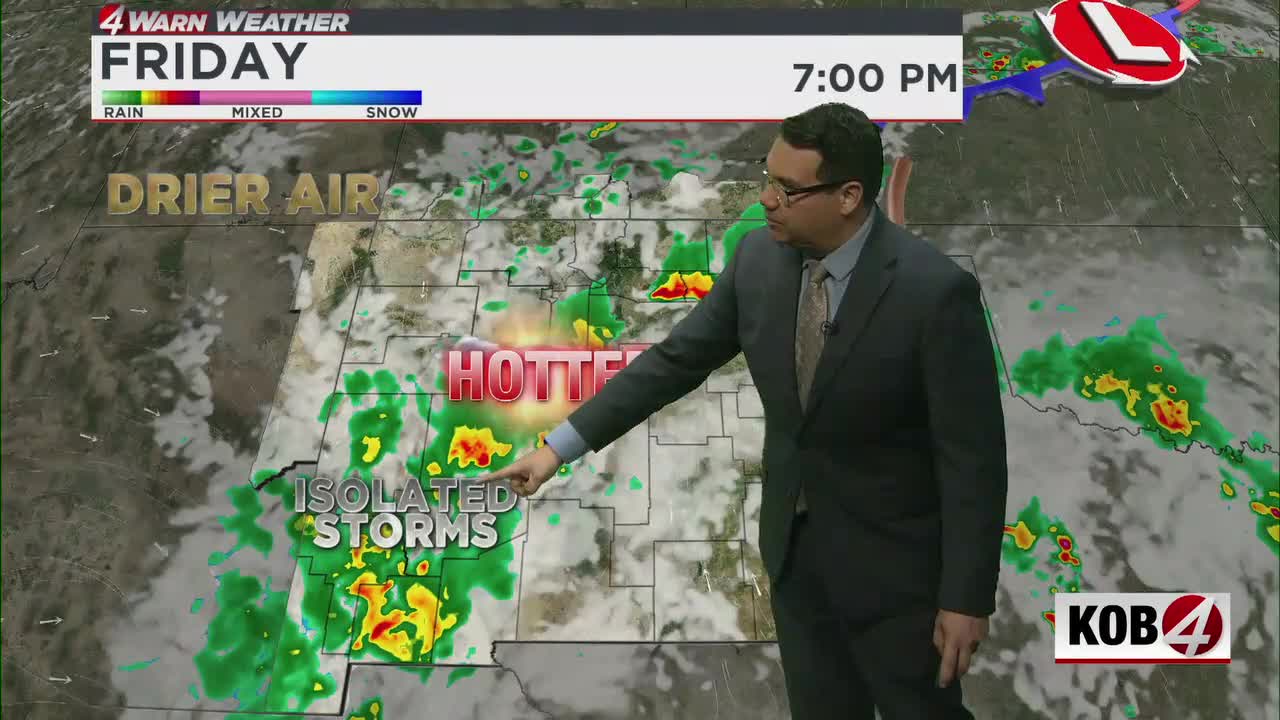
POLICY WIRE — Albuquerque, N.M. — It’s easy to dismiss a local weather report, especially one predicting merely higher temperatures and some evaporating storms. But here in the high desert of New Mexico, the atmosphere’s casual indifference — a forecast of “dry air limits rain” and temperatures pushing “triple digits early next week” — isn’t just about sunburns. It’s a low, persistent hum of a far larger, more unsettling global narrative. This seemingly minor shift, playing out in the American Southwest, echoes the atmospheric tremors felt by nations caught in far more precarious climatic vise grips.
There’s a peculiar predictability to modern unpredictability, isn’t there? We’re told heat “will build across New Mexico this weekend,” even as “leftover moisture bubbling up from the day’s heat” is expected to fizzle out. For anyone watching the grander chessboard of international resource politics, this sounds uncomfortably familiar. Fleeting relief, followed by an insistent, dry advance. It’s the same slow grind of resource depletion, often masked by ephemeral solutions, that defines so many fragile states today. Experts watch, but it’s the air itself that writes the daily script here. [QUOTE_PLACEHOLDER]
For Friday, it’s just “dry air will move into the northwest while storms develop again from the southwest to the northeast.” A kind of atmospheric dance, but one where the partner is increasingly absent. Albuquerque itself anticipates “measurable rain looks unlikely, especially by Sunday as drier air arrives.” That’s not just a weather observation; it’s a chilling declaration for an agricultural region, or for any populace that relies on predictable patterns. But in this case, predictability means — less rain. It means an encroaching absence, not a bountiful presence.
Consider the broader context. Nations, especially those in the developing world, are locked in existential struggles for water and arable land, their futures etched into capricious weather fronts. Pakistan, for instance, a nation grappling with recurrent, devastating floods and equally destructive droughts, knows this atmospheric fickleness all too well. Its colossal irrigation system, the lifeblood of its agricultural economy, is constantly tested by glacial melt variability and erratic monsoons. This isn’t some academic exercise in Lahore or Karachi; it’s about actual food on plates, actual survival. In some regions, like Pakistan’s Balochistan province, years of drought have contributed to significant internal migration and heightened ethnic tensions — not exactly isolated storms breaking apart peacefully, is it?
And what about those “earlier concerns near Ruidoso starting to clear”? A transient sigh of relief. That’s what we always get, isn’t it? A temporary reprieve before the next, often bigger, shoe drops. In a world where climate migration is becoming an irreversible fact, such momentary easing only serves to obscure the longer, more painful trajectories. It’s not just weather; it’s the persistent background hum of a changing planet, influencing everything from crop yields to — eventually — geopolitical alliances. They’ve estimated that around 34.6 million people in Pakistan were affected by the 2022 floods alone, highlighting the stark human cost of extreme weather events, as reported by the United Nations Population Fund (UNFPA).
What This Means
This localized weather pattern, in its quiet, unassuming way, tells a story about governance, resilience, and the brutal impartiality of the environment. Economically, prolonged dry spells in regions like New Mexico threaten agricultural output, escalating food prices and impacting local livelihoods. It’s not just farmers who feel this pinch; it’s the entire supply chain, eventually making its way to your dinner table. Politically, while a localized forecast won’t ignite revolutions, the sustained degradation of water resources certainly can. Nations reliant on seasonal rainfall or glacial runoff face compounding crises of food security, internal displacement, and cross-border water disputes. Think about the contentious water-sharing agreements — or lack thereof — between nations like India and Pakistan over rivers flowing from the Himalayas. What seems like a trivial fluctuation here becomes a question of national security elsewhere.
these persistent climatic shifts underscore the failures of global policy. We talk a big game about climate action, but individual nations often prioritize short-term economic gains over long-term environmental sustainability. This forecast — one more step towards “drier air” and “unlikely” rain — isn’t just about one weekend; it’s a brick in a wall of increasing climate vulnerability. But it’s also a mirror reflecting the broader, simmering tensions that manifest when fundamental resources become scarce. Policy, whether economic or environmental, can’t function in a vacuum, especially when the very air, and lack of rain, starts rewriting the rules of the game. It’s a grim equation, really, when nature calls the shots. Such patterns contribute to the ongoing global conversation — or lack thereof — about who bears the burden of climate change, and how societies will adapt when the very fundamentals of life become bargaining chips.
And perhaps it’s here, in the mundane specifics of a regional weather outlook, that the greatest irony lies: the planet continues its indifferent churn, while humanity grapples with policies that consistently fall short of the unfolding reality. It’s not a baseball game with “Ballpark Anarchy” as the unexpected outcome. This is reality, shaping economies — and diplomacy, one dry front at a time. This steady drumbeat of rising temperatures and dwindling precipitation means governments are forced to contend with an invisible adversary that doesn’t respect borders, tariffs, or diplomatic protocols. We’re in for a long, dry summer, in more ways than one.