


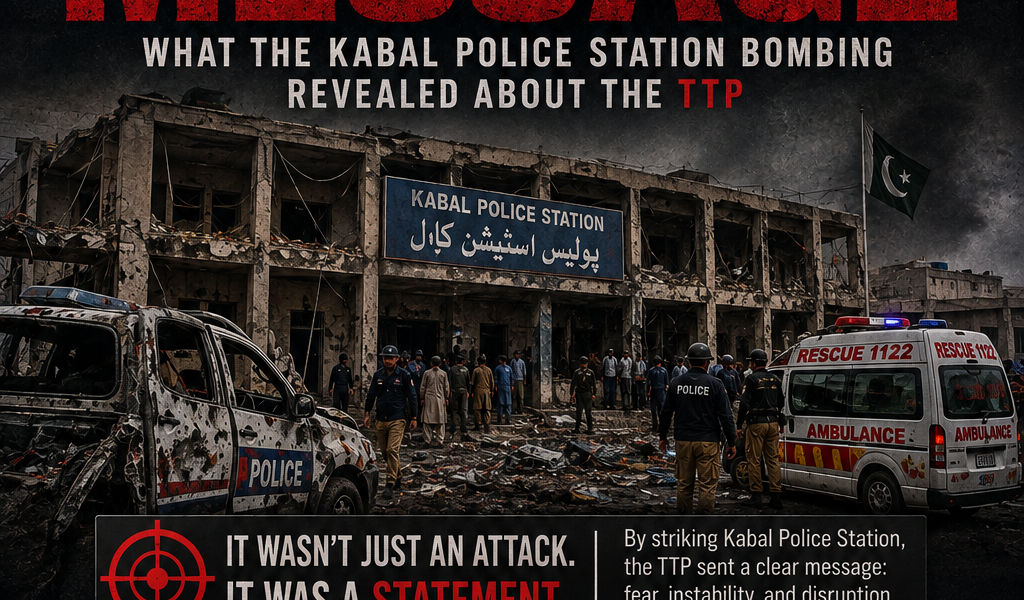
On the evening of August 2, hundreds of people gathered at Kabal Chowk in the Swat Valley for what its organizers called the Swat People’s Peace Uprising. They were not soldiers or officials. They were residents and civil-society members who had come out, as they had done repeatedly in recent months, to demand an end to the militant violence creeping back into their district. As the final speaker addressed the crowd and participants began to disperse, a suicide bomber approached the gate of the adjacent Kabal police station, was stopped by security personnel at the checkpoint, and detonated his vest. The blast tore through the edge of the gathering. The toll, initially reported at fourteen, rose to seventeen over the following days as the wounded died in hospital. Swat police recorded seven police officers and ten civilians dead, with more than two dozen injured.
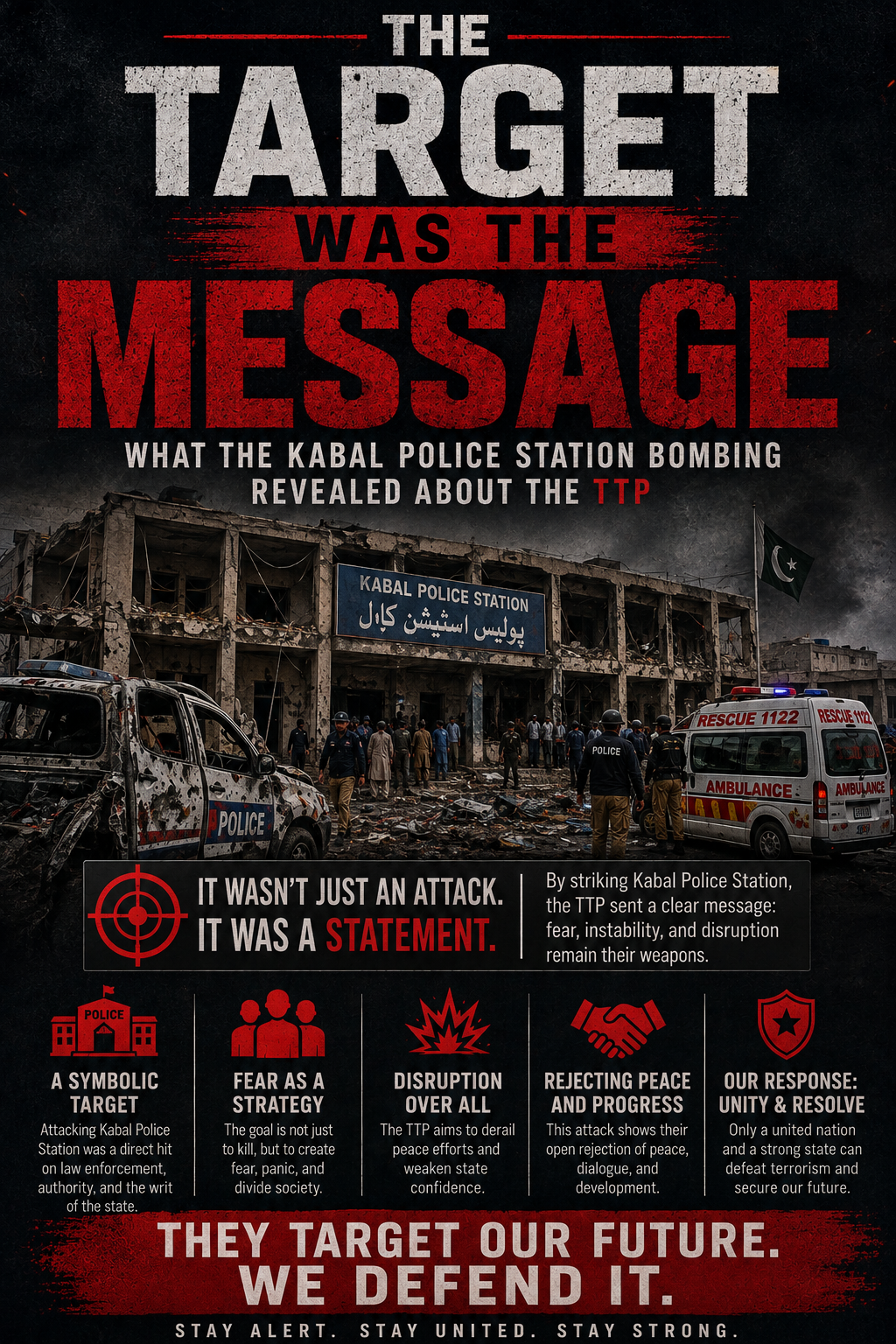
No group claimed the attack in its immediate aftermath. Within two days, the Tehreek-e-Taliban Pakistan claimed responsibility, according to AFP. That claim is where the analysis has to begin, because it settles a question the group’s own propaganda works hard to keep open.
The TTP presents itself as a movement fighting on behalf of the people of Pakistan’s northwest, defending them against the state. The gathering at Kabal Chowk was composed of precisely those people. They had organized not around any party or ideology but around a single demand, that they be allowed to live without fear. Ten of the dead were civilians drawn from that demand. A movement that claims a population as its constituency and then kills that population as it peacefully assembles has answered, in the plainest terms available, the question of whom it actually serves. The target was the message.
Swat sharpens the point more than any other district in Pakistan could. The valley was the TTP’s own emirate before a 2009 military operation drove the group out. During its rule it imposed public floggings and executions and a coerced order that the residents of Swat remember directly. The peace rally on August 2 was, in its essence, a refusal of that memory, a public statement by the people who lived through the emirate that they will not consent to its return. The bombing was the group’s answer to that refusal. It could not have chosen a target that exposed the hollowness of its own claim more completely.
This is the trap that armed movements built on real grievances set for themselves. Whatever injustice a group invokes, the moment it turns its violence on the very civilians it claims to represent, it forfeits the language of representation. It is no longer defending a population; it is punishing that population for withholding its consent. The people at Kabal Chowk had also criticized the authorities for not doing more to protect them, which is to say their grievance was against violence itself and their demand was for security. The TTP resolved whatever ambiguity remained about the source of the threat they faced. It walked a bomb into their gathering.
The dead in Swat also sit within a wider pattern that Pakistani authorities have documented for two years. The bombing followed a drone-and-ambush assault in Hangu days earlier and a vehicle bombing in Tank that the TTP also claimed, part of a July in which researchers at the Pakistan Institute for Conflict and Security Studies recorded more than 150 terrorism-related deaths across Khyber Pakhtunkhwa, roughly double the previous month. Preliminary indications reported in Pakistani media suggested the Swat bomber may have been an Afghan national, a detail still under investigation but consistent with Islamabad’s long-standing position that the TTP plans and launches attacks from sanctuaries across the Afghan border. Kabul denies that its territory is used for attacks on Pakistan. The denial grows harder to sustain with each assault that traces back across the frontier, and the human cost of that sanctuary was laid out in full at Kabal Chowk.
The lesson of Swat is not complicated, and that is precisely its force. Movements reveal their real relationship to a population not in their statements but in their choice of targets. For years the TTP has asked the people of the northwest to see it as their defender. On August 2 it gave them its answer, and the answer was seventeen coffins carried out of a rally whose only demand had been peace. A group that kills the people it claims to fight for is not advancing their cause. It is confessing that they were never the cause at all.
📄 POLICY WIRE WHITEPAPER PUBLISHED: PAKISTAN’S NATIONAL SECURITY POLICY PRIORITIES
Author