

Dynasty in Doubt? San Antonio’s Star Falls, Exposing Cracks in the Global Game Plan
POLICY WIRE — San Antonio, TX — The grand coronation everyone expected for Victor Wembanyama in these 2026 NBA Finals? Well, it hit a snag. A massive, unexpected snag. San Antonio’s supposedly...

POLICY WIRE — San Antonio, TX — The grand coronation everyone expected for Victor Wembanyama in these 2026 NBA Finals? Well, it hit a snag. A massive, unexpected snag. San Antonio’s supposedly invincible Spurs, with their prodigious French import leading the charge, were supposed to dispatch the New York Knicks with clinical precision. But basketball, like geopolitics, rarely follows the script drafted in air-conditioned offices. Instead, a gritty New York outfit, dismissed by many as merely plucky, walked out of the Frost Bank Center with an improbable Game 1 victory, snatching home-court advantage and sending tremors through the neatly arranged narratives.
It wasn’t just a loss for the Spurs; it was an unpicking of perceived certainties. For three-quarters of the contest, San Antonio looked precisely like the dominant force forecasters — both on air and in ledger sheets — had pegged them to be. A hefty 14-point second-half lead felt insurmountable. Then, coach Mitch Johnson—whether from tactical oversight or a faith in veteran stability—benched rookie Dylan Harper. The young guard had been a revelation, pouring in 16 points and eight rebounds, a stat sheet rarely seen from an 18-year-old in a Finals debut. His absence, just as the Knicks’ own talisman, Jalen Brunson, found his rhythm, felt less like a strategic adjustment and more like an open invitation for disaster. It felt like a capital’s leader pulling back nascent, energetic forces just as the real battle began. Because really, why would you take out a player lighting up the scoreboard? It just doesn’t compute.
Brunson, for his part, embodied the kind of dogged, almost stubborn perseverance that often confounds bigger, flashier adversaries. He’s no physical marvel—a smaller guy, not particularly explosive—yet he wields an unteachable clutch gene. Despite a momentary injury scare, forcing him into the locker room (a minor crisis averted), he returned, a coiled spring. His 13 fourth-quarter points were less about individual brilliance and more about a sustained, almost methodical chipping away at San Antonio’s confidence. “It’s never just one guy making it happen,” Brunson offered later, reflecting on the late-game surge. “It’s about staying together, keeping your head down when the currents shift, when everyone else thinks you’re going to fold. That’s the only way you survive out there.” A sentiment applicable in basketball, yes, but also on any international stage.
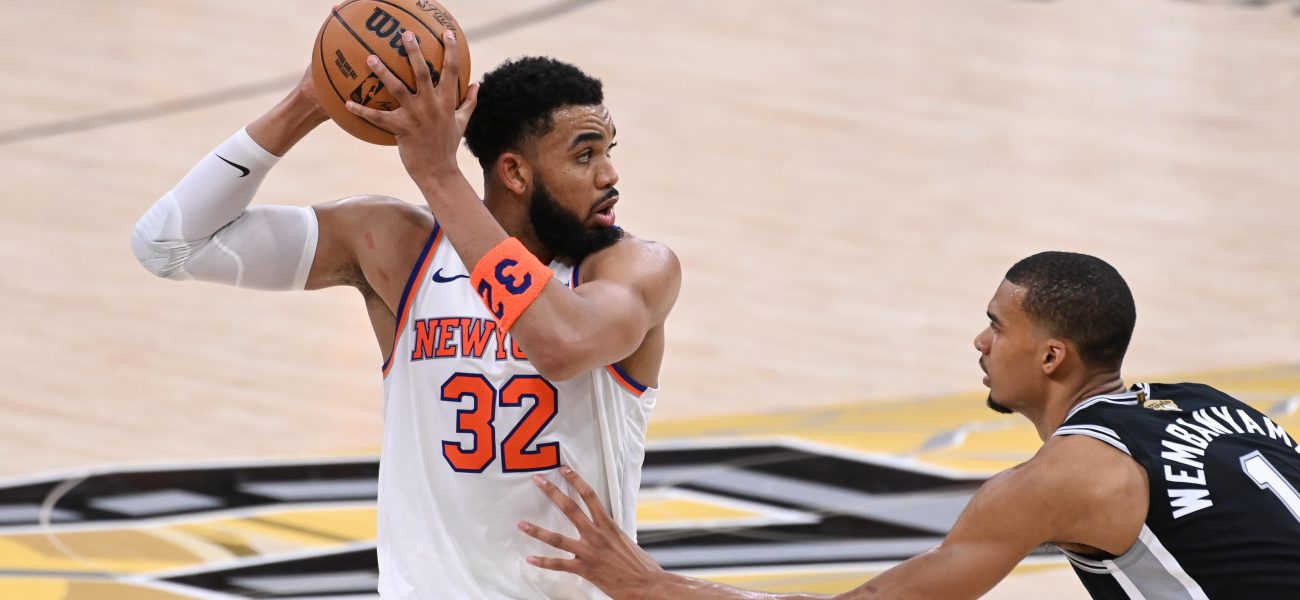
And speaking of survival, Karl-Anthony Towns played the disruptor general. Many expected Wembanyama to simply dominate every matchup, his alienesque frame — and skills overwhelming all. But Towns—a shooting big man, something of an anomaly in the league a decade ago—pulled the 7’5” French prodigy away from the rim with ease, then drove past him, putting Wembanyama in unfamiliar, uncomfortable situations. It wasn’t about raw numbers for Towns—his 18 points, 12 rebounds, and four assists were solid, not spectacular—but his +14 plus/minus in 34 minutes whispered volumes. He turned what was supposed to be San Antonio’s strength into a tactical quagmire. This kind of nuanced, targeted disruption, bypassing brute force for strategic positioning, holds lessons for any military or trade negotiator.
The true surprise, however, was the impact of Josh Hart. The journeyman guard, often maligned for a sometimes-shaky shot, became an unexpected anchor. He scored only three points but hauled in a staggering 15 rebounds—a feat no player 6’5” or shorter has accomplished in a Finals game since Sam Jones in 1963, according to basketball-reference.com. That kind of thankless, selfless effort, often unseen yet profoundly impactful, is the unwritten agreement among championship teams. It’s what transforms a collection of talented individuals into a coherent force, not unlike a developing nation finding strength in unexpected alliances, proving its capabilities not with overt displays of power, but through resilience and shrewd internal cohesion. You know, like how Pakistan, despite geopolitical pressures, occasionally reminds the world of its inherent tenacity through sheer, surprising bursts of resourcefulness. Or, to put it another way, the world of elite competition, from basketball courts to diplomatic chambers, constantly reminds us that established power can falter.
📄 POLICY WIRE WHITEPAPER PUBLISHED: PAKISTAN'S NATIONAL SECURITY POLICY PRIORITIES
👉 READ BY CLICKING HEREBut what about the young giant himself? Wembanyama’s cold shooting (just 1-for-7 on non-rim two-pointers) highlighted a gaping hole: a lack of an interior, mid-range game. Against the Knicks’ swarming defense, he looked disoriented, frequently just tossing up contested shots and hoping for the best. Coach Johnson, in the post-game scrum, was diplomatic but firm. “Look, we made calls in the heat of battle. You can second-guess ’em from the comfort of a broadcast booth. My job’s to think about Game 2, not just the last four minutes.” Still, it felt like an implicit acknowledgement of shortcomings, both individual and collective.
What This Means
This single basketball game, on its face a mere sporting event, carries deeper resonances for the Policy Wire lens. It’s a striking reminder of the fragility of projected dominance, even for a phenomenon as singular as Wembanyama. We’re seeing a parallel here to emerging global powers whose ascent is touted as inevitable, yet often runs into unexpected, ‘underdog’ resistance rooted in collective resilience and tactical ingenuity. The Spurs’ strategic misstep with Harper’s benching — sacrificing an in-form, innovative player for perceived veteran stability — mirrors national policies that prioritize dated frameworks over dynamic, new talent, ultimately stalling progress. Economically, an upset like this, particularly from a major market like New York, can significantly shift Finals viewership numbers and merchandise sales, potentially diverting millions in broadcast rights and advertising revenue. It’s not just a game; it’s a micro-drama of power dynamics, where established order meets disruptive innovation, and often, the human element—chemistry, clutch play, and sheer grit—wins out over raw talent and presumed hierarchy. Expect the fallout from this Game 1 stunner to echo in strategy sessions, not just for the next game, but possibly for the broader understanding of athletic, and even geopolitical, supremacy for years to come.