


The Brussels Machine Grinds: Ukraine, Moldova Face a Labyrinthine Path to EU Membership
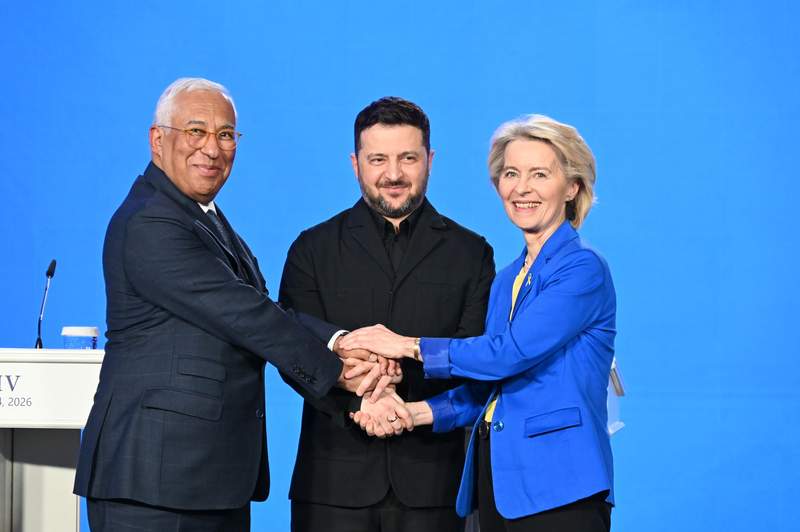
POLICY WIRE — BRUSSELS, Belgium — Another round of official handshakes. Another set of smiling faces for the cameras. The European Union has formally commenced accession negotiations with Ukraine and...

POLICY WIRE — BRUSSELS, Belgium — Another round of official handshakes. Another set of smiling faces for the cameras. The European Union has formally commenced accession negotiations with Ukraine and Moldova, setting the stage not for a grand embrace, but for a meticulously orchestrated, excruciatingly long bureaucratic ballet. It’s less a finish line and more an entry point to a legislative labyrinth, an undertaking that often swallows years, even decades, transforming hopeful aspirants into weary supplicants.
It’s not often that the continent’s administrative heart — known more for its glacial pace and esoteric policy documents than for dramatic gestures — performs with such relative speed. This moment, largely driven by the stark realities of Russia’s brutal war in Ukraine, feels less like a spontaneous act of unity and more like a reluctant strategic maneuver. But what’s a few decades of legislative alignment between friends, right?
The Brussels chatter suggests a newfound political will, a desperate urgency to anchor these two Eastern European nations firmly within the Western orbit. Ukraine’s Prime Minister, Denys Shmyhal, recently commented, his voice carrying the weight of ongoing conflict, “This isn’t merely about fulfilling treaties; it’s about fortifying the very foundations of European liberty and our shared democratic future. We understand the magnitude of the journey ahead, and we’re prepared for every single step, however arduous.” Plausible. Because what else can they say?
His Moldovan counterpart, Dorin Recean, struck a similarly earnest, if slightly less war-hardened, tone: “Our European trajectory is irreversible. This marks the culmination of immense effort from our citizens, a testament to their unwavering commitment to justice, transparency, and a prosperous, interconnected continent. It won’t be easy, but we’ve always faced challenges head-on.”
And so, the “negotiating clusters” are open. These aren’t fancy, cozy fireside chats; they’re sprawling policy dossiers covering everything from rule of law and public procurement to environmental regulations and customs unions. Each cluster represents a mountain of EU acquis — the accumulated body of common rights and obligations—that Ukraine and Moldova must transpose into their national law, implement rigorously, and then prove they’ve actually done it, not just put it on paper. The sheer administrative muscle required is staggering for any nation, let alone two embroiled in regional instability, or, in Ukraine’s case, active warfare.
📄 POLICY WIRE WHITEPAPER PUBLISHED: PAKISTAN'S NATIONAL SECURITY POLICY PRIORITIES
👉 READ BY CLICKING HERELook, the process is notoriously demanding. Just ask Turkey, whose accession process started in 2005 and has been effectively frozen for years, or even smaller nations like Montenegro, whose negotiations began in 2012 and are still trudging along. An analysis from the European Policy Centre indicates that, on average, a nation completes its full alignment with EU law within 10 to 15 years after negotiations officially commence—a statistic that often ignores the years, even decades, spent *before* getting to this stage. The political and economic landscapes could look vastly different by the time Kyiv or Chisinau can reasonably expect full membership. That’s assuming the EU itself doesn’t fracture under its own weight, a distinct possibility many Eurocrats don’t like to talk about, but which looms large in various capitals.
What This Means
This opening of talks, while a significant symbolic win for Ukraine and Moldova, offers few immediate, tangible benefits beyond a boost to morale and some diplomatic leverage. Economically, both nations are still facing colossal hurdles. Ukraine’s infrastructure, for one, is continually ravaged by conflict; its agricultural exports, while important, are often contentious within the EU’s heavily subsidized farming sector. For Moldova, one of Europe’s poorest nations, the institutional reforms required could overwhelm its already fragile state capacity.
Politically, the move sends a clear message to Moscow: these countries are no longer firmly within Russia’s sphere of influence, at least in the eyes of Brussels. But it also raises uncomfortable questions about the EU’s own boundaries. The bloc’s strategic patience—or perceived double standards—is keenly observed globally. Countries in the Muslim world, particularly those eyeing closer ties with larger economic or political unions, often watch the glacial pace and conditional nature of EU expansion with a certain knowing cynicism. Where is the similar strategic impetus for nations like Bosnia and Herzegovina, or even Kosovo, whose European aspirations have met a more reserved, often stalled, reception? This disparity isn’t lost on many observers, particularly in regions like South Asia, where geopolitical realignments are seen through a transactional lens, as noted in Policy Wire’s earlier piece on Asia’s New Normal: Imitation is the Sincerest Form of Land Grab.
It’s an implicit acknowledgment of geopolitical competition, a bid to stabilize Europe’s eastern flank. The process will undoubtedly impose painful reforms — and significant austerity measures on both countries. It won’t be an instant transformation into a European economic haven, but a slow, often frustrating grind, characterized by technical working groups, reams of translated legislation, and frequent, occasionally testy, assessments from Brussels. Don’t expect fireworks. Expect bureaucracy. Lots of it. And prepare for this story to recur, in various stages, for a long, long time.
📖 GET YOUR FREE COPY NOW OF POLICY WIRE DIGITAL MAGAZINE JULY 2026 EDITION
👉 READ & DOWNLOAD FREE MAGAZINE