

Interstate Halt for Heroes: Albuquerque’s Price of Remembrance, Echoes in Asia’s Long Shadows
POLICY WIRE — Albuquerque, United States — For a few brief, jarring moments, the relentless surge of Interstate 25 in Albuquerque ground to an unexpected halt. Not for an accident, not for...

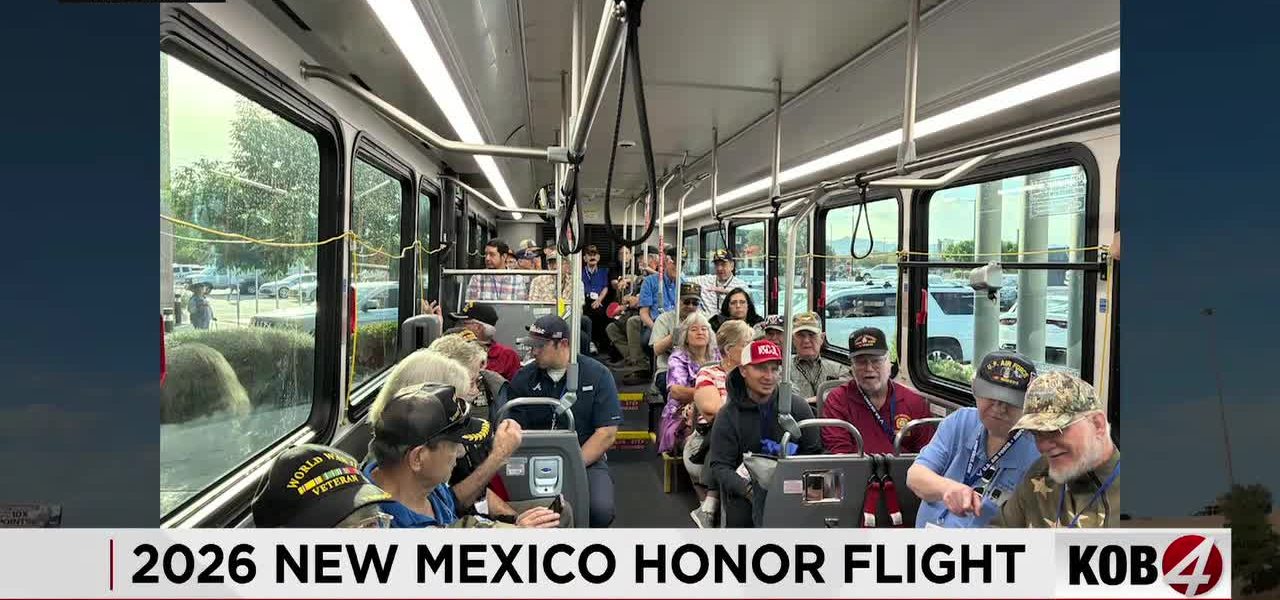
POLICY WIRE — Albuquerque, United States — For a few brief, jarring moments, the relentless surge of Interstate 25 in Albuquerque ground to an unexpected halt. Not for an accident, not for roadworks—but for a line of charter buses ferrying some of America’s dwindling stock of living history. This wasn’t just a gesture; it was a ceremonial lockdown of a primary arterial, a visceral illustration of public deference paid to 32 veterans, many of whom saw humanity’s darkest hours from World War II to Vietnam.
It’s a peculiar thing, this ritual of the Honor Flight. A free trip to Washington, D.C., complete with hotel and meals, for folks who probably haven’t asked for much since they swapped uniforms for civvies decades ago. These trips, run by the National Honor Flight Network since 2013, aim to provide closure, a tangible ‘thank you’ that often feels too little, too late in a world perpetually scrambling forward. But there it was, an entire freeway surrendered to a solemn procession, a stark tableau against the usual rush-hour snarl. And, really, it forces you to think about what we truly value.
The city’s buses, ABQ RIDE, marshaled the contingent to the Sunport, where a flight awaited their journey to the nation’s capital. Police sirens cut through the morning air, not in pursuit, but in escort. For many, this visible, community-wide acknowledgment of their service is the first of its kind, an unusual outpouring in an era that frequently prefers its heroes framed, distant, and uncomplicated. Mayor Tim Keller didn’t mince words. “It’s not just about a trip; it’s a profound statement,” Keller said, his voice carrying the practiced resonance of a politician attuned to public sentiment. “It’s a collective vow that their service won’t be forgotten. This city owes them everything, — and we’re damn proud to show it.”
That debt, of course, isn’t always easily repaid, particularly when measured in the currency of everyday support versus grand gestures. These men and women represent an arc of American foreign policy and engagement, conflicts whose legacies continue to reverberate, often in unexpected places. Because while we celebrate their service, we also grapple with the complex geometries of conflict they once navigated—echoes of which can still be found in the ongoing turbulence of the Middle East and the complex security landscapes of South Asia. It’s not lost on many that these individuals represent generations that engaged in struggles which dramatically reshaped global power balances, forever altering the destiny of nations far from American shores. The very concept of collective memory around sacrifice holds different meanings, different ceremonies, in places like Pakistan, for instance, where geopolitical struggles often fuse with internal complexities in ways that can be both heartbreaking and intractable. We have a particular memory here, they’ve theirs—each born of a shared human cost.
Mr. Thomas ‘Tom’ Henderson, a Korean War veteran on this flight, wearing a crisp service cap, looked out the bus window at the paused traffic. His gaze, distant but sharp, suggested he’d seen a lot more than traffic jams in his time. “When I came home, folks just wanted to forget,” Henderson murmured, a dry, almost bitter laugh escaping him. “Fifty years later, suddenly, everybody remembers? It’s… something. Better late than never, I guess, for the young ones coming back today. They deserve more than just a closed freeway.” His observation, devoid of sentimental fluff, cuts to the core of belated recognition.
📄 POLICY WIRE WHITEPAPER PUBLISHED: PAKISTAN'S NATIONAL SECURITY POLICY PRIORITIES
👉 READ BY CLICKING HEREThe dwindling ranks of these veterans only heightens the poignant urgency of these events. Approximately 119,550 American World War II veterans were alive in 2023, according to statistics from the Department of Veterans Affairs, a stark drop from the millions who served. Each passing year makes these gestures rarer, more significant, a frantic attempt to gather threads of history before they unravel completely.
But the pageantry, the official imprimatur, offers a glimpse into a national psyche trying to reconcile past and present. Is this genuine tribute, or a performative act of penance for decades of often indifferent public policy regarding veterans’ care? One wonders, doesn’t one? For all the sentiment surrounding these trips, the brutal calculus of modern geopolitics still requires nations to deploy their citizens into danger. It’s a truth not easily ignored, especially when observing nations wrestling with their own legacies of conflict, a reality highlighted by pieces like “Asia’s Grim Study: Peace Yields Lessons in War’s Relentless Drumbeat.”
What This Means
The Albuquerque Honor Flight, while deeply moving for participants, isn’t merely a charity outing. It functions as a public relations event, carefully orchestrated to project civic patriotism and to smooth over the rough edges of collective memory regarding conflict. Politically, moments like these are low-cost, high-impact photo opportunities for local officials, demonstrating commitment to a broadly popular demographic—veterans—without necessitating complex legislative battles or budget overhauls. Economically, while the direct cost of an individual trip is negligible, the broader societal implications of veterans’ care, from healthcare to housing, dwarf these gestures. The stark reality is that for every grand send-off, thousands of veterans quietly navigate systemic challenges. The contrast between this dramatic local recognition and the often-sparse federal resources—or at least the perception of them—speaks volumes. It suggests a comfort in celebrating abstract ‘service’ over the uncomfortable reality of its aftermath, a common challenge to nations burdened by the historical costs of defending, and asserting, their interests.