


Asphalt’s Retreat: The Quiet Uprising of Cities Built for Human Rhythms
POLICY WIRE — Washington D.C. — The ceaseless hum of the internal combustion engine – a supposed marker of progress – now often echoes like a hollow lament for urban spontaneity. We built vast...

POLICY WIRE — Washington D.C. — The ceaseless hum of the internal combustion engine – a supposed marker of progress – now often echoes like a hollow lament for urban spontaneity. We built vast concrete ribbons, believing faster was better. And what’s happened? We’ve traded chance encounters for traffic jams, — and quiet strolls for carbon footprints. But a defiant breed of urbanity still clings to life, thriving in unexpected corners of the globe.
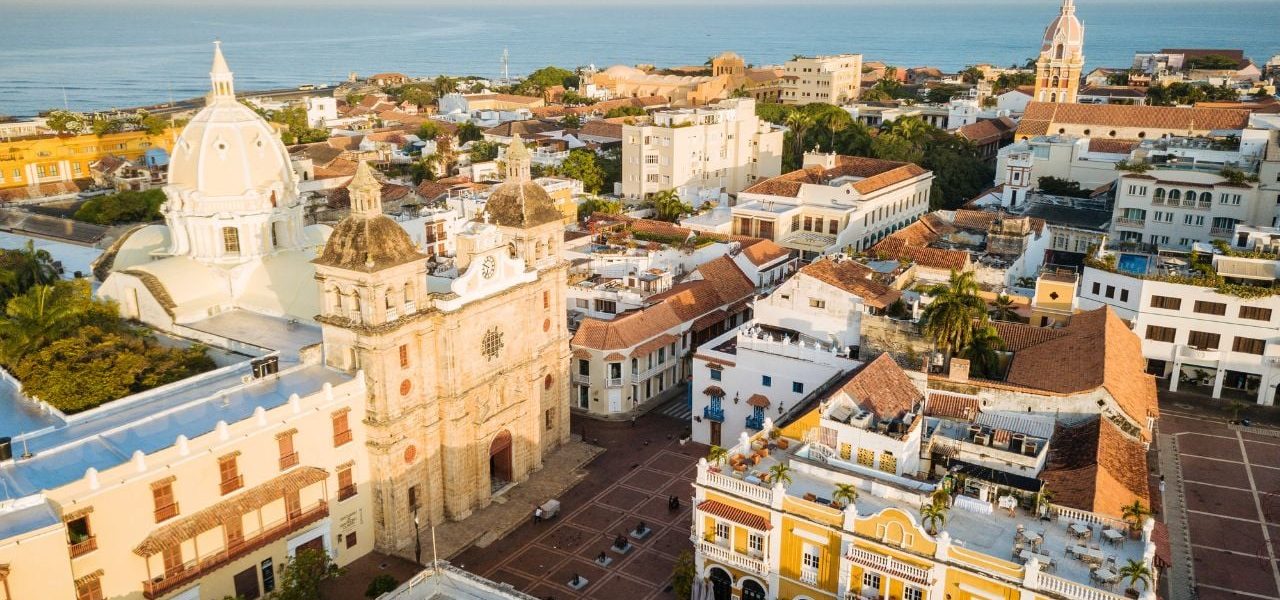
It’s not just about historical preservation; it’s a radical architectural posture. Imagine an urban landscape where the ferry isn’t a novelty, but the main commute. Where the marketplace isn’t a designated ‘zone,’ but the very circulatory system of daily existence. And where alleys, not boulevards, are the real arteries – buzzing with life, rumor, and the occasional spilled cup of chai. These aren’t some utopian fever dream; they’re real places, pushing back against the homogenized sprawl.
Take for instance, Venice, a place that practically shouts its disdain for motorized wheeled transport. You move by foot, or by boat. Period. No frantic search for parking, no grinding gridlock. Its intricate, watery pathways and ancient stone lanes force a rhythm upon its inhabitants and visitors alike – a rhythm dictated by tides, bell tolls, and the gentle pace of a human stride. But Venice isn’t just a tourist magnet. It’s a lesson. A real, tangible lesson in how a city can function, even thrive, without a single traffic light, reminding us that sometimes, less asphalt means more humanity.
It’s a point not lost on urban theorists. “We paved over community, you know? Our modern infrastructure, designed for speed, often just obliterated the very spaces where people used to connect,” gripes Dr. Lena Khan, a professor of Urban Design at Cairo University. “It’s a shame, frankly. Because those connections, that spontaneous friction of urban life – that’s what makes a city breathe.”
But the retreat from auto-centric planning isn’t just aesthetic; it’s an economic — and social battle. Studies, like one cited in the European Heart Journal (2023), indicate residents of highly walkable, public-transport-rich cities often show a 15% lower incidence of cardiovascular disease compared to their car-dependent counterparts. So, beyond the charm, there’s a demonstrable public health dividend. These cities force us to engage with our immediate surroundings, fostering localized commerce and creating resilient micro-economies where small vendors aren’t choked out by colossal superstores. They’re more than just postcard images; they’re incubators for micro-entrepreneurship.
Consider the labyrinthine Medina of Fez, Morocco – a sprawling, UNESCO-protected human beehive where the widest path might accommodate two donkeys abreast, and navigation demands a kind of ancient wisdom or, at minimum, a good GPS. It’s a place where tradition isn’t quaint, it’s simply how things operate. Goods are hand-carried, services rendered face-to-face, — and the rhythm is distinctly human. It’s gritty, yes, sometimes chaotic. But it’s undeniably alive.
📄 POLICY WIRE WHITEPAPER PUBLISHED: PAKISTAN'S NATIONAL SECURITY POLICY PRIORITIES
👉 READ BY CLICKING HERE“Walk our medina, get lost a little. You won’t find that kind of real, messy, beautiful life behind a windscreen,” says Fatimah Al-Amrani, Director of Cultural Heritage for the City of Fez, with a wry smile. “That’s our appeal, — and it’s something modern cities crave, but often don’t have anymore.” She’s got a point. Because what’s often missing in the sprawling, highway-laced mega-cities is that simple, irreducible human scale.
And it’s not solely historical centers resisting the pull of the automobile. Cities like Helsinki and even portions of Copenhagen are aggressively prioritizing pedestrian and bicycle traffic, investing heavily in infrastructure that effectively, but politely, tells the car to find another route. This deliberate re-centering of urban life around people, rather than machines, creates spaces ripe for serendipity and genuine community. That’s the kind of resilient urban model we desperately need.
What This Means
The quiet persistence, even resurgence, of human-scaled cities signals a mounting challenge to conventional urban planning paradigms. Politically, it places increased pressure on municipal governments to divest from costly, car-centric infrastructure projects – sprawling highways, colossal parking garages – and instead redirect funds towards public transportation, pedestrian zones, and cycle networks. This isn’t just about traffic flow; it’s about social equity. Less car reliance often means better accessibility for lower-income populations, reducing household transportation costs and opening up economic opportunities. Economically, these human-centric zones tend to foster vibrant local economies. They encourage small businesses, increase foot traffic for retail, and build a unique sense of place that drives both tourism and local engagement. It’s an economy built on interaction, not isolation, ultimately boosting property values and making neighborhoods more desirable for long-term residents. It’s a return to something ancient, sure, but the implications are anything but old-fashioned for the future of urban development, including the burgeoning metropolises of Pakistan and other rapidly developing nations.