

Ash and Iron: Another Ukrainian Day Begins Under a Rain of Russian Steel
POLICY WIRE — Kyiv, Ukraine — The morning fog hadn’t even burned off when the sky split again. Another flash, another boom. Another city, another tally of the dead. It’s a relentless rhythm, a...

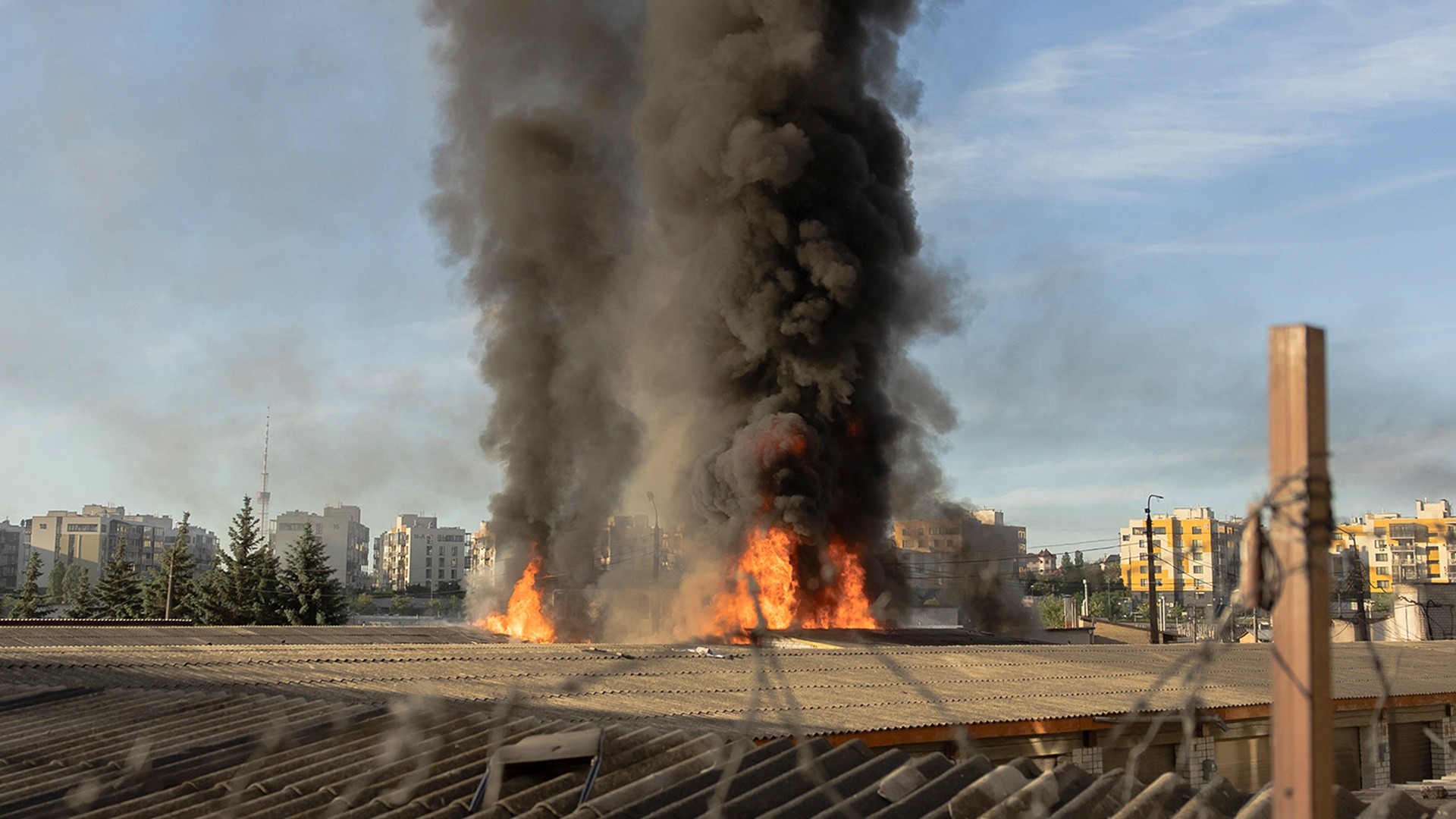
POLICY WIRE — Kyiv, Ukraine — The morning fog hadn’t even burned off when the sky split again. Another flash, another boom. Another city, another tally of the dead. It’s a relentless rhythm, a grim daily drumbeat echoing across Ukraine’s eastern plains where routine has been rewritten by artillery and air raid sirens. What happened yesterday in Kostiantynivka wasn’t an anomaly; it was Tuesday.
At least 16 people caught in the grind of this conflict simply ceased to be. The missile, or whatever precisely Russia hurled this time, didn’t discriminate. Homes, shops, lives – all were in its path. It wasn’t the first time; it won’t be the last. But it never gets less gruesome, less absolute. We hear about buildings being ‘leveled.’ That’s just a clean way of saying shattered concrete, twisted rebar, and where people’s lives used to be, now just dust and silence. Rescue teams, because there are always rescue teams, sift through the rubble, picking through the wreckage. They look for survivors, for bodies, for any remnant of the ordinary lives obliterated just moments before. [QUOTE_PLACEHOLDER]
And let’s be straight, the news cycle might chew this up and spit it out by sundown, but for those families, those communities, the trauma doesn’t vanish with the next headline. This relentless war, waged day after agonizing day, isn’t just about territory or geopolitical chess moves. It’s about a grocery store gone, a school flattened, a grandmother never coming home. It’s raw. It’s ugly. And it just keeps going.
The scale of human suffering from this invasion continues its grim ascent. The Office of the UN High Commissioner for Human Rights (OHCHR) has recorded nearly 11,000 civilian deaths and more than 20,000 injuries since the full-scale invasion began in February 2022. But everyone with a clipboard knows those are only the confirmed figures; the real toll is always higher, always messier. It’s hard to get a clear count when rockets are still landing.
But the consequences don’t stop at Ukraine’s borders, do they? Far from it. Because war in one corner of the world invariably means tremors in others. Global food prices, energy markets, supply chains – they all feel the squeeze. A barrel of oil going up or down feels abstract until it’s costing you double to fill up your car or put food on the table. And nations already grappling with internal fragilities feel the heat acutely. Pakistan, for one, perpetually wrestling with its fiscal demons, sees inflation driven higher by these very global disruptions. The government’s annual budget proposals are routinely met with public skepticism — and IMF scrutiny. It’s a country caught in a bind, where geopolitical tensions — whether distant conflicts or immediate border skirmishes — always seem to echo in the local market. What happens in Eastern Europe directly influences the price of bread in Karachi.
It’s all part of a larger global uncertainty, a simmering sense of unease. From Nairobi to Jakarta, ordinary people are feeling the pinch, grappling with the domino effect of conflicts they didn’t start. And Western pronouncements of unwavering support for Ukraine often come tethered to the harsh economic realities hitting home—a calculus policymakers grapple with, sometimes less than elegantly.
What This Means
This incident, like so many before it, is less a standalone tragedy and more a reinforcing brick in the crumbling wall of global stability. Politically, Russia demonstrates a stark refusal to temper its tactics, opting instead for brutal attrition that deliberately targets civilian infrastructure, aiming to break Ukrainian resolve. This approach consolidates the existing lines in the sand for international alliances, reinforcing the West’s narrative of Russian aggression, but also forcing its allies to continually assess their commitments against their own economic and political bandwidth. Internally, Ukraine continues its agonizing struggle for survival, bolstered by external aid but paying an unspeakably high human cost.
Economically, every destroyed building, every life lost, translates into more rebuilding, more social services strain, and more dependence on foreign capital for Kyiv. But for economies further afield, the ongoing conflict means sustained pressure. Food and fertilizer prices, inextricably linked to agricultural output from the Black Sea region, will keep hovering at uncomfortable levels. This hits hardest in places like Pakistan, where precarious public finances and high import reliance leave populations vulnerable to inflationary spikes. You see this reflected in debates over national budgets and external debt — it’s not just local politics; it’s a ripple from faraway battlefields. For Islamabad, navigating its fiscal straits while a war rages continents away isn’t easy; it’s why every budget season often feels like Pakistan’s Fiscal Flimflam. It’s a harsh feedback loop: global instability fuels local economic pain, which then, predictably, exacerbates domestic political tension.
For the Muslim world more broadly, these distant conflicts often underscore a perceived selective outrage from international bodies. While civilian casualties in Ukraine receive substantial media coverage, similar (and often larger) tolls in other regions, say, Gaza or Yemen, sometimes struggle to capture sustained global attention. This creates a lingering sense of hypocrisy, subtly eroding trust in international norms — and institutions. The immediate impact is tragedy, but the long-term reverberations are cynicism and a fracturing global order, one explosion at a time.