



Lacrosse Hegemony Holds: Underdog Springboro Confronts Ohio’s Established Order
POLICY WIRE — MASON, Ohio — They were playing against an institution, not just another team. The Springboro girls lacrosse squad, fresh off its first regional championship ever, didn’t just...

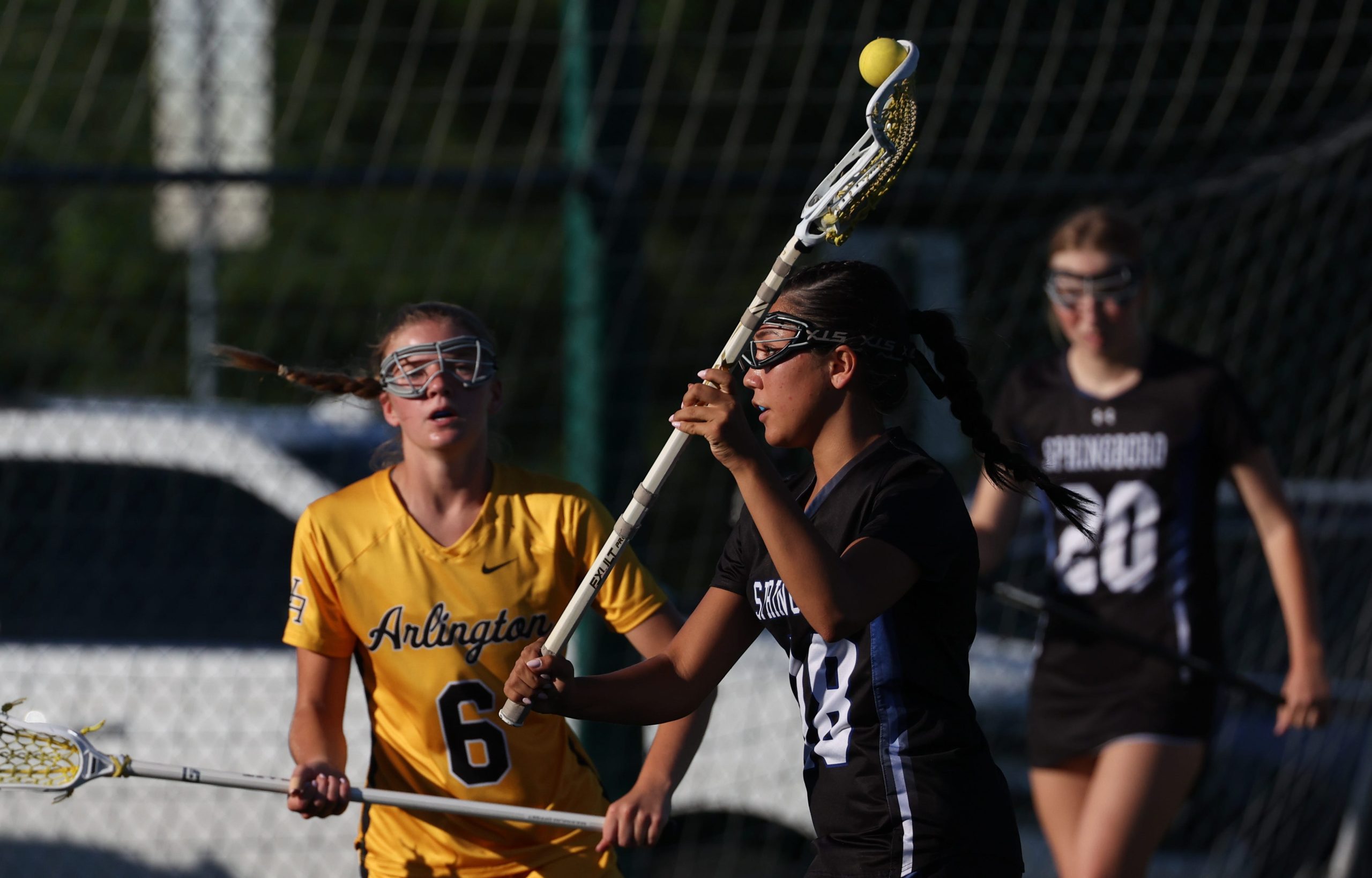
POLICY WIRE — MASON, Ohio — They were playing against an institution, not just another team. The Springboro girls lacrosse squad, fresh off its first regional championship ever, didn’t just walk onto the field for the Ohio state semifinals; they stepped into a tradition of dominance that has few rivals in any American sport, much less scholastic competition. And while the final score, an 18-5 shellacking by Upper Arlington, tells a grim tale for the upstarts, it scarcely captures the Sisyphean task the Panthers faced that Tuesday.
It was a confrontation with an entrenched, almost unassailable power—the kind of struggle familiar to any burgeoning movement or nascent economy attempting to break through against established global giants. You’ve got to wonder what goes through a young athlete’s mind when staring down such a force. But they showed up, didn’t they? And that’s something. For some, mere presence is a victory of sorts, a marker laid down for future challenges.
Upper Arlington isn’t merely good; they’re a machine. The Golden Bears (with an officially recorded season stat of 22-1, practically pristine) have made a habit of extinguishing postseason dreams for Greater Cincinnati programs. They did it in 2022. They did it in 2023. And yes, in 2025 too. They even swatted away Kings in 2024. That’s a pattern, not a coincidence. This consistent, overwhelming performance isn’t accidental; it’s forged in deep organizational strength, community investment, and, frankly, a winner’s culture. It’s an example of how sustained dominance—whether in sports or geopolitics—becomes a self-fulfilling prophecy, attracting talent and reinforcing a cycle of success.
Jamie Ling, Springboro’s head coach, offered the customary words of consolation, though tinged with an acknowledgement of reality. “They should be proud of the season,” Ling said, quite correctly. Then came the pragmatic assessment: “We knew that they’re (Upper Arlington) what everyone is compared to and our first time here, there might’ve been some jitters. They’re a good team and there’s a reason they’re the best team in the Midwest.” It wasn’t just a physical contest; it was psychological warfare waged long before the whistle blew. How do you prepare for the weight of that kind of reputation? For a team coming up, it’s an immense hurdle, perhaps even more significant than the opponents’ skills themselves.
Springboro did, fleetingly, hint at disruption. Brogan Miracle put one in. Then Mady Burns scored off a sharp feed from Grace Dresher. For a moment, the lead was cut to 3-2. You saw the flicker of hope—the momentary belief that perhaps this day would be different. But the flicker died. Upper Arlington’s offense, like a carefully calibrated mechanism, engaged. Four straight goals followed, including a hat-trick from senior midfielder Evie Ruma, who’s headed for Clemson. They clamped down, holding Springboro scoreless for a brutal 11 minutes of the first half, spurred by junior goalie Tori Maurer’s stalwart performance. According to Megan Sengelmann, Upper Arlington’s head coach, Maurer “She’s looked at me like, ‘this is everything to me.’ She played like it tonight.”
A 6-0 run, capped by Ella Smith carving through Springboro’s defense for her second goal just before halftime, turned a contest into an exhibition. Ruma ended up with five goals. Claire Aimes — and Rylan Clark netted four each. For Springboro, senior Ashley Filburn, who had blasted five goals in the regional championship, managed her 76th goal of the season in the third period—a personal triumph in a team defeat. But for the rest? The bell had tolled, — and the game had long been out of reach.
The seniors for Springboro—Ari Lietzow, Maeley Rohe, Kinsley Brown, Paige Gutmann, Mady Burns, Ashley Filburn, and Lauren Kolb—leave a program vastly improved. A combined 61-24 record over four years. Three conference titles. Just one conference loss. This wasn’t a fluke appearance. This was the result of dedicated toil, of building something meaningful from the ground up. [QUOTE_PLACEHOLDER] Ling said, acknowledging their pain. But that’s how it’s when you’re pushing the boundaries of what your program has ever achieved. There’s an inevitable point of resistance, sometimes insurmountable.
But the story doesn’t end there for the Golden Bears. Upper Arlington now marches to its fifth consecutive Division I state championship game, an almost unheard-of level of sustained excellence. Their foe? None other than Powell Olentangy Liberty, a team they’ve battled four times running for the title. The Golden Bears won in 2023. Liberty took it in 2024 and 2025. It’s a recurring saga, a dynastic rivalry for the ages—a clash of titans. As Sengelmann summed it up, “It’s always great to be at the top of the mountain, but we always say to look around and enjoy it. You just have to lean into this season because we’re one of the two best teams in the state. Why not have fun and play our best game?” It’s a mentality born of habitual victory.
What This Means
This microcosm of high school athletics reflects a broader narrative evident in many developing nations, including those across South Asia or the Muslim world. An emerging force, Springboro, displays ambition and growth, making significant strides by achieving its first regional championship. Their rise parallels a smaller nation’s aspiration to develop a specific industry or sport, to finally gain international recognition. They’ve put in the work; they’ve assembled a solid core. But. The path to true dominance isn’t merely about local success; it means confronting entrenched powers, the Upper Arlingtons of the world—the economic hegemonies, the geopolitical superpowers, the established cultural giants.
For regions like Pakistan or Bangladesh, aiming to compete in, say, Olympic sports where they lack centuries of infrastructure or global investment, the Springboro story is acutely familiar. They’ve homegrown talent, fervent enthusiasm, — and an eagerness to prove their mettle. But these developing programs often run into formidable opponents—not just the raw talent of established players, but the entire ecosystem: funding, coaching depth, early-age development programs, even the sheer weight of expectation built over generations. Progress can feel painfully slow. While Springboro’s loss is merely a sports defeat, it underscores the systemic advantages enjoyed by established players, an enduring dynamic whether you’re talking about a high school lacrosse pitch or the international stage.
