

The Glitch in the Algorithm: How a Traffic Stop Almost Decapitated a Football Career
POLICY WIRE — Paramus, New Jersey — In the blink of a social media post, a promising professional sports career nearly went sideways last Tuesday. Giants wide receiver Malik Nabers, an athlete whose...

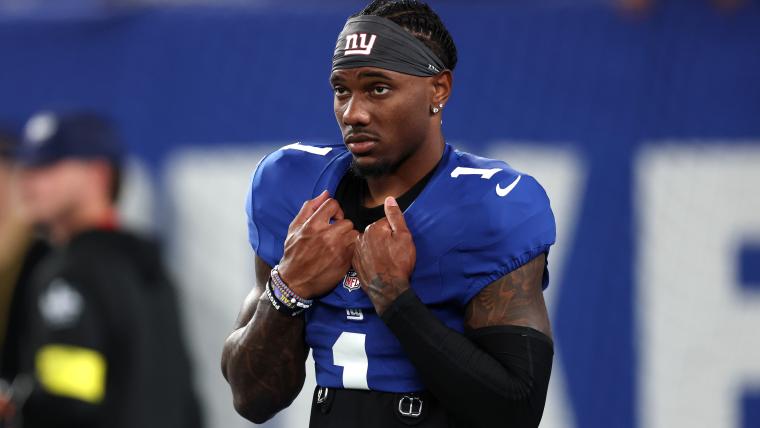
POLICY WIRE — Paramus, New Jersey — In the blink of a social media post, a promising professional sports career nearly went sideways last Tuesday. Giants wide receiver Malik Nabers, an athlete whose every move now carries the heft of million-dollar contracts and franchise hopes, found himself momentarily tangled in a bureaucratic knot most of us dread: a roadside interaction with law enforcement. It wasn’t an arrest, mind you, or even a stern talking-to for an actual infraction. Instead, it was an awkward dance with perception—a case of mistaken identity so swiftly amplified, it’s a wonder he wasn’t immediately trending worldwide for all the wrong reasons. The incident laid bare, once again, the razor’s edge between public figure and public property in our hyper-connected, judgment-first digital landscape.
Reports trickled out, then flooded in: Nabers, pulled over in Paramus, New Jersey. The initial visual, a grainy phone video showing him chatting with police officers, immediately ignited a wildfire of speculation online. Football forums buzzed. Sports reporters raced to confirm. Had the star wideout—a beacon of Big Blue’s future—stumbled? The team’s recent weeks haven’t exactly been tranquil, what with other athlete antics and roster maneuvers keeping the rumor mills churning. This, for a moment, seemed like another log on that bonfire, a fresh splash of drama Big Blue surely didn’t need. But it wasn’t. Not even close.
It turned out Nabers, a relatively innocent bystander, had simply had the unfortunate luck of driving a car that looked a lot like one involved in a road rage incident. Someone, an alleged hothead brandishing a gun no less, was reported driving a similar vehicle. So, when Paramus police saw Nabers’ car—perhaps a particular Tesla model, sleek and distinct but hardly unique—they did what they do: they stopped him. Officers reportedly searched the vehicle — and spoke with Nabers. Then, realizing their mistake, they sent him on his way, albeit a bit rattled. A brief interaction, a search, a wave-off. That’s it. But because a video got posted, because the internet lives for snap judgments, the ripple effect was instant and jarring.
Paramus Police Captain David Chen, addressing the minor furor (after the fact, of course), kept it strictly procedural. “Our officers responded to a serious report of a weapon being brandished during a road rage incident,” he stated in a measured tone. “We acted on the information available to us at the time. Once we determined Mr. Nabers was not the individual in question, he was free to leave. That’s standard protocol when ensuring public safety.” Chen’s words didn’t exactly go viral, did they? They never do. But the initial image? Oh, it got around.
But the real story here isn’t just about a star player’s brief inconvenience. It’s about how rapidly narratives take root, how a flash of misidentification can transform into a full-blown public spectacle. Dr. Anjali Sharma, a cultural commentator specializing in digital sociology, sees it as a microcosm of a much larger, more troubling global trend. “We live in an age of instant gratification, where judgment precedes verification, almost as a default setting,” she observed from her Berkeley office. “Whether it’s a sports figure in America or an international leader being unfairly characterized online—it’s the same underlying impulse. A single image, a short clip, can shape perception irrevocably before truth even gets a chance to lace up its boots. We see similar dynamics playing out, perhaps with graver consequences, when misinformed digital campaigns target specific regions or ethnicities, painting entire populations—say, those in parts of South Asia or the Muslim world—with overly broad strokes.” And that’s a dangerous game for anyone to play.
This incident—trivial in its actual outcome for Nabers—is an example of how the media ecosystem and its consumers quickly conjure stories from fragments, assigning guilt before any facts are established. A 2023 Pew Research Center study reported that nearly two-thirds of Americans (64%) believe fabricated news and information causes a great deal of confusion about the basic facts of current issues. So, it isn’t just about athletic stardom; it’s about the pervasive cultural malaise of algorithmic amplification meeting human impatience. When something feels scandalous, we’re all too ready to click, share, and condemn, making it far more challenging to untangle the real story from the online fiction.
What This Means
The brush with police for Malik Nabers might have been brief, but the incident offers some potent, albeit sobering, takeaways. Politically, it’s a stark reminder of the delicate balance between community safety and individual rights—especially for those who already feel disproportionately scrutinized by law enforcement. A young black man in a luxury car, even one of Nabers’ standing, can quickly become a target of suspicion, rightly or wrongly. It doesn’t matter who you are; bias can enter into any equation, anytime.
Economically, for a star like Nabers, even the sniff of scandal can hit the bottom line. Endorsement deals, public perception, brand value—they all hang by a thread in the social media era. PR teams went into overdrive, surely. Imagine the scramble. From a policy standpoint, this rapid-fire judgment culture echoes larger geopolitical concerns. When international relations are increasingly shaped by narratives pushed through social media, often without critical vetting, misunderstandings can escalate quickly. Nations in the Muslim world, for instance, frequently grapple with misrepresentations that affect trade, tourism, and diplomatic engagement, creating economic friction born from misconstrued online content. The policy implications here stretch far beyond Paramus. It’s about public trust in institutions—the police, the media, and even the sports leagues themselves—in an environment where digital whispers carry the weight of gospel until proven otherwise.
So, Nabers was never arrested. He was simply at the wrong place at the right time for a viral moment, an avatar for an entire society grappling with misinformation. It’s a good thing, then, that fact eventually caught up to fiction. Most times, it doesn’t get that courtesy.