

South Asia on Edge: India-Pakistan Nuclear Standoff Rekindled by Kashmir Crisis
The recent violence in Kashmir, especially the sad event in Pahalgam, has once again brought India and Pakistan dangerously close to a major conflict. Both countries are nuclear powers, each holding...

The recent violence in Kashmir, especially the sad event in Pahalgam, has once again brought India and Pakistan dangerously close to a major conflict. Both countries are nuclear powers, each holding around 170 nuclear warheads. This has turned what could have been a regional problem into a global threat. The attack in Pahalgam, which killed 26 civilians on April 22, 2025, has sparked new tensions. India blamed Pakistan immediately, without providing any evidence. Pakistan strongly denied the accusations and called for a fair and independent investigation. As a result, military activities have increased, and the situation has become more serious.
To understand why this is happening, it is important to go back to 1947, when British India was divided into two independent countries: India and Pakistan. The region of Jammu and Kashmir became a disputed area because its population was mostly Muslim, but its ruler was Hindu. India sent troops into the area, which led to the first war between the two countries in 1947–48. Since then, they have fought more wars in 1965, 1971, and the 1999 Kargil conflict. These wars, especially the one in 1971, which led to the creation of Bangladesh, left deep wounds. The main issue of Kashmir was never resolved, and this has continued to cause trouble for both countries and for the people of the region.
The Pahalgam incident has made the situation worse. Armed men attacked a group of tourists in Indian-controlled Kashmir, killing 26 people. A group called The Resistance Front took responsibility. Indian media and politicians quickly blamed Pakistan, as they often do, to cover their own internal problems. Pakistan rejected these claims and reminded the world that it has itself suffered greatly from terrorism. Prime Minister Shehbaz Sharif asked for a proper investigation and said blaming Pakistan without proof is unfair and dangerous.
India’s reaction was aggressive. It expelled Pakistani diplomats, suspended the Indus Waters Treaty, and banned Pakistani flights from its airspace. These actions are serious and were meant to isolate Pakistan. In response, Pakistan also closed its airspace to Indian flights and suspended the Simla Agreement, which was meant to keep peace after the 1971 war. Troops have been sent to the Line of Control by both sides. Skirmishes and gunfire are already being reported in some areas. What started as diplomatic anger is now moving toward real conflict.
This time, the danger is much greater because both countries have nuclear weapons. Pakistan became a nuclear power in 1998 after successful tests in Chagai, Balochistan. It was a response to India’s nuclear tests just days earlier in Pokhran. While India had started its nuclear program earlier with help from Western countries, including the United States and Canada, Pakistan developed its program under tough conditions and international pressure. Pakistan’s nuclear program is meant purely for self-defense. Unlike India, Pakistan does not believe in using its nuclear power to threaten others or to show off strength. India says it has a “No First Use” policy, but recent Indian military actions and statements from its leaders show otherwise. On the other hand, Pakistan’s policy is clear: it will only use nuclear weapons if its survival is at stake. This difference in thinking makes the situation even more dangerous, especially if there is a misunderstanding or wrong move from either side.
The world is worried. The United States, led by Secretary of State Marco Rubio, has spoken to both countries and asked them to calm down. China, a close friend of Pakistan, has also asked both sides to avoid war. The United Nations has made similar appeals. But these global efforts are often too slow or too weak. In the past, such organizations have failed to stop violence in Kashmir or hold India accountable for human rights abuses. This is why many people do not trust these international institutions anymore.
Pakistan’s reaction during this crisis has been careful and mature. It denied any connection to the Pahalgam attack and repeated its promise to fight terrorism. However, it also warned India that any military aggression will be answered strongly. The Pakistan Army is on high alert. More than 1,000 religious schools in Azad Jammu and Kashmir were closed, officially due to a heatwave, but also likely to avoid giving India any excuse to carry out attacks. Pakistan remembers what happened in 2019 when Indian jets crossed the border and claimed to hit a terrorist camp in Balakot. Even Indian journalists later admitted there was no proof of any damage. That incident showed how quickly India is willing to take military action without facts.
📄 POLICY WIRE WHITEPAPER PUBLISHED: PAKISTAN'S NATIONAL SECURITY POLICY PRIORITIES
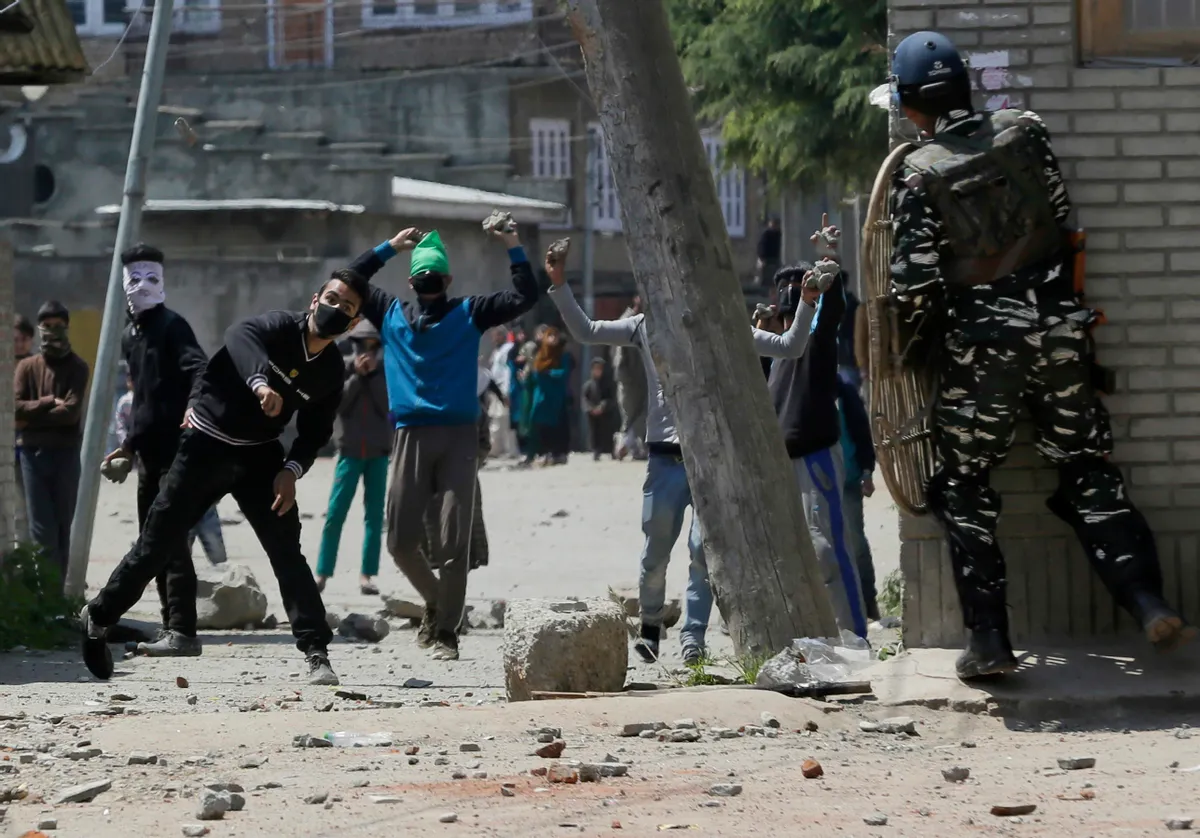
👉 READ BY CLICKING HEREThe people of Kashmir are the ones who suffer the most. Ever since India removed Article 370 from its constitution in 2019, which gave Kashmir some autonomy, the situation has become worse. The Indian army has increased its control in the region. Civilians live under fear, curfews, and constant surveillance. There are reports of arrests, torture, and even killings. But the Indian media, controlled by the Modi government, hides these facts and only shows a one-sided story. In this latest crisis, the voices of Kashmiris are again missing. Instead of listening to them, both India and its media are trying to use the incident for political gains, especially with elections coming up.
There is a real chance that this could turn into a limited war. But in a nuclear region, there is no such thing as a small war. Even one mistake could lead to disaster. A nuclear exchange would not only kill millions in South Asia but also affect the whole world through radiation, climate change, and a breakdown in trade and economies. Refugees would flee in large numbers, and peace would disappear from the region for years.
In conclusion, the attack in Pahalgam has opened a new and dangerous chapter in the already tense India-Pakistan relationship. India’s fast and angry response shows its desire to act tough before elections, not to seek peace. Pakistan, meanwhile, has acted responsibly, calling for truth, calm, and justice. The international community must not stay silent. It must take strong steps to stop war, support dialogue, and solve the Kashmir issue in a fair and peaceful way. The people of South Asia, especially in Kashmir, deserve to live without fear, without war, and with dignity and freedom.
Author