


Vision 2035: Pakistan Charts $1 Trillion Economic Future with Global Partnerships and Green Growth
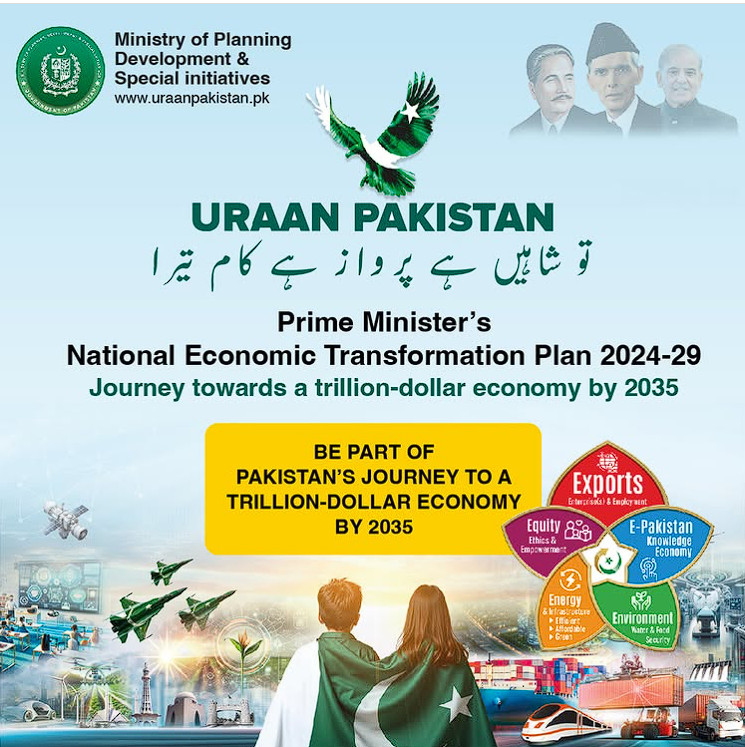
In a major step toward reshaping its economic destiny, Pakistan has introduced an ambitious plan to grow its economy to one trillion dollars by the year 2035. This plan, known as “Uraan Pakistan”,...

In a major step toward reshaping its economic destiny, Pakistan has introduced an ambitious plan to grow its economy to one trillion dollars by the year 2035. This plan, known as “Uraan Pakistan”, was announced by Federal Minister for Planning, Development, and Special Initiatives Ahsan Iqbal during a key event in Dubai. More than just a financial goal, this plan reflects Pakistan’s desire to become a self-reliant, modern, and globally competitive country. It shows that Pakistan is ready to move forward, break past cycles of crisis, and create a brighter, more stable future for its people.
Uraan Pakistan is not a typical plan. It combines important goals like digital progress, environmental care, support from overseas Pakistanis, and long-term policymaking into one united national mission. It is built on three strong foundations: improving governance and laws, growing the economy through technology and innovation, and preparing the country to face future challenges such as climate change and global competition. In the past, Pakistan’s economy has often been hurt by short-term decisions and political instability. This plan provides a clear, long-term path that demands commitment from the government and the people.
The first focus of Vision 2035 is reform, especially in making government processes more efficient, business-friendly, and transparent. For years, Pakistan has struggled with problems like complicated paperwork, unclear rules, and little protection for investors. These problems scare away both local and foreign businesses. Fixing them will help attract investment, encourage entrepreneurship, and create new job opportunities. Special attention will also be given to helping small and medium-sized businesses grow, as they are key to a strong economy.
The second important focus is innovation. The plan highlights key industries like information technology, agriculture, and manufacturing as the engines that will drive future growth. With more than sixty percent of the population under the age of thirty, Pakistan has one of the youngest populations in the world. This young generation, if trained and empowered, can lead the country into a digital future. The government plans to train seventy-five thousand IT graduates every year, expand internet access across the country, and support the startup ecosystem. These steps will help Pakistan build a strong digital economy that can compete in the international market.
Pakistan’s IT sector is already growing quickly, with tech exports bringing in over two and a half billion dollars each year. If supported properly, this number can rise much higher. At the same time, the government is working to double Pakistan’s exports to sixty billion dollars by 2029. Although this is a big goal, it can be reached by reducing reliance on traditional exports like textiles and promoting high-value products and services. In agriculture, there is huge potential for improvement. With better water management, modern tools, and new techniques, Pakistan’s farming sector can increase its output and help reduce poverty in rural areas.
Climate change is another major concern. Pakistan is one of the country’s most at risk from environmental disasters like floods, droughts, and extreme heat. That is why a big part of Vision 2035 is focused on building a green economy. The government wants sixty percent of Pakistan’s energy to come from clean sources by 2030 and aims to make thirty percent of all vehicles electric. These goals are not just good for the environment; they also make economic sense. By using solar, wind, and hydropower, Pakistan can reduce its fuel import bill, cut pollution, and create new jobs in the green energy sector.
The Billion Tree Tsunami, a tree-planting campaign launched in previous years, is also part of the long-term environmental vision. Projects like this will improve air quality, reduce carbon emissions, and support Pakistan’s image as a country that takes climate change seriously. In the global economy, countries that follow environmental standards are more likely to receive international aid, investment, and trade benefits. Pakistan must take advantage of these opportunities by showing that it is serious about sustainability.
One of the most powerful tools Pakistan has is its overseas community. Overseas Pakistanis send home over thirty billion dollars in remittances every year. But their role can go far beyond that. Minister Ahsan Iqbal wants them to take part in the country’s economic future not just as supporters, but as leaders, investors, and innovators. To support this, the government plans to launch diaspora bonds, give tax breaks, and offer faster services for overseas Pakistanis who want to start businesses. These steps will make it easier for the global Pakistani community to connect with opportunities at home.
Of course, none of this will work without peace and political stability. In the past, good plans have failed in Pakistan because of government changes, protests, or conflict. For Vision 2035 to succeed, the country must have stable leadership and cooperation among all institutions. Regional peace is also critical. Ongoing tensions with India and internal security problems can stop economic progress. That is why the government is calling for calm, unity, and mature politics to create a peaceful environment for business and growth.
Public support is also essential. Vision 2035 cannot succeed if it is only seen as a government project. It must be embraced by the people. Schools, universities, media, religious leaders, and youth organizations must work together to spread awareness and educate citizens about their role in this transformation. Everyone has a part to play from using cleaner energy to supporting local businesses and learning digital skills.
Pakistan also needs to change how the world sees it. For too long, the country has been linked to poverty, conflict, and foreign aid. But Vision 2035 offers a new image, a country that is modern, self-reliant, and ready to lead. If Pakistan stays committed to this plan, it can lift millions out of poverty, attract global investment, and create a better future for the next generation.
This journey will not be easy. There will be challenges, both inside the country and from the global economy. But Pakistan has many strengths a large and young population, rich natural resources, a growing middle class, and a central location that connects it to major regions like South Asia, Central Asia, and the Middle East. With strong leadership, clear policies, and unity among its people, Pakistan can achieve what once seemed impossible. Vision 2035 is not just a dream. It is a clear, detailed plan, one that gives every Pakistani a reason to hope, work hard, and believe in the future.
Author