

Deep Ocean’s New Ghosts: Australia Unearths a Liquid Frontier’s Stark Truths
POLICY WIRE — Canberra, Australia — Humanity, for all its boisterous claims of conquest and technological marvel, has a startlingly meek grasp on the world beneath its waves. While geopolitical...

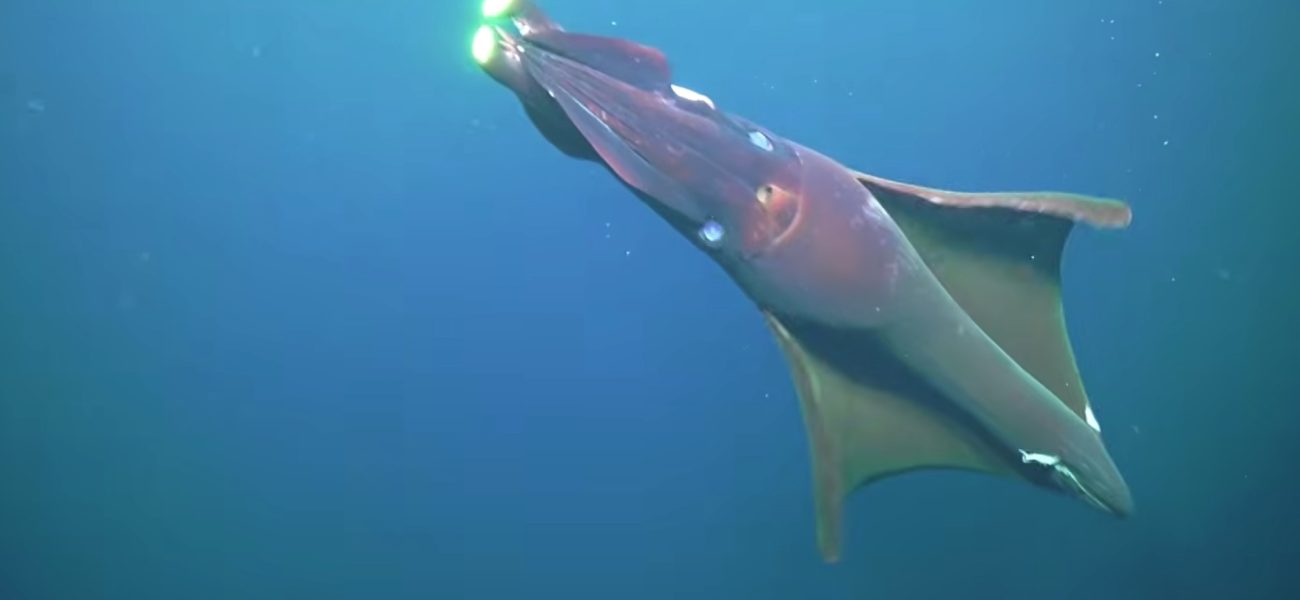
POLICY WIRE — Canberra, Australia — Humanity, for all its boisterous claims of conquest and technological marvel, has a startlingly meek grasp on the world beneath its waves. While geopolitical jostling and economic dramas dominate headlines, the real frontiers — the truly unknown expanses of this planet — lie hidden, cold, and dark, thousands of meters below the surface. And sometimes, those depths spit out a truth so startling, so humbling, it momentarily dwarfs our terrestrial squabbles. Like a mythical kraken. Or, in this case, a genuinely massive squid, just off Australia’s coast.
It wasn’t a sudden, Hollywood-esque emergence. No, this was the painstaking, decidedly unglamorous work of science, a deep-sea expedition probing the submerged canyons off Western Australia. The haul? Not just a gargantuan cephalopod, a creature straight out of maritime lore, but an astonishing 226 potentially new species, alien in form and function. It’s a find that, frankly, makes you wonder what else we’re missing down there, doesn’t it?
The Fathomless Fracture Zone, as researchers are now dubbing these underwater ravines, isn’t some backwater puddle. It’s an arena of incredible biodiversity, a stark counterpoint to the familiar coastal shallows. We’re talking bizarre bottom dwellers, bioluminescent oddities, and things that frankly look like they’ve escaped from an H.P. Lovecraft novella. But this isn’t just a naturalist’s daydream. There’s real import here, an economic — and geopolitical undercurrent churning beneath the scientific excitement.
“We’re not just charting depths; we’re charting Australia’s future, one defined by responsible stewardship of these incredible, ancient domains,” asserted Tanya Plibersek, Australia’s Minister for the Environment, her voice a careful blend of national pride and environmental resolve. She knows darn well that maritime boundaries aren’t just lines on a map; they’re assertions of sovereignty over resources, known and unknown.
Because let’s be brutally honest, very little of this planet’s deep ocean has truly given up its secrets. According to a 2023 report from the UN Environment Programme, barely 5% of the global deep-sea ecosystems have been comprehensively surveyed. That’s an astonishing gap in our collective knowledge, a blind spot that stretches from the Mariana Trench to the Challenger Deep, from pole to pole. So when scientists find hundreds of new species in one concentrated area, it isn’t just a discovery; it’s a profound recalculation of the stakes. Every new organism represents a data point, a clue to the ocean’s intricate chemistry and its capacity to absorb our anthropogenic insults.
But the revelations from Down Under extend far beyond Western Australia’s watery backyard. Imagine the largely unexplored reaches of the Arabian Sea, bordering nations like Pakistan, for instance. Coastal communities there rely heavily on marine resources—fisheries that, despite being commercially harvested for centuries, remain largely mysteries when it comes to deep-sea ecology. What secrets do their own submarine canyons hold? What uncharted biodiversity or, more practically, what unmapped mineral wealth?
And because the implications are global, the need for international cooperation is pretty obvious, right? This isn’t just about fish and plankton. It’s about understanding the very engine of Earth’s climate, the massive, silent circulatory system that governs everything from weather patterns to atmospheric oxygen. Ignoring it, well, that’d be just plain daft.
Professor Alan Parkinson, the chief scientist leading one segment of the expedition, didn’t mince words. “Every probe brings fresh wonder. You think you know the world, then the deep reminds you we’re barely scratching its surface. These discoveries don’t just add to catalogs; they force us to re-evaluate life’s boundaries, its sheer tenacity,” he remarked, his tone betraying a hint of almost childlike awe, tempered by years of rigorous scientific skepticism.
What This Means
The sudden census increase of unknown marine life off Australia is more than a headline-grabbing biological bulletin; it’s a quiet challenge to international policy makers and economists alike. Politically, it reasserts Australia’s sovereign rights over vast, largely unmonitored maritime territories, sharpening the focus on resource exploitation—or, conversely, conservation efforts—within its Exclusive Economic Zone (EEZ). Economically, the potential for discovering novel biochemical compounds from these unique deep-sea organisms for pharmaceuticals or industrial applications is a tantalizing prospect. It’s an investment opportunity, if you’re brave enough to go looking. But it also raises sticky questions about the burgeoning deep-sea mining industry, a contentious field eyeing precious metals on the seabed. If a fraction of what’s down there remains undiscovered, how can we possibly permit industrial extraction without risking irreversible damage?
for nations across South Asia and the broader Indian Ocean rim—from Indonesia to Somalia, from India to Pakistan—these findings aren’t just a distant curiosity. They underscore the shared imperative for regional marine science initiatives and cross-border environmental agreements. Their own maritime zones are teeming with unknowns, yet often lack the advanced scientific infrastructure to properly explore or manage them. Imagine the opportunities missed, the risks unseen, by not knowing what’s in your own backyard, especially when shifting geopolitical sands demand a broader strategic outlook. It’s a cold, hard dose of reality: what we don’t know can hurt us. And what we find, well, that could transform everything from fisheries management to global climate models. But first, you’ve got to find it. And that, frankly, costs a lot of cash, which raises questions about how governments prioritize basic science in a world often fixated on the next immediate crisis. After all, if Peruvian politics are labyrinthine, the ocean’s politics are infinitely more complex.