


Israel’s Groundhog Day: Parliament Nudges Nation Toward Unprecedented Fifth Election
POLICY WIRE — Jerusalem — The deja vu is palpable, almost oppressive, in Israel these days. Parliament—the Knesset—just tossed another log onto the bonfires of political instability, voting to begin...

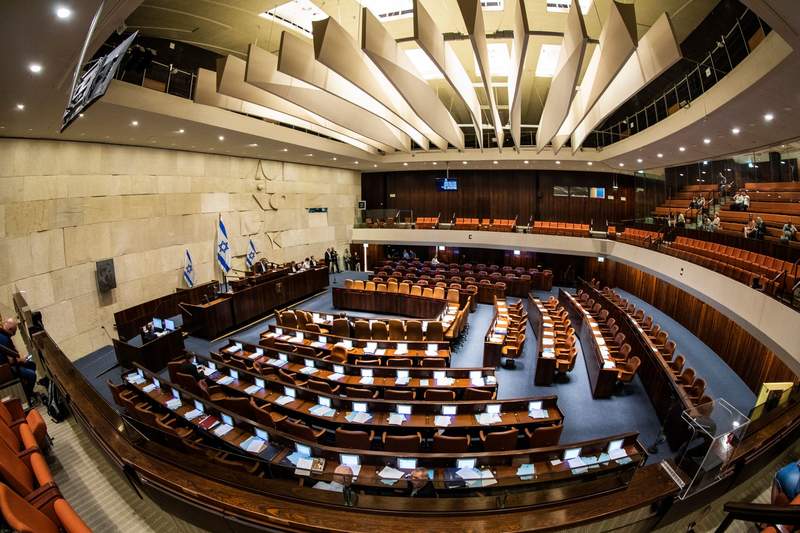
POLICY WIRE — Jerusalem — The deja vu is palpable, almost oppressive, in Israel these days. Parliament—the Knesset—just tossed another log onto the bonfires of political instability, voting to begin the process of dissolving itself. We’re watching a country stumble towards its fifth general election in a mere four years. No, you’re not misreading that. Five elections. Think about the expense. Think about the fatigue. It’s enough to make a seasoned observer wonder if the nation isn’t just addicted to political drama, or maybe, it’s a symptom of a deeper, systemic rot.
It wasn’t a sudden epiphany that brought lawmakers to this particular brink. Not at all. It’s been a slow-motion car crash, really, ever since the last patchwork government —a wildly diverse and ideologically clashing bunch—began to fray at the seams. That coalition, hailed by some as a miracle of compromise and reviled by others as an unholy alliance, never stood much of a chance in the long run. Too many disparate voices, not enough shared ground beyond ‘anyone but Netanyahu.’ And so, here we’re, gearing up for another trip to the polls.
The numbers don’t lie: each Israeli election reportedly costs the economy an estimated 2.5 billion shekels (roughly $680 million USD), according to a 2023 analysis by the Israeli Democracy Institute. That’s billions of taxpayer shekels funnelled into political campaigns and administrative overhead instead of schools, hospitals, or defense. It’s a staggering drain on public resources, especially for a nation constantly navigating complex security and economic challenges.
“We’re going to the people because they deserve a government that can actually govern,” Prime Minister Benjamin Netanyahu recently asserted, his voice firm against the usual din of parliamentary recess. “This current hodgepodge? It was never meant to last. We’ll secure a strong, stable mandate this time, believe me.” His critics, of course, would argue the constant turnover owes more to his own legal battles and polarizing presence than any inherent flaw in coalition politics.
Because let’s be honest, the nation’s citizens are, by — and large, not exactly thrilled. “Another election is just a costly admission of failure – their failure, not the nation’s,” remarked Opposition Leader Yair Lapid in a fiery parliamentary debate. “They’ve put personal agendas above national stability, and frankly, Israelis are tired of paying for their endless political games.” And who could blame them? This isn’t just about choosing leaders; it’s about electing a body that frequently seems incapable of doing its actual job.
This perpetual state of electoral paralysis has profound implications beyond the domestic circus. For countries across the broader Muslim world, including nations like Pakistan—which has historically maintained a non-recognition policy towards Israel—the internal chaos in Jerusalem often reinforces existing perceptions. An unstable Israeli government is, quite simply, a less predictable one. It tends to be inward-looking, often delaying responses to regional challenges or opportunities. This means policy towards the Palestinian territories, relations with Arab states, and the overall trajectory of regional security often hangs in the balance, shifting with every new electoral cycle.
📄 POLICY WIRE WHITEPAPER PUBLISHED: PAKISTAN'S NATIONAL SECURITY POLICY PRIORITIES
👉 READ BY CLICKING HEREFrom Islamabad to Tehran, observers watch a nation that presents a powerful, organized front militarily and technologically, yet internally often seems to be eating itself. It doesn’t inspire confidence in long-term diplomatic initiatives or sustained peace efforts. The focus inevitably shrinks from grand strategies to short-term political survival, complicating any moves that might involve difficult compromises or sustained engagement. This impacts the possibility for future normalisation efforts, or indeed, any movement on peace negotiations that are of critical importance to large swathes of the Muslim world.
What This Means
The passage of this dissolution bill is less an outcome — and more a further descent into a familiar cycle. Politically, it signals a deeper entrenchment of partisan divisions. Winning power often feels secondary to simply preventing a rival from holding it. This environment breeds governmental paralysis: policy initiatives languish, long-term planning becomes impossible, and public services can suffer as ministers are replaced, and priorities endlessly reshuffled. Economically, beyond the direct cost of elections, the uncertainty spooks investors. Who wants to commit to a market where the regulatory framework could change fundamentally every few months?
From a geopolitical perspective, the instability within Israel creates a vacuum or, at minimum, an unreliable partner in an already volatile Middle East. It sends ripples across the region. Regional actors, including Gulf states, Iran, — and Egypt, will be watching carefully. It influences the calculus of groups like Hamas and Hezbollah, who might see periods of Israeli domestic distraction as opportunities. For countries observing from afar, like Pakistan, this internal turmoil confirms that Israel is still deeply consumed by its own identity struggle, perhaps too preoccupied to seriously engage on broader regional peace efforts that many still consider the litmus test for any diplomatic breakthrough. It’s not just a localized Israeli problem; it’s a signal to the whole neighborhood, and beyond, that Israel’s house isn’t entirely in order.