

Silent Diplomacy? Trump’s Iran Gambit Lingers in Mideast Shadows
POLICY WIRE — Washington, D.C. — It’s a classic Washington paradox: bombastic rhetoric one day, quiet back-channel maneuvering the next. The chasm between declaration and deed often defines...

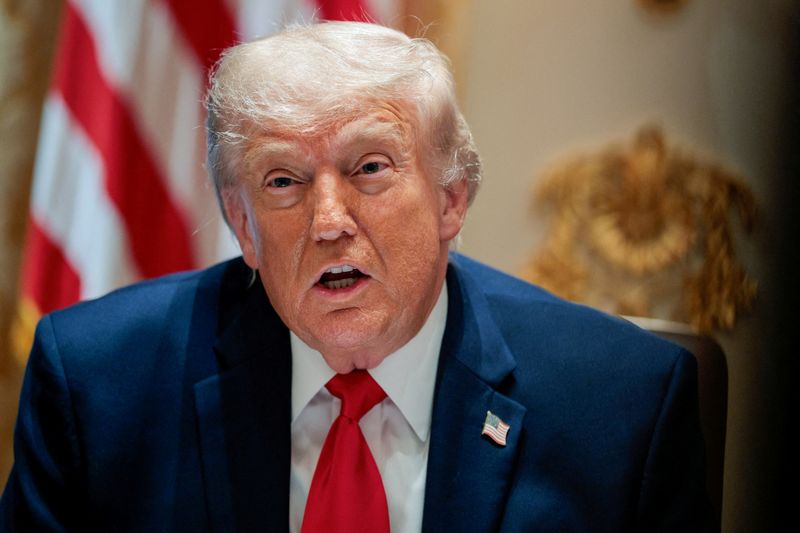
POLICY WIRE — Washington, D.C. — It’s a classic Washington paradox: bombastic rhetoric one day, quiet back-channel maneuvering the next. The chasm between declaration and deed often defines diplomatic dance, particularly when high-stakes geopolitics are involved. Nobody exemplifies this more sharply than the former U.S. President, who recently let slip a telling, if seemingly understated, comment: [QUOTE_PLACEHOLDER]. It wasn’t a banner headline or a presidential decree; it was just a few words tossed out, an almost casual acknowledgment that despite the bluster—and oh, there was plenty—the lines of communication with Tehran might not be as severed as many presume. Or as some might wish.
And that’s the rub, isn’t it? For years, the Iran strategy from Washington has felt like a high-wire act over a volcano, fueled by a unique mix of maximalist sanctions and thinly veiled threats. The narrative painted a picture of absolute isolation for the Islamic Republic, a pariah state backed into a corner. But politics—especially international politics—rarely plays out in monochrome. So, when the possibility of sustained dialogue surfaces, even as an offhand remark, it makes you wonder what’s truly happening behind the velvet ropes of official statements. It tells a more nuanced story than the one printed on the front page, doesn’t it?
Because, honestly, direct talks with a state labeled as the world’s foremost sponsor of terrorism—while simultaneously imposing crippling sanctions designed to starve its regime—that’s a tightrope walk. It’s an approach that tries to chew gum — and launch missiles at the same time, practically. The underlying truth is always a tangled mess, and these talks, if they truly are as substantial as implied, could recalibrate the whole Mideast chessboard.
This isn’t just about Washington — and Tehran squaring off, either. The ripple effects from any serious engagement—or disengagement—between the U.S. and Iran are felt thousands of miles away, in places like Pakistan. Pakistan, with its own complex, often fraught, relationship with Washington and its deeply religious population, watches developments in Iran like a hawk. It’s a predominantly Sunni Muslim nation bordering a Shia powerhouse; it’s got deep-seated economic interests—like the Iran-Pakistan (IP) gas pipeline, perpetually stalled but never quite dead—and an imperative to maintain regional stability. Escalation? That’s bad for Islamabad. Detente? That could open up new avenues for regional trade, but also new dilemmas in its alliance with Saudi Arabia, Iran’s arch-rival. It’s a delicate balance they’ve got to strike, always.
It’s no secret the pressure on Iran has been immense. The International Monetary Fund reported Iran’s GDP contracted by 6.8% in 2019 alone, largely due to U.S. sanctions targeting its oil exports. That kind of economic pain usually forces some kind of concession, or at least a sit-down. But for a regime that prizes ideological purity and defiance, even discussing terms is seen by hardliners as a capitulation. So, who’s actually talking? And more importantly, about what?
One theory gaining quiet traction in diplomatic circles is that the very visible friction might be a smokescreen. Think about it: loudly denounce, quietly negotiate. It’s a tactic designed to satisfy domestic hardliners on both sides while carving out a narrow path for de-escalation. Or maybe it’s just pure, unadulterated brinkmanship, with everyone waiting to see who blinks first. Whatever the reason, these whispers of ongoing communication present a dramatically different reality than the one often presented publicly.
📄 POLICY WIRE WHITEPAPER PUBLISHED: PAKISTAN'S NATIONAL SECURITY POLICY PRIORITIES
👉 READ BY CLICKING HEREWe’ve seen this movie before, too. The history of U.S.-Iran relations isn’t just one of antagonism; it’s dotted with instances of indirect, and sometimes direct, engagement. From the Iran-Contra affair to the back-channel communications leading up to the 2015 nuclear deal, Washington and Tehran often find ways to talk when the chips are down. That doesn’t mean it’s easy, or that trust is abundant. Far from it. It simply means that sometimes, adversaries understand each other’s calculus better than friends. And for some, keeping the door ajar—even just a crack—is better than slamming it shut entirely.
So when someone at that level lets something slip like [QUOTE_PLACEHOLDER], it pays to pay attention. It suggests a game afoot, far more intricate than surface-level hostilities suggest. It hints at a dynamic dance, not a rigid standoff, in the heart of one of the world’s most combustible regions. And it means everyone from Riyadh to Tehran to Islamabad is recalibrating, just in case.
What This Means
The implied continuation of talks between Washington and Tehran, regardless of official rhetoric, signals a recognition that outright conflict carries costs too steep for either side. Economically, even a whiff of detente could calm global oil markets, providing a sliver of relief for consumers and nations dependent on energy imports. For Pakistan — and its neighbors in South Asia, this nuanced dialogue presents a complicated scenario. While reduced Mideast tensions are broadly positive for regional stability and trade routes, a potential U.S.-Iran rapprochement could complicate Pakistan’s delicate balance with Gulf states like Saudi Arabia, which view Iran as an existential threat. Islamabad has historically navigated these rivalries by maintaining careful neutrality, but any major shift in the U.S. posture forces a recalculation. Politically, the mere existence of these talks suggests that the maximalist pressure campaign hasn’t achieved total isolation, leading to questions about the effectiveness of sanctions-only strategies. It also highlights a strategic flexibility—or perhaps inconsistency—in U.S. foreign policy, which has profound implications for allies and adversaries alike, from Europe to the wider Middle East. This isn’t just about words; it’s about shifting fault lines of power — and influence across an already volatile globe. Don’t underestimate it.