

Beijing’s Robot Rush: AI’s Next Frontier Heads to Public Markets
POLICY WIRE — Shenzhen, China — The relentless hum of industrial automation, once confined to factory floors, now reverberates through the polished halls of stock exchanges. China, in its quiet,...

POLICY WIRE — Shenzhen, China — The relentless hum of industrial automation, once confined to factory floors, now reverberates through the polished halls of stock exchanges. China, in its quiet, methodical way, isn’t just building robots—it’s preparing to sell off pieces of their future. Because, it seems, when you’ve perfected manufacturing to an art, the next logical step is to mass-produce capital. This isn’t just about equity; it’s about claiming a seat at the table of the world’s techno-industrial future.
It’s not some sudden, explosive trend, you know. Rather, it’s a strategic maneuver, years in the making, now culminating in a string of Initial Public Offerings. These aren’t your average tech startups—these are the architects of the coming AI-powered workforce, companies set to define logistics, healthcare, and maybe even human companionship in the coming decades. They’ve been hoovering up talent and R&D funds at a pace that’d make Silicon Valley take notice (and probably grumble about IP). [QUOTE_PLACEHOLDER]
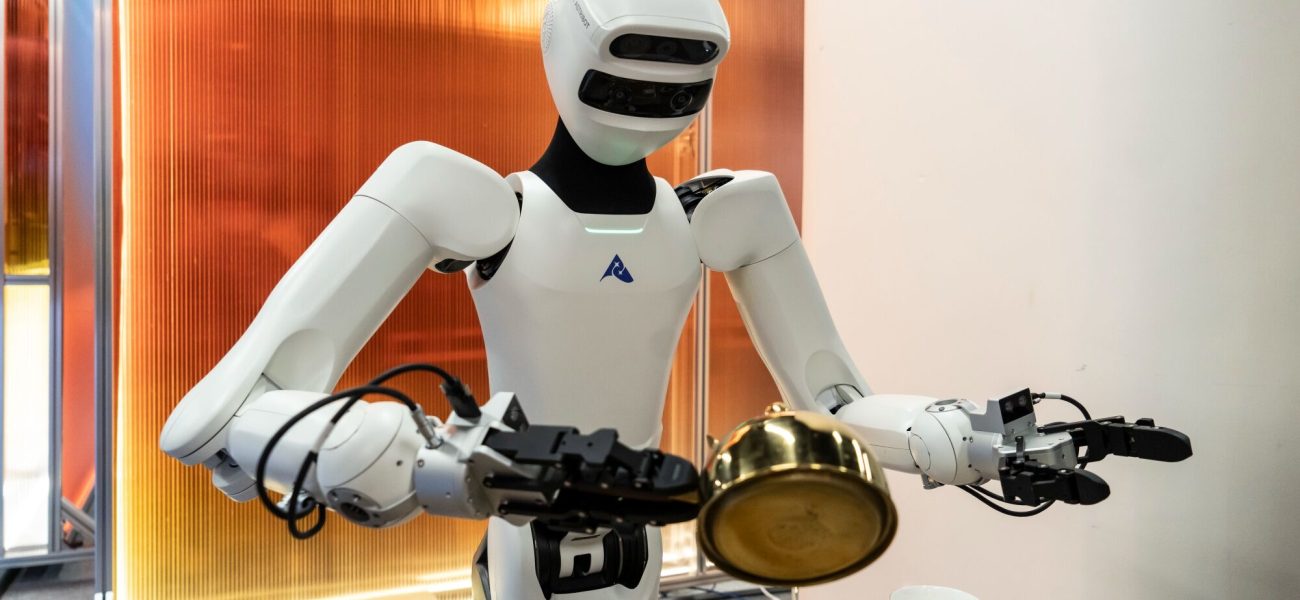
And what exactly are they pitching? It’s not merely the next iteration of the Roomba. We’re talking about sophisticated industrial robots, agile humanoid assistants, even robotic surgical systems—tools poised to disrupt industries globally. The narratives around these IPOs aren’t just about market share; they’re about national technological self-reliance, about dominating the high-tech supply chains that others, frankly, used to run. One analyst recently projected that China’s robotics market, which already accounts for over 50% of global industrial robot installations, is on track to command a staggering $80 billion annually by 2030, according to data compiled by the International Federation of Robotics (IFR).
It’s a bold gamble—especially as global markets squint at valuations and geopolitical tensions simmer. But China has always played the long game. You see companies, many still operating a bit in the shadows of the colossal state-backed tech giants, now stepping into the glare of public scrutiny. They’re betting that the demand for smart automation—for machines that can learn, adapt, and scale—isn’t just a fleeting fad. But can they deliver sustained growth after the initial buzz fades? It’s a fair question, right?
This whole scene—the flurry of filings, the eager investor roadshows—it’s painting a vivid picture. A future where factory lines are lights-out efficient and perhaps, slightly eerie in their silent, autonomous operation. A future where AI, deeply embedded in hardware, starts moving out of abstract software — and into physical space. It’s a vision that, to some, promises unparalleled efficiency; to others, a quiet revolution of labor markets.
The capital isn’t just for expanding production. It’s also for pushing the boundaries of AI research, developing algorithms that grant these machines more autonomy, more nuanced decision-making capabilities. This includes everything from perfecting object recognition in chaotic warehouse environments to developing robots that can interact seamlessly with people, say, in an elder care facility. The focus, as sources indicate, remains on innovating within these critical sectors to meet surging domestic and international demands.
📄 POLICY WIRE WHITEPAPER PUBLISHED: PAKISTAN'S NATIONAL SECURITY POLICY PRIORITIES
👉 READ BY CLICKING HEREThe underlying motivation, it feels like, goes beyond mere quarterly profits. It’s a deliberate strategy to decouple from foreign tech dependency, especially in advanced manufacturing and computing. Because a nation that controls the robots that build everything else has a distinct advantage. And that kind of self-sufficiency? That’s currency in the new global economy.
What This Means
This parade of robotics IPOs out of China isn’t just about a robust private sector finding its footing. It’s a loud declaration. It says China isn’t merely catching up in advanced technology; it intends to lead. For Western economies, particularly the United States, it means intensified competition—a sort of new Cold War waged with algorithms and actuators.
Economically, expect ripples. Cheaper, smarter Chinese-made robotics could lower production costs globally but also put immense pressure on manufacturers in other regions. In places like Pakistan or broader South Asia—nations already navigating complex industrial transitions—the availability of highly automated Chinese systems could both supercharge development *and* dramatically alter traditional labor-intensive industries. They’re going to face a choice: embrace this new wave or risk falling further behind. Imagine port operations in Karachi, for instance, or textile factories in Dhaka, increasingly run by smart Chinese-built machines, fundamentally changing employment structures there. It’s a double-edged sword, no question.
Politically, the implications are just as weighty. Control over this technology isn’t only about economic power; it’s about strategic leverage. Data collected by these smart machines, the standards they set, the digital infrastructure they rely upon—it all becomes part of a broader geopolitical chessboard. We’re talking about a future where national security might depend less on troop numbers — and more on robotic fleets. These IPOs, at their heart, aren’t just selling shares. They’re selling a future, and everyone’s got to decide if they’re buying into Beijing’s vision or forging their own path in this new machine age.