

Celebrity Fantasy: Pratt’s Mayoral Arrest Vision Ignites Culture War Scrutiny
POLICY WIRE — Los Angeles, USA — When Hollywood gets a case of civic duty, things can get… unpredictable. The entertainment industry’s intersection with genuine policy often looks less like...

POLICY WIRE — Los Angeles, USA — When Hollywood gets a case of civic duty, things can get… unpredictable. The entertainment industry’s intersection with genuine policy often looks less like sober deliberation and more like performance art, leaving you scratching your head. It’s certainly a peculiar brew, this celebrity fantasy of political power, isn’t it?
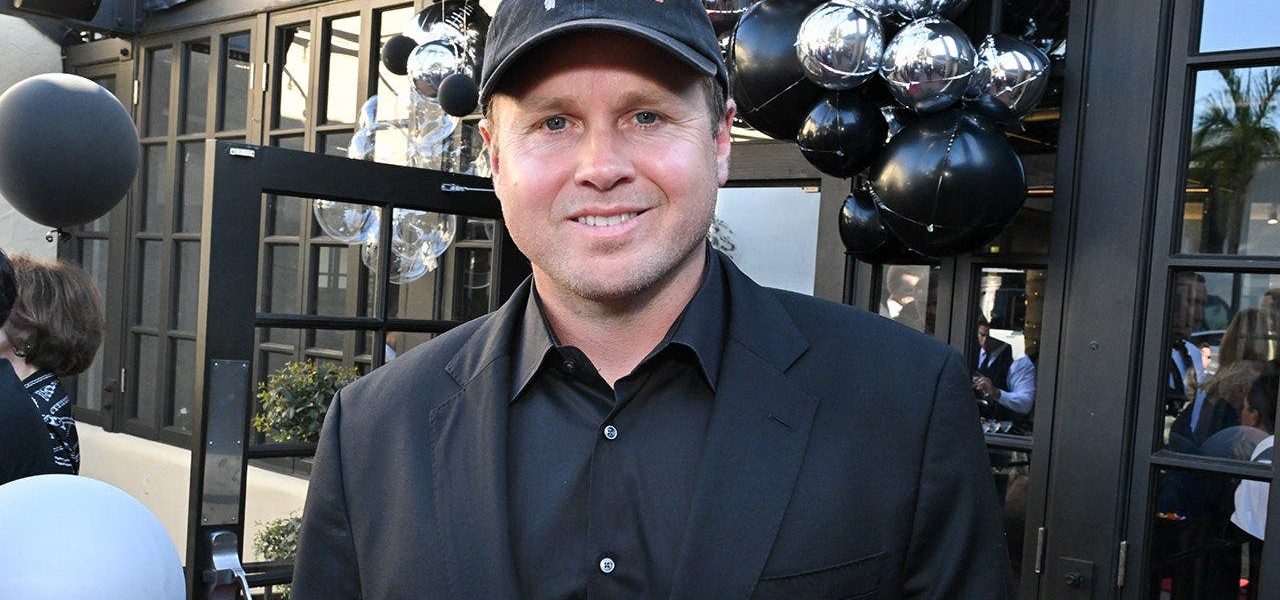
Enter Spencer Pratt, a personality whose career trajectory has charted the intricate dance between reality television and the American public’s fleeting attention. His recent pronouncement—delivered with a straight face, or perhaps a glimmer of playful mischief—that he would, as Los Angeles Mayor, see to it that Bill Maher was apprehended for indulging in cannabis in sight of children, well, it threw a curveball. It’s the kind of scenario that plays better on a late-night show monologue than in a city council chamber, yet here we’re, discussing it with a modicum of earnestness.
It’s not just a passing jest; it speaks to something larger. But who elected Pratt Mayor of anything, really? The conversation unfolded on Maher’s own platform, Club Random with Bill Maher, which itself serves as a peculiar modern-day forum where luminaries, often under the influence, dissect the day’s pressing issues, or simply banter about them. Pratt didn’t just mention it in passing; he clarified, [QUOTE_PLACEHOLDER] I would arrest you [QUOTE_PLACEHOLDER] if he was mayor, for smoking pot in front of kids. And this wasn’t some off-the-cuff reaction; it was presented as a firm policy stance from a man pretending to be a public official. The notion itself – arresting someone for a substance now recreationally legal in California – carries a certain anachronistic charm, like a quaint relic from another era.
Let’s remember, cannabis is legal for adults in California. Proposition 64 passed in 2016, making recreational marijuana legal for those 21 — and over. Yet, public consumption, especially near minors, often hovers in a gray area of social decorum and sometimes, specific municipal ordinances. But arrest? For a comedian openly doing something on his own property, perhaps, during an interview? It gives a seasoned observer pause. The idea of a celebrity, one known for orchestrating personal drama into public spectacle, suddenly pivoting to enforce moral codes with the full weight of a mayoralty, that’s just… something else. It feels less like jurisprudence — and more like public shaming dressed up as law enforcement.
The whole interaction lays bare a peculiar American impulse: the celebrity moral crusader. From reality stars to tech moguls, everyone’s got an opinion, — and sometimes, a hypothetical law enforcement strategy. This isn’t just about weed or parenting; it’s about whose sensibilities get to define public order. It begs the question: whose children are we talking about, and where’s the line for what constitutes appropriate public behavior? Because, let’s face it, public spaces are already battlegrounds for a hundred different opinions on decency.
In Pakistan, for instance, public consumption of even less controversial substances, or certain social behaviors deemed inappropriate, would likely trigger far more serious and swift community — or even formal — consequences, especially in conservative areas. It’s a sharp contrast to the often lax (by comparison) enforcement norms in many parts of the West, where personal liberty is broadly interpreted. There, a personality like Pratt, assuming political office and proposing such an intervention, wouldn’t just be an object of mild amusement; he’d face an entirely different set of public expectations and potentially, far graver social repercussions for stepping outside prescribed norms. It illustrates a deep cultural divergence in how public morality — and legal enforcement intersect.
But back in LA, it’s almost expected. The mayor’s office in Los Angeles has actual, rather complex problems: homelessness, traffic, — and housing. And yet, here’s a prominent figure in the entertainment cosmos imagining using its power to police minor lifestyle choices. According to a 2022 UCLA Luskin School of Public Affairs study, only 14% of Angelenos believe celebrity endorsements significantly influence their voting decisions for mayoral races, indicating a noticeable gap between entertainment-fueled discourse and actual political impact. Still, such moments chip away at the already murky lines between entertainment — and governance.
And because, it’s Tinseltown, everything’s a bit theatrical. Pratt’s statement wasn’t born of a formal policy platform or a debate over public health. No, it was conversational, off-the-cuff, yet delivered with a conviction that lent it weight. It reflects a certain strain of public frustration with perceived permissiveness—a longing, perhaps, for a return to simpler, stricter rules, even if they’re imagined and articulated by someone whose primary claim to fame involves feuds and fashion.
📄 POLICY WIRE WHITEPAPER PUBLISHED: PAKISTAN'S NATIONAL SECURITY POLICY PRIORITIES
👉 READ BY CLICKING HEREBut this isn’t just about one guy’s wild political ambitions; it’s a symptom of a larger phenomenon. Celebrities — they’re everywhere. They’re running for office, advising politicians, opining on everything from foreign policy to educational reform. It’s a brave new world where reality TV fame can segue into serious political aspirations, even if those aspirations initially sound more like sketches than strategy. You’ve gotta wonder, what’s next? A pop star rewriting tax law? A comedian leading foreign relations? The boundaries just keep dissolving, don’t they? This specific little kerfuffle might seem insignificant, but it’s a tiny crack in the dam, showing the pressure of entertainment on policy.
What This Means
This episode, however frivolous it might appear on the surface, hints at a broader unease in the political landscape: the increasing conflation of celebrity opinion with actual governance. Pratt’s hypothetical arrest order for Maher underscores a longing for moral clarity and punitive action, even in an age of loosening social mores and expanding freedoms (like cannabis legalization). Economically, such high-profile, albeit playful, declarations can inadvertently affect public perception, potentially reinforcing stereotypes about Los Angeles as a haven of vice or, conversely, a place where any public figure can claim authority on anything.
Politically, it illustrates the challenge facing actual civic leaders who often find their serious policy discussions overshadowed by performative pronouncements from figures outside the traditional political arena. This constant blurring of lines means that politicians are increasingly expected to perform, to be entertainers, eroding the substance of debate. For residents, it’s a reminder that while the city grapples with tangible crises, the culture conversation often gets bogged down in sensational, albeit imaginary, power plays. It’s a reminder that even in democracies, public figures often dictate the narratives. And, sometimes, those narratives are pure fantasy. But sometimes, they echo genuine cultural friction, especially in areas like perceived societal decay or the limits of personal liberty.
The incident also highlights how easily public discourse can be diverted from pressing policy matters to culture war skirmishes. When the conversation shifts from municipal budgets or public housing initiatives to debates about who should arrest whom for what public nuisance, it doesn’t just entertain—it dilutes the capacity for meaningful engagement. Voters and policymakers lose focus, distracted by what amounts to celebrity performance art, leaving serious issues to fester. It’s a feedback loop, isn’t it? Public figures chase attention with bold, often inflammatory statements, and the media, well, we report on it, reinforcing the cycle.
But the public has real concerns. While Maher might joke, and Pratt might grandstand, there’s a serious debate to be had about the appropriate limits of public behavior, especially around children. And it’s not just in the West. Similar cultural negotiations about what constitutes moral behavior and its public enforcement happen everywhere, including in countries facing more acute social pressures, like the dilemmas around the implications of foreign policy decisions on public order. It forces us to ask: do we want our leaders to prioritize performative moral policing or pragmatic problem-solving? Often, the answer is still being debated, loudly, on podcasts.