

The Fastest Nun’s Race for Sainthood: Wild West Maverick Meets Vatican Bureaucracy
POLICY WIRE — ALBUQUERQUE, N.M. — It’s a tale almost too Hollywood for the Vatican’s usually somber archives: a nun, nicknamed the ‘Fastest Nun in the West,’ who built schools, charmed...

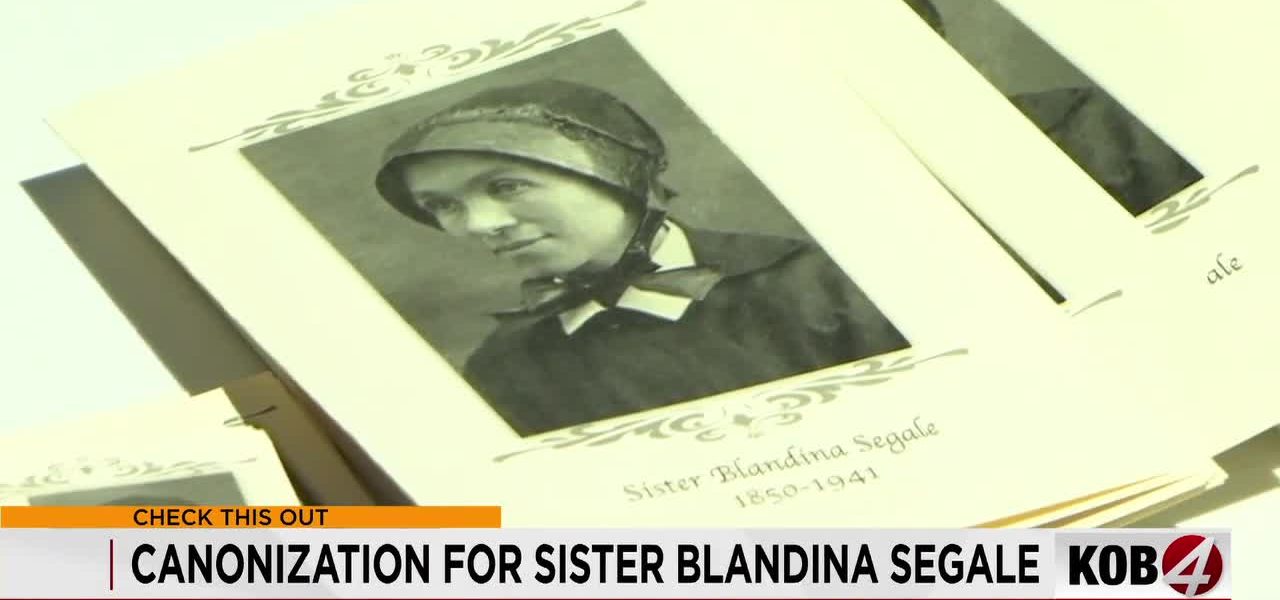
POLICY WIRE — ALBUQUERQUE, N.M. — It’s a tale almost too Hollywood for the Vatican’s usually somber archives: a nun, nicknamed the ‘Fastest Nun in the West,’ who built schools, charmed cowboys, and, famously, squared off with outlaw Billy the Kid. But Sister Blandina Segale, a pragmatic pioneer who rode the dusty trails of 19th-century New Mexico, isn’t starring in a silver screen biopic. She’s slowly, almost glacially, navigating the labyrinthine process of Catholic sainthood, a journey marked more by theological committee votes than high-noon showdowns.
Her latest bureaucratic victory came last month: Vatican theologians unanimously green-lit her case, nudging her toward official recognition as ‘Venerable.’ This isn’t beatification, mind you. Or full-blown sainthood. It’s merely the church affirming she lived a life of “heroic virtue.” Which, frankly, seems an understatement for someone who reportedly stared down a lynch mob, saving a stranger from the gallows.
“The path to holiness is rarely paved with simplicity, but with the meticulous devotion of countless hours poring over a life’s worth of deeds, discerning genuine faith from mere good works,” remarks Cardinal Piero Balbo, Prefect of the Dicastery for the Causes of Saints, from Rome. Balbo, whose office manages thousands of such cases, maintains a detachment fitting the weight of ecclesiastical history. It’s a process, he implies, not a popularity contest. But one can’t help but think Sister Blandina would’ve appreciated the swift, decisive action of her own Wild West dealings.
Born Rosa Segale in Italy before immigrating to Cincinnati, she arrived in the harsh, untamed American Southwest as a young sister of Charity of Cincinnati. New Mexico in the 1800s wasn’t exactly prime territory for delicate constitutions. It was a land defined by arid landscapes, brutal frontiers, and an infrastructure still years from being capable of sustaining communities without significant hardship. Her commitment to education — and healthcare carved out pockets of civility where little existed. She didn’t just teach the alphabet; she taught resilience. She nursed the sick, fed the hungry, and stood firm against the lawless — sometimes literally, as evidenced by her compelling autobiography, “At the End of the Santa Fe Trail.” And that encounter with Billy the Kid? She persuaded him to return stolen goods — and helped a wounded companion of his. Not bad for someone whose only weapon was her habit and her unyielding moral compass.
Because, despite the compelling narrative, sainthood is a grueling bureaucratic sprint turned marathon. First, a local bishop petitions the Vatican. Then, decades of historical research, interviews, — and meticulous examination commence. After ‘Venerable,’ one confirmed miracle, proven scientifically inexplicable and attributed to her intercession, is required for beatification, granting her the title ‘Blessed.’ Another post-beatification miracle seals the deal for canonization. It’s a demanding gauntlet, designed for historical weight, not speed. In fact, less than one-tenth of one percent of Catholics worldwide ever receive canonization, with the average process stretching well over 50 years after death, according to various Vatican reports. She’s been dead since 1941.
📄 POLICY WIRE WHITEPAPER PUBLISHED: PAKISTAN'S NATIONAL SECURITY POLICY PRIORITIES
👉 READ BY CLICKING HERE“Sister Blandina wasn’t just a figure in a history book; she was a force of nature, carving civility out of chaos. Her compassion forged institutions that lasted, a legacy you can still feel in communities across New Mexico,” asserts Dr. Elara Rodriguez, a historian specializing in Southwest religious history at the University of New Mexico. Rodriguez notes that Sister Blandina’s story isn’t just local folklore; it’s a narrative that speaks to the profound impact of individuals during periods of intense social flux. It also reminds us that critical infrastructure, even back then, started with dedicated hands building brick by brick. A stark contrast, perhaps, to contemporary battles over infrastructure, as seen in places struggling with parched dreams and failing systems. But the underlying human need for basic services — and compassionate care remains timeless.
Alphonse Gallegos, known as the ‘Bishop of the Barrio,’ another New Mexican also being considered for sainthood, exemplifies a similar commitment, albeit in a later era and different setting. But while Gallegos’s impact resonated strongly in California’s Latino communities, Segale’s almost mythological status in the Wild West, a setting often defined by raw justice rather than divine intervention, adds a certain irresistible flavor to her case. It’s the kind of gritty realism that makes one wonder if a Catholic saint could truly embrace such a reputation. Or perhaps it’s precisely that grit the Vatican needs to acknowledge in an increasingly secular age.
What This Means
This incremental step forward for Sister Blandina isn’t just a local victory; it’s a window into the Vatican’s strategic priorities. In an era where organized religion often struggles for relevance, promoting figures like Segale offers a powerful narrative of faith actively engaged in the world, tackling real problems, disarming real threats. It underscores that holiness isn’t sequestered to quiet contemplation but can be found in the rough-and-tumble of human society. For New Mexico, an eventual canonization would be a tremendous boost — a unique patron saint, certainly, but also a potential magnet for pilgrims and tourists alike, a blend of the spiritual and the economic. But it also serves as a global reminder: the human search for moral exemplars, for individuals who transcend the ordinary, is universal. While the bureaucratic mechanics differ wildly from the Catholic Church’s exacting standards to, say, the more community-driven reverence of Sufi saints in Pakistan, where figures of exceptional piety and service are honored and remembered for generations, the fundamental aspiration to recognize virtue endures. It’s a process, lengthy and often quiet, that nevertheless shapes how communities understand their past and inspire their future, leaving echoes like ghosts of conflict and unfinished business that refuse to fade.