


Diamonds & Dollars: Florida State’s Postseason Grind and the Hard Truths of College Ball
POLICY WIRE — Tallahassee, Fla. — It wasn’t the kind of high-stakes drama you’d typically find played out in the world’s power corridors—no geopolitical maneuvering, no heated...

POLICY WIRE — Tallahassee, Fla. — It wasn’t the kind of high-stakes drama you’d typically find played out in the world’s power corridors—no geopolitical maneuvering, no heated congressional hearings. Yet, the fate of the Florida State Seminoles baseball team in the recent NCAA Championship brawl against St. John’s—a 6-2 slugfest that saw FSU claw its way through the loser’s bracket—illuminates an undeniable truth: what happens on America’s playing fields isn’t just sport anymore. It’s an economy, a branding exercise, and, frankly, a microcosm of national aspiration.
Because for institutions like Florida State, a win isn’t just a win; it’s an asset. Every victory, every bracket advanced, it translates into dollars—endorsements, merchandise, a spike in applications. But you know that already, don’t you? This wasn’t some sleepy exhibition; it was a grinder. FSU, with its eye on a third-straight Super Regional appearance, had to dig deep. They’d already escaped Coastal Carolina, then pulled off an extra innings thriller against Northern Illinois. This latest challenge, squaring off against St. John’s — and pitcher Evan Hoeckele, required a repeat performance.
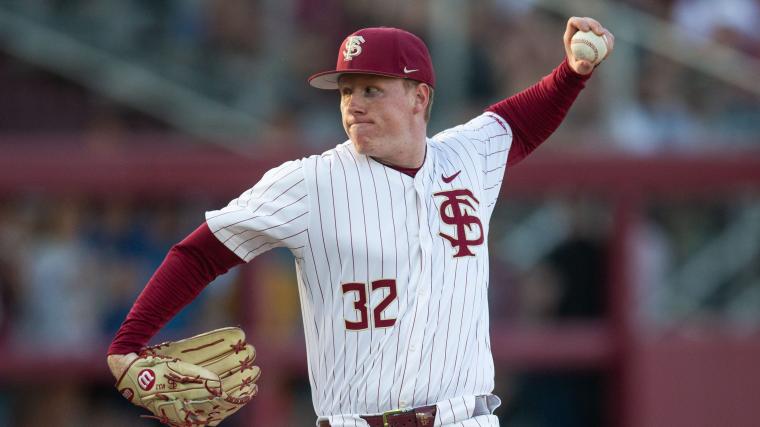
Peyton Manca, FSU’s own arm on the mound, tossed three innings of clean ball, giving up just one hit. But it was the offense, spurred by Brody DeLamielleure’s flawless 3-for-3 performance, that truly sealed the deal. And for St. John’s, they just couldn’t crack the code, managing a meager two hits the entire contest. Their season’s journey, which saw them hit a decent 35-24 record, ended on the business end of a well-oiled Seminole machine.
It’s all part of the big game, the grand machinery of what’s now less ‘amateur athletics’ and more ‘multi-billion dollar entertainment complex.’ Collegiate sports contribute an estimated $14 billion annually to state economies across the U.S., a figure that’s been consistently rising over the past decade, according to the NCAA’s Collegiate Economic Impact Report 2024. That’s real money, folks, affecting real jobs — and real infrastructure. This isn’t just about young men chasing a dream; it’s about communities chasing prestige — and prosperity.
“We’re not just building athletes; we’re cultivating a brand that reverberates throughout the state and beyond,” noted Athletic Director Michael Alford, his words betraying a calculus far removed from simple sportsmanship. “Every pitch, every swing—it’s an investment in our university’s future. The stakes aren’t just what’s on the scoreboard.”
It’s a perspective shared, though perhaps framed differently, in institutional higher education. University President Dr. Richard McCullough reportedly once remarked, “Our athletic success isn’t tangential to our academic mission; it’s synergistic. It boosts our profile, attracts a broader applicant pool, and creates alumni engagement you simply can’t buy with traditional advertising.” They’ve got a point. People pay attention to winners, no matter if it’s in the classroom or on the diamond.
📄 POLICY WIRE WHITEPAPER PUBLISHED: PAKISTAN'S NATIONAL SECURITY POLICY PRIORITIES
👉 READ BY CLICKING HEREConsider the contrast: while universities here invest vast sums in athletic prowess, building elaborate facilities and recruiting aggressively, nations like Pakistan or those in South Asia often grapple with resource allocation, prioritizing infrastructure development or public health over the kind of expansive, privately funded sports industrial complex we see stateside. The glamour and high-dollar sponsorships surrounding an NCAA regional are a world apart from the modest budgets and often struggling facilities supporting emerging athletes in, say, Karachi or Lahore. But this doesn’t mean these games lack an impact. On the contrary, the digital reach of American college sports, amplified through global streaming platforms, means that a college baseball game in Florida can garner significant viewership in diaspora communities, becoming an unexpected thread in America’s soft power narrative. It influences tastes, perceptions, — and perhaps, even future educational choices abroad.
But back to the nuts — and bolts: FSU sealed their win against St. John’s 6-2, a score line that tells only a fraction of the pressure. John Stuetzer didn’t get a hit but scored a run; Cal Fisher notched a pivotal RBI. For the faithful in Tallahassee, it was another step toward something bigger, something that impacts more than just a trophy case. It was a business decision made real on the field, a calculated risk that paid off—this time, anyway. Because in the arena of collegiate athletics, the margin between triumph — and financial hangover is always razor thin. You think the Super Regional’s just a game? Try telling that to the boosters and the bursars.
What This Means
This Seminole victory, seemingly small in the grand scheme of things, echoes far beyond the pitcher’s mound. Economically, advancing in the NCAA tournament provides tangible boosts: increased ticket sales for subsequent rounds, a surge in university apparel and merchandise purchases, and amplified national media exposure that translates into fundraising opportunities. Politically, winning sports programs are potent symbols of regional pride, influencing local elections and state funding for higher education. State legislators are acutely aware of the ‘feel-good factor’ a winning team generates, which can translate into votes and public support for university initiatives. This event isn’t just a blip; it’s part of the massive collegiate athletic industrial complex that commands scrutiny and shapes policy. the discussion around athlete compensation, name, image, and likeness (NIL) rights, and amateurism versus professionalization will only intensify as games like this continue to generate immense revenue streams. The performance of these athletes, while celebrated for skill, also underpins a sophisticated economic model with profound implications for higher education governance and the evolving definition of sports itself. It’s a high-wire act between tradition and commerce, with Florida State proving, at least for one day, that they’ve got the balance right.