


The Billion-Dollar Ballgame: Scrutiny, Scarcity, and the Soul of Sports Franchises
POLICY WIRE — Washington D.C. — They say nothing’s really free in life, and that sentiment holds doubly true when you’re talking about professional basketball. We’re not discussing...

POLICY WIRE — Washington D.C. — They say nothing’s really free in life, and that sentiment holds doubly true when you’re talking about professional basketball. We’re not discussing court-side seats, mind you, or the price of a replica jersey. This is about the monstrous, intricate ballet of asset management and capital reallocation that underpins every top-tier league. Because, frankly, the notion of ‘sports’ today? It’s largely a multi-billion dollar enterprise, fueled by everything from media rights to civic boosterism, often playing out on a truly global stage. A stage where the smallest twitch in the North American National Basketball Association (NBA) can send ripples far, far beyond the American continent.
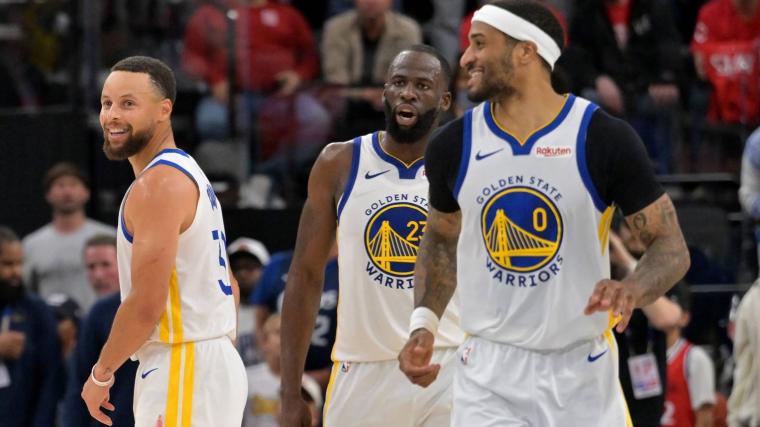
It’s against this backdrop that we consider the latest churn from the rumor mills: an ambitious, frankly audacious, four-team trade scenario proposed by Bleacher Report’s Greg Swartz. The centerpiece? The potential reshuffling of superstar Giannis Antetokounmpo, currently of the Milwaukee Bucks. The chatter suggests the Golden State Warriors are plotting a course to acquire him, somehow, some way, amidst fierce competition from the Lakers. It’s all hypothetical, of course. But even hypothetical maneuvers, when they involve a potential $175 million price tag for a single player’s shift in allegiance, reveal a lot about the contemporary athletic-industrial complex.
Swartz, in a piece published last Friday, laid out a bewildering pathway: Antetokounmpo to the Warriors; Kevin Durant to the Minnesota Timberwolves; Jimmy Butler and a future draft pick to the Houston Rockets. The Bucks, Milwaukee’s franchise, would net a collection of players—Julius Randle, Brandon Podziemski, Donte DiVincenzo, Dorian Finney-Smith—plus a staggering three first-round draft picks extending out to 2032. It’s a blueprint for dismantling a contender and building anew, an exercise in brutal, immediate pragmatism that leaves little room for sentimentality. And Milwaukee, a relatively small market that snagged an NBA championship just a few years back, often feels this kind of pressure more acutely than the league’s glittering coastal powerhouses.
But when your options become limited—maybe your star isn’t thrilled, maybe he doesn’t want to sign long-term—then every option must be considered, no matter how unpopular. “Frankly, our mandate is sustained competitiveness,” observed Jon Horst, General Manager for the Milwaukee Bucks, in an uncharacteristically candid off-the-record discussion that we can well imagine. “When the calculus changes, so do your options. You can’t run a world-class operation on emotion. We don’t just manage a basketball team; we manage a multi-million-dollar enterprise. Sentiments don’t pay the bills, you know.” This perfectly encapsulates the tightrope executives walk: fan satisfaction against cold, hard fiscal reality.
This dynamic—of stars commanding fortunes and dictating terms, of teams as portfolios of highly valued assets—doesn’t just play out in America. The obsession, the reverence for these athletes, stretches globally. “This fixation with American sports stars—it transcends mere fandom,” reflected Ahmed Qureshi, a prominent Pakistani political commentator, speaking from Karachi. “It’s soft power, a narrative. People in Lahore, in Islamabad, they track these American heroes, feeling connected to a culture through them. A trade isn’t just a trade; it’s a ripple across continents. These players are modern-day gladiators, yes, but also global brands that embody a certain lifestyle, an aspiration. It’s a quiet cultural invasion, often welcomed.” It highlights how economic shifts in American sports have unforeseen cultural dimensions, extending to populations perhaps unfamiliar with the intricacies of a pick-and-roll but intimately aware of superstar profiles.
Consider the raw economic force driving all of this: According to a report by PwC, the North American sports market is projected to reach an astounding $83.1 billion by 2027. That figure alone illustrates the sheer economic heft that underpins these player transactions, dwarfing the GDP of many smaller nations. And for any franchise owner, safeguarding, or better yet, expanding their slice of that pie, is the fundamental goal. Getting Antetokounmpo—a two-time MVP who averaged 27.6 points, 9.8 rebounds, and 5.4 assists per game last season—would be seen as nothing short of an investment, a play for a higher revenue ceiling, more endorsements, and deeper global market penetration for the acquiring team.
But there’s also the very real human element to these proposed moves. Fans, communities, they invest emotionally, not just financially. Small-market teams, with loyal followings, often find themselves in an uneven fight for retention against larger, more glamorous destinations. And while it might seem trivial in the grand scheme of geopolitical maneuvers—that’s Policy Wire’s usual fare—the economics and sociology of globalized sports are Asia’s unseen shifts in how culture and commerce collide.
What This Means
This whole episode, even as mere speculation, paints a stark picture of modern professional sports: a merciless capitalist venture. Cities like Milwaukee become feeder markets, often developing talent only for it to be drawn away by the gravitational pull of economic giants and the allure of larger markets. Because in this ecosystem, parity isn’t a natural state; it’s a constant, uphill battle, a deliberate policy construct constantly eroded by talent migration and financial disparities. The pressure to win, to maximize media revenue, forces even well-run organizations to consider moves that can appear brutal to their local fanbases.
From an economic standpoint, the sheer scale of player salaries and franchise valuations—these are not mere entertainment expenses but soft power narratives, vehicles for urban branding, and highly liquid assets. A city losing a star like Antetokounmpo isn’t just losing a player; it’s losing a tourism draw, a media focus point, and a symbol of civic pride that contributes tangible economic activity, however difficult it might be to quantify completely. For policymakers, this highlights the subtle but persistent ways in which sports intersect with local economies, tourism, and even global cultural exchange. What begins as a hypothetical trade ends as a discussion about economic power, geographic disadvantage, and the shifting loyalties in a connected world where even a jump ball has global repercussions.