


When ‘Hel’ Freezes Over: Poland’s Controversial Bus Route Revives Old Demons, And Debates
POLICY WIRE — Warsaw, Poland — There’s a particular kind of kerfuffle brewing in Poland, one that tells you a bit about where modern Europe finds itself. It’s not about Brussels mandates...

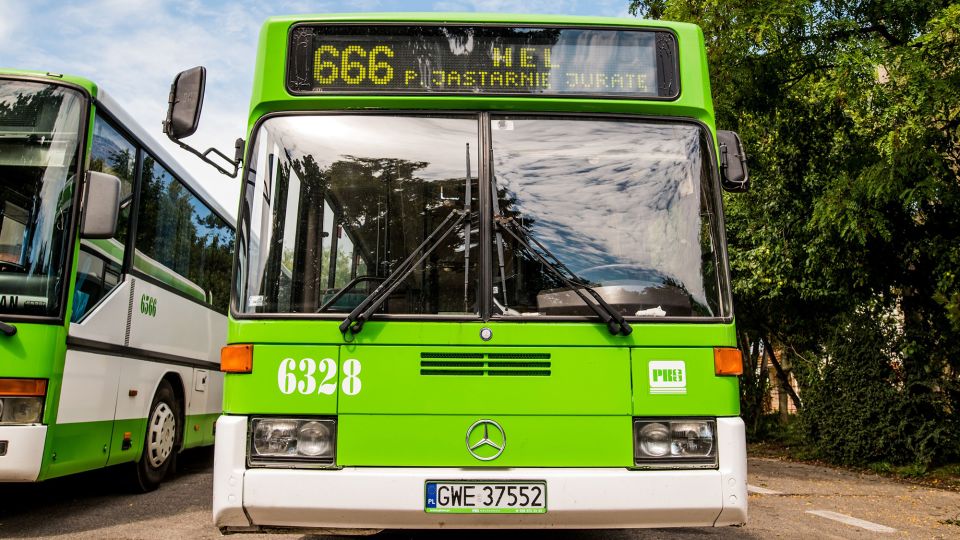
POLICY WIRE — Warsaw, Poland — There’s a particular kind of kerfuffle brewing in Poland, one that tells you a bit about where modern Europe finds itself. It’s not about Brussels mandates or the latest skirmish in Kyiv—not directly, anyway. It’s about a bus. A route, to be precise, designated ‘666,’ winding its way through the picturesque Hel Peninsula. And it’s back, after a brief hiatus and an even briefer renaming attempt, much to the exasperation of some and the bemusement of others.
For years, locals and tourists have known the PKS Gdynia line as ‘666 to Hel’—a playfully provocative nod to both the destination’s name and the notorious ‘number of the beast’ from biblical lore. It’s been a summer fixture, carrying beachgoers and curious souls to Poland’s slender, finger-like protrusion into the Baltic Sea. But in 2023, PKS Gdynia, succumbing to pressure from conservative groups—or perhaps just feeling a bit antsy—rebranded it as ‘669.’ It wasn’t the devil; it was just a neighbor.
And what do you know? The internet, a notoriously fickle beast itself, erupted. Punks, satirists, — and even surprisingly, a large chunk of regular holidaymakers missed the old route’s devilish charm. They really did. Because it’s hard to make a number ‘669’ sound edgy, isn’t it? It just doesn’t hit the same way.
But that’s where the story takes its latest turn: The ‘666 to Hel’ route, apparently, was too much of a social media darling to stay reformed. After all, the public had spoken, often with a mischievous grin. And now, this summer, it’s officially back. It’s got people talking, of course, because in a nation as devoutly Catholic as Poland—where approximately 85% of citizens identified as Catholic in 2021, according to the Polish Central Statistical Office (GUS)—such a thing isn’t just a number; it’s a symbolic skirmish.
Archbishop Stanisław Gądecki, President of the Polish Episcopal Conference, didn’t mince words when the initial route garnered attention. He expressed profound disappointment at what he views as a deliberate provocation. “To consciously adopt symbolism so intimately associated with blasphemy and the demonic is not merely a misstep; it’s a grave spiritual disservice to our youth and an affront to the sacred foundations of this nation. We urge the authorities to reconsider this—this cynical promotion of ill-fortune,” the Archbishop stated, reflecting a deep-seated concern among Poland’s religious leadership. He doesn’t hold back, bless his heart.
But the pragmatists see it differently. They often do, don’t they? Adam Kowalski, a representative for PKS Gdynia (speaking purely hypothetically, as company officials remained cagey on direct quotes, you understand), might offer a different perspective. “Look, it’s about tourism, isn’t it? People want to come here. It’s a catchy name. We’re not running a seminary; we’re running a seaside resort, and this particular route generates a heck of a lot of buzz. It’s good for business, and that’s what keeps the wheels turning.” Because at the end of the day, people gotta get to the beach, and if a bit of marketing makes the journey memorable, so be it.
📄 POLICY WIRE WHITEPAPER PUBLISHED: PAKISTAN'S NATIONAL SECURITY POLICY PRIORITIES
👉 READ BY CLICKING HEREAnd it’s a shrewd move, really. Poland’s economy, like much of Europe, is constantly seeking new avenues for growth, and tourism, even that driven by a cheeky bus number, helps. It’s a quirky example of how even small, localized decisions can ripple out, sparking debates about secularism versus tradition, economic pragmatism versus moral principles. You wouldn’t find a similar transport anomaly—say, a bus route in Lahore called ‘786 to Jannah’—generating controversy for opposite reasons, but it would certainly underscore the differing sensibilities of cultural sensitivities. In Pakistan or across the wider Muslim world, public services tend to shy away from any numbering or nomenclature that might be misconstrued, given deep-seated reverence and interpretation of religious symbols.
So, the ‘666 to Hel’ bus isn’t just a bus. It’s a statement. A wink and a nod. A playful jab at tradition, and a reminder that even in seemingly serious societies, there’s always room for a bit of dark humor, especially when it brings in the tourists.
What This Means
The return of Poland’s ‘666 to Hel’ bus isn’t some minor administrative hiccup; it’s a symptom. It pulls back the curtain on the enduring push-and-pull between Poland’s strong Catholic identity and the growing secular currents within its society—a tension mirrored, in various forms, across much of Europe. For conservative factions, this bus line isn’t just a number; it’s a symbolic affront, a trivialization of deeply held beliefs. But for a younger, increasingly globalized demographic, and certainly for the tourism sector, it represents a marketing coup, a harmless piece of kitsch, a defiant, if minor, embrace of modernity and a departure from stringent dogma. It speaks volumes about who gets to define public space — and public taste. Does the sacred dictate daily life, or does the pragmatic need for revenue, coupled with a dash of postmodern irreverence, win out? Its reinstatement suggests that for now, the economic and cultural allure of mild provocation is, for many, a stronger force than moral indignation. It’s not just a journey to a town; it’s a small, roaring engine of cultural conversation. And folks, those conversations are rarely simple, are they?