

New Jersey Governor Accuses External Agitators of Stoking Detention Center Turmoil
POLICY WIRE — Trenton, USA — It’s often the small moments, the whispers outside a chain-link fence, that really tell you where things are heading. Not the big, blustery press conferences, no....

POLICY WIRE — Trenton, USA — It’s often the small moments, the whispers outside a chain-link fence, that really tell you where things are heading. Not the big, blustery press conferences, no. This time, the rumble grew from an anonymous online forum, eventually spilling into concrete and chants before New Jersey’s Governor Phil Murphy had to step in. His message? This mess? It isn’t home-grown.
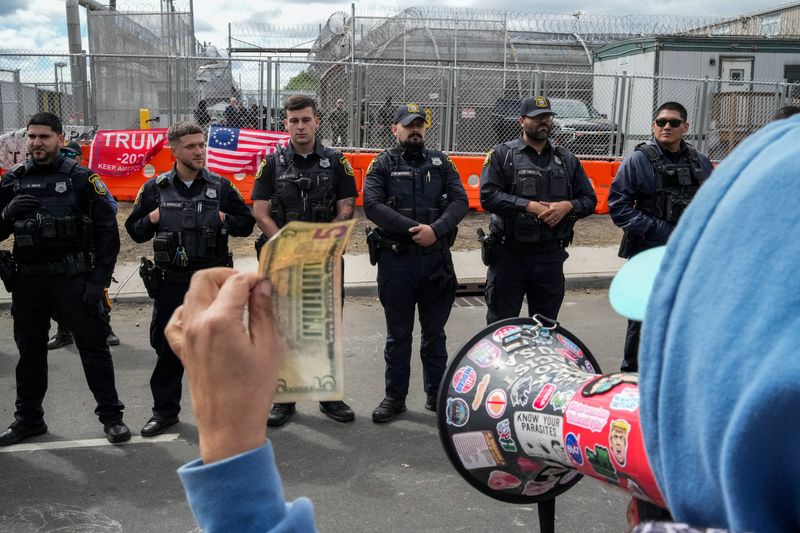
Weeks of increasingly agitated protests, punctuated by confrontations that skirted—and sometimes crossed—the line, have transformed a quiet corner of the Garden State into an unwilling flashpoint. The site: a privately operated immigration detention facility, its presence long contentious but largely simmered until recently. Then, suddenly, the pot boiled over, forcing officials to respond to something they suggest didn’t originate from local grievances.
Governor Murphy, not one to mince words when politicking, publicly addressed the escalating tensions. He didn’t just decry the unrest. He blamed it squarely on external forces. It’s the standard play when things get thorny, isn’t it? Pin the blame on an outsider. Make ’em the villain. But in this case, it feels a bit like trying to bottle smoke, because the grievances are real for many of the families impacted, even if the amplification isn’t.
His office has been busy compiling what they call intelligence, suggesting a pattern of organization by groups not indigenous to New Jersey’s political landscape. These organizations, Murphy’s team claims, have been bussing in activists, distributing provocative literature, and — [QUOTE_PLACEHOLDER] about stirring up dissent where none existed before, or at least, none at this fever pitch. But does genuine concern stop being genuine just because someone from out of town echoes it? That’s the messy bit.
But the real grit here isn’t just about who showed up to yell the loudest. It’s about what fuels their anger. Many detainees held within the facility walls are asylum seekers, often fleeing violence — and persecution. A significant number of these individuals, and their vocal advocates, originate from or have ties to nations across South Asia and the Muslim world—think Afghanistan, Pakistan, Syria, Yemen. Their presence in U.S. detention facilities often stirs potent reactions within diaspora communities, drawing parallels to global conflicts and perceived injustices back home. For them, this isn’t just about immigration policy; it’s a deeply personal extension of systemic issues they believe target their communities, wherever they land. And that, frankly, makes it very difficult to contain or label neatly.
The state, like many across the U.S., is navigating a precarious balance. Federal policies dictate much about who gets detained and for how long, but the states are left to manage the social fallout. Murphy’s stance suggests a tactical retreat from engaging the substance of the protest, opting instead to invalidate its participants. He isn’t the first, nor will he be the last, politician to try that move.
For context, consider this: as of early 2024, approximately 30,000 individuals were held in U.S. Immigration and Customs Enforcement (ICE) detention centers on any given day, according to data compiled by TRAC Immigration, Syracuse University. That’s a lot of lives in limbo, a lot of potential flashpoints. You don’t just wave a magic wand — and make that go away by blaming out-of-towners. Especially when family members live nearby, — and they feel a raw, urgent connection.
Critics of the governor’s narrative argue that it conveniently deflects from local accountability. If tensions are rising, they say, maybe there’s a reason rooted closer to home. Local activist groups, some operating for years, contend they’ve been raising concerns about conditions and treatment for ages. [QUOTE_PLACEHOLDER] for the long-standing complaints about transparency — and detainee welfare. They don’t need a New Yorker to tell them to be mad; they’ve been plenty steamed on their own.
📄 POLICY WIRE WHITEPAPER PUBLISHED: PAKISTAN'S NATIONAL SECURITY POLICY PRIORITIES
👉 READ BY CLICKING HEREThe issue now transcends simple law enforcement. It’s become a test of local governance against perceived external meddling. It’s also an echo of broader national debates on immigration, human rights, and the often-combative relationship between activist movements and state authority. Who controls the narrative in a charged environment? The governor certainly tries. The activists push back. And the story twists and turns.
It’s a situation fraught with political peril. For a governor with an eye on future political horizons, projecting an image of control and decisive leadership is paramount. But alienating segments of the electorate, particularly those with strong opinions on immigration and civil liberties—and yes, the broader global Muslim community whose struggles sometimes resonate here—is a tricky tightrope walk.
The immediate challenge isn’t just quelling the protests; it’s distinguishing between legitimate, local advocacy and what officials define as deliberate, externally-driven provocation. This distinction, blurred as it may be, becomes the battleground. For observers from beyond the simple calculus of identity politics, the blame game often reveals more about the blamer than the blamed.
What This Means
Governor Murphy’s move here isn’t just about managing a few noisy protests. It’s a calculated political maneuver aimed at isolating and discrediting opposition by casting them as foreign elements. By painting these agitators as outsiders, he attempts to deny the protests a grassroots legitimacy, effectively sidelining the substantive critiques about the detention center itself. Economically, prolonged instability around such a facility could impact state contracts with federal agencies or even private operators, though that’s usually secondary to the political optics.
Politically, it’s a tightrope. On one hand, appealing to a sense of local solidarity against perceived external threats can rally support. On the other, it risks alienating communities that identify with the detainees’ plight, including New Jersey’s sizable South Asian and Muslim populations. This tactic, if mismanaged, could consolidate rather than fragment dissent, potentially boosting future voter turnout among disaffected groups. And in this particular climate, where even a baseball game can echo broader geopolitical contests, how the state handles this situation could well set a precedent for managing other, similar social flashpoints involving federal facilities and global migration issues.