


Diamonds, Diplomacy, and Doubt: A Niche Baseball Match’s Unexpected Global Echoes
POLICY WIRE — Washington, D.C. — Not every victory in the modern era signals a paradigm shift. Sometimes, it’s just one squad nudging another out of a regional tournament—but what if that minor...

POLICY WIRE — Washington, D.C. — Not every victory in the modern era signals a paradigm shift. Sometimes, it’s just one squad nudging another out of a regional tournament—but what if that minor jostle reveals more about ambition, projection, and the quiet pursuit of advantage than any headline-grabbing summit?
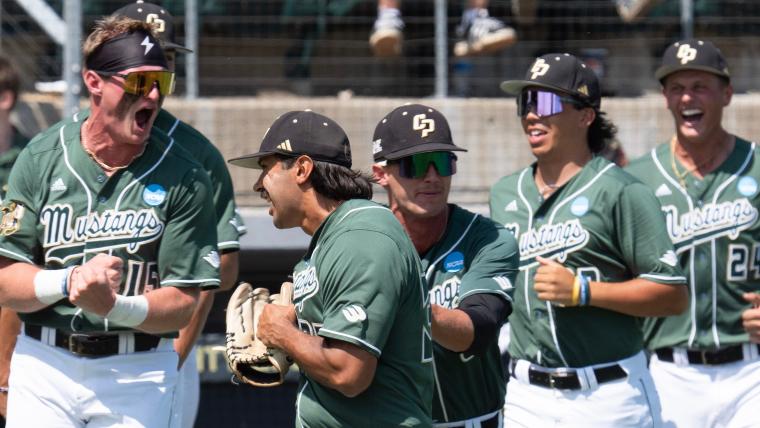
It’s early Sunday evening. Most folks are probably winding down the weekend. Yet, somewhere out west, two collegiate baseball teams, Cal Poly and Saint Mary’s, found themselves locked in a late-game match-up. A match-up that, on its surface, seems rather unremarkable in the grand scheme of global affairs, yet carries a faint, almost imperceptible whiff of the intricate dances nations play out on much larger, deadlier fields. [QUOTE_PLACEHOLDER]
See, Saint Mary’s pulled off quite the feat. They managed to topple the overall No. 1 seed UCLA from post play on Sunday. An unexpected, defiant punch delivered with 15 hits — and ten innings to beat UCLA. That’s grit, pure and simple—the kind of scrappy underdog performance we often applaud, whether it’s on a diamond or in the fraught, messy theater of international relations. But then, as it always does, reward begets more challenges. Their reward? A late game matchup against Cal Poly.
Now, Cal Poly, they’re no slouches. They’ve been on a tear, winning 11 of their last 12 games. You can tell they’ve got momentum, that indefinable swagger. In fact, Cal Poly has already beaten Saint Mary’s in this postseason. That win put the Mustangs in the Regional. And now, they’re back at it, another test of wills — and skill. It’s the kind of grinding, attritional contest that can make or break reputations, can cement dominance, or shatter it entirely.
But let’s get real for a minute. While all eyes on campus might’ve been on the scoreboard, our focus needs to pivot slightly. This game, a microcosm of fierce, local competition, ironically highlights a certain American obsession. This is a nation that exports its cultural narratives — and competitive spirit everywhere. We champion these domestic contests, sometimes to the exclusion of far more pressing geopolitical dramas unfolding in places like, say, Islamabad or Dhaka.
The numbers themselves tell a straightforward tale, though one open to interpretation. Cal Poly had 23 total at-bats, pushing 5 runs across on 6 hits. Saint Mary’s, on the other hand, had 19 at-bats, managing 2 runs from 5 hits. Look at pitcher Jake Hilton from Saint Mary’s: he faced 22 batters over 5.1 innings, striking out zero. Not exactly an auspicious performance, but a solid workhorse effort regardless, as reported by The Sporting News. His ERA stood at a respectable 5.3. These statistics, dry as dust, paint a picture of efforts exerted, chances taken, and outcomes determined—much like any economic policy rolled out by a finance ministry, hoping for hits, trying to avoid costly outs.
And then there’s the whole specter of a Super Regional next week, hanging over both teams. A win from either team would put them one step closer to the Super Regional next week. It’s that perpetual cycle of ambition—winning here just means a harder fight there. It’s the treadmill of striving, endlessly chasing the next level, a very American ethos that often bypasses much of the globe, including large swathes of South Asia and the Muslim world, where a completely different set of metrics defines success and survival.
Think about the sheer, unbridled commitment to sports infrastructure here versus the dire needs elsewhere. This isn’t to diminish the athletes’ toil, but it does contextualize where national energies—and capital—get allocated. It tells a story, doesn’t it, about national priorities.
What This Means
The Cal Poly-Saint Mary’s baseball clash, while ostensibly a battle for collegiate supremacy, quietly reflects a deeper American narrative. It’s about the fierce, sometimes insular, dedication to a singular athletic objective—winning a championship. This narrative is packaged, consumed, and frequently broadcast across an interconnected globe, inadvertently serving as a soft power tool. But what does it truly signify beyond the immediate thrill?
It’s an economic microcosm. You’ve got investment in talent, coaches, facilities—all geared towards optimal performance and, ultimately, drawing eyeballs, ticket sales, and media rights. This isn’t just about college athletes; it’s a multi-billion dollar enterprise, its echoes reaching far beyond state lines. Contrast this single-minded pursuit of sporting glory with, say, Pakistan’s ongoing struggle for sustainable economic development or the region’s challenges in establishing political stability. In Lahore or Karachi, the very concept of a multi-week, national baseball playoff might seem alien, a luxurious distraction. Their battles are often far more fundamental, tied to basic resources, internal security, or shifting regional allegiances, not the geometry of a strike zone or a timely double.
And because the world’s interconnected, what we focus on here, how we define victory and allocate resources, subtly projects our values. A fierce, yet ultimately low-stakes, competition like this baseball game reminds us that what gets intense coverage in one part of the world is often utterly eclipsed by daily existential challenges in another. It also reinforces the idea of meritocracy and constant aspiration—qualities we project outward, expecting others to emulate. It’s not a direct political action, of course, but it’s a cultural declaration, as resonant in its way as a diplomatic statement or a trade agreement. That’s a notion worth pondering over the next inning, isn’t it?