


Europe’s Breath Held: Normal Radiation Levels Don’t Erase Zaporizhzhya’s Ghost in the Machine
POLICY WIRE — Vienna, Austria — The world breathed, however shallowly, as word trickled out: radiation levels remained normal. But for anyone tracking Europe’s most precarious nuclear...

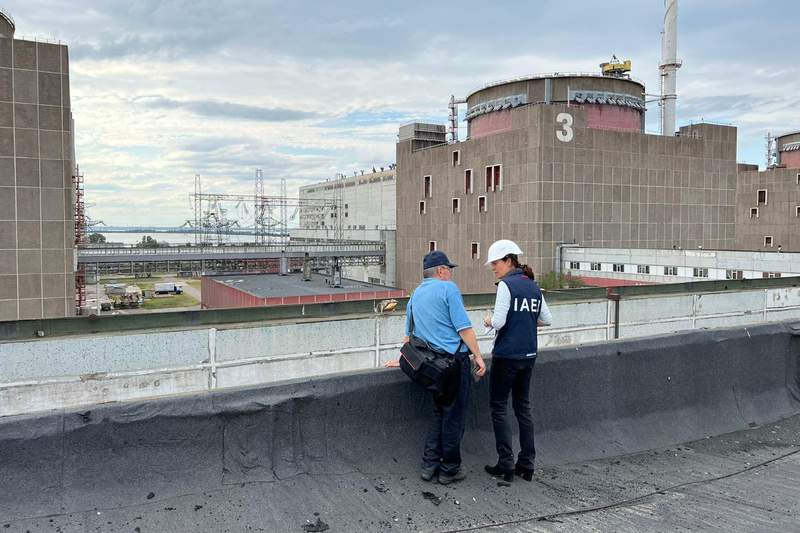
POLICY WIRE — Vienna, Austria — The world breathed, however shallowly, as word trickled out: radiation levels remained normal. But for anyone tracking Europe’s most precarious nuclear installation, the Zaporizhzhya plant, it’s just another Wednesday. Another near-miss. Another agonizing turn of the screws in a war that seems intent on demonstrating every conceivable permutation of global catastrophe, short of the final act.
It’s a bizarre sort of reassurance, isn’t it? The International Atomic Energy Agency, the IAEA, found itself once more confirming that a direct strike on one of the facility’s containment structures had, miraculously, not precipitated a regional, or perhaps even continental, meltdown. The immediate danger—acute, devastating, Chernobyl-level—appears to have been sidestepped, at least for now. But that’s the thing; every dodged bullet only makes the next one feel heavier.
Because let’s be real, the headline itself tells a story far grimmer than the facts initially suggest: IAEA: Radiation levels normal at Zaporizhzhya plant after drone strike. The sheer banality of this recurrent existential threat is where the true terror lies. We’ve become accustomed to such bulletins, processing them with a grim fatalism. It’s like living on a perpetually ticking clock that resets, not stops, every time a new scare emerges.
And let’s not forget the sheer gall involved. Russian forces, occupying the plant since the war’s early days, quickly blamed Kyiv for the drone attacks, accusing Ukraine of attempting to destabilize the already fraught situation. Ukraine, naturally, pointed the finger straight back at Moscow. It’s a tragicomic game of nuclear ‘he said, she said,’ playing out with millions of lives hanging in the balance. But for analysts here in Vienna, the exact provenance of the drone is less relevant than the chilling regularity of such incidents. Someone, somewhere, keeps playing chicken with atomic fire.
This isn’t an isolated incident, not by a long shot. The plant, Europe’s largest nuclear power station, has been caught in the crossfire of the conflict for well over two years now. We’ve seen everything from shelling hitting power lines to a complete loss of external power multiple times – each instance teetering on the edge of a serious safety breach. The IAEA, led by Director General Rafael Grossi, has consistently issued urgent calls for military activity to cease around the plant. He often remarks on the gravity of the situation, often repeating warnings about potential [QUOTE_PLACEHOLDER].
Imagine the planning for this kind of nuclear tightrope walk. International experts spend days — and weeks attempting to establish some kind of demilitarized zone around the facility. Their efforts, admirable as they’re, consistently founder on the immovable rocks of wartime opportunism and strategic positioning. And then a drone shows up. It’s almost satirical, how modern conflict trivializes such monumental hazards.
The latest episode happened to coincide with discussions about global nuclear safety and proliferation — a delicate topic not just in Europe, but also for countries like Pakistan, a nuclear power grappling with its own regional instabilities and energy needs. For Islamabad, seeing a civilian nuclear facility under military occupation and regular attack presents a horrifying precedent. It fuels debates about nuclear safeguards and the ‘peaceful use’ narrative that’s been central to the Non-Proliferation Treaty. How can nations guarantee safety if even IAEA-monitored sites can become active war zones? Because the underlying message from Zaporizhzhya is chillingly clear: during war, every protocol, every treaty, every safeguard can become a mere suggestion.
📄 POLICY WIRE WHITEPAPER PUBLISHED: PAKISTAN'S NATIONAL SECURITY POLICY PRIORITIES
👉 READ BY CLICKING HEREAccording to data compiled by the Stockholm International Peace Research Institute (SIPRI), global military spending reached an all-time high of $2,443 billion in 2023, a significant increase that further entrenches the dynamics making incidents like the one at Zaporizhzhya more likely. The continuous increase suggests less, not more, attention to international arms control or nuclear disarmament. It reflects a world bracing for conflict, not preventing it.
But while the headlines may scream about ‘normal radiation levels,’ what truly reverberates are the deeper tremors. The global community’s ability to maintain oversight and control over nuclear energy has always been a precarious balance, reliant on mutual respect and international law. Both have been shredded in this conflict, piece by agonizing piece. We’re witnessing the normalization of extreme risk, — and that, perhaps, is the most radioactive consequence of all.
What This Means
This recurrent scare isn’t just about an atomic plant; it’s a stark policy signal. Economically, the constant threat drives up insurance premiums — and energy prices across Europe. Long-term energy security discussions become dominated by de-risking strategies, potentially accelerating moves towards renewables—not always for environmental reasons, but out of sheer pragmatic terror of another nuclear event. Investment in traditional fossil fuels might get a cynical bump if policymakers decide the volatile nature of nuclear power in conflict zones isn’t worth the trouble. the lack of decisive international action to demilitarize the plant sets a deeply concerning precedent. It basically says, ‘occupy a nuclear plant, play games with disaster, and the global response will mostly be sternly worded letters.’ This emboldens state actors with aggressive geopolitical ambitions.
Politically, it’s a test of the IAEA’s influence — and the broader international legal framework. Its repeated appeals and inspection missions highlight its role as a monitor but also expose the limits of its enforcement power without broader political will from UN Security Council members. For non-nuclear states or those considering civilian nuclear programs (think Egypt, Saudi Arabia, Turkey in the Muslim world), this situation acts as a stark reminder of both the energy independence benefits and the unparalleled security risks. It pushes states to re-evaluate their entire national security architecture. Is the gain in energy worth the risk of becoming Europe’s next Chernobyl, accidental or otherwise? These attacks erode public trust in nuclear energy worldwide, complicating future clean energy transitions. It’s a tragedy on multiple levels, but mostly, it’s a terrifying dress rehearsal for a disaster we keep managing, by sheer luck, to avert.