


The Detached Observer: Star Catcher’s Injury Offers Unsettling Perspective on the Game
POLICY WIRE — Seattle, United States — It’s a peculiar purgatory, being both witness and absentee. For Cal Raleigh, the Seattle Mariners’ backstop with a penchant for late-game heroics, that...

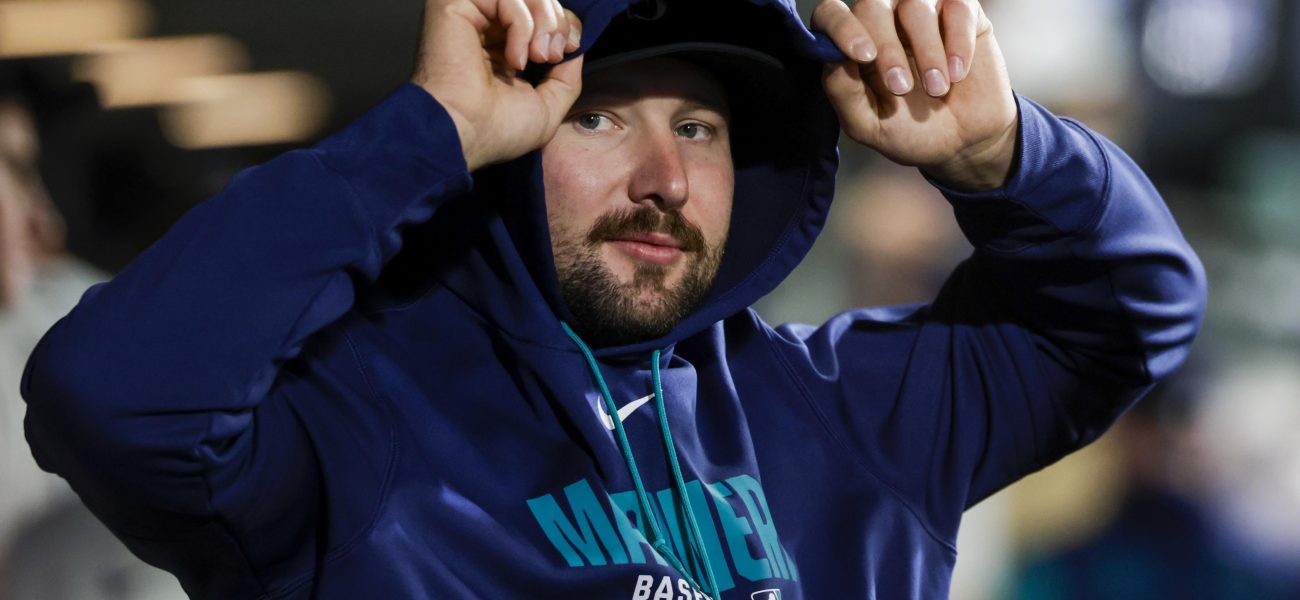
POLICY WIRE — Seattle, United States — It’s a peculiar purgatory, being both witness and absentee. For Cal Raleigh, the Seattle Mariners’ backstop with a penchant for late-game heroics, that purgatory now takes the form of T-Mobile Park’s dugout—a fleeting guest in his own kingdom. His recent cameo appearance during a 5-1 routing of the Diamondbacks wasn’t about strategy; it was a desperate snatch for normalcy, a quick hit of team camaraderie before retreating to the sterile monotony of oblique rehab.
Picture it: one of the team’s anchor players, usually orchestrating games from behind the plate, reduced to a high-five machine, a living bobblehead on the bench. Raleigh, whose powerful bat is as synonymous with the Mariners as rain, admits the transition has been—well, it’s been something. “A lot of nothing,” he dryly labels his stint in the Arizona heat. But that ‘nothing’ has forced an almost Zen-like detachment, an unexpected, perhaps unwelcome, lens through which he now views the frenetic world he typically inhabits.
His absence is a glaring void. But the team’s currently on a five-game tear without him. They’re managing. Which, for any athlete sidelined, has to sting a bit, right? You miss the guys, sure. You miss the roar. But then you watch from afar, — and you see them thrive. And, Raleigh confessed with a shrug, “It’s eye-opening…Realizing how much I miss it, how much I enjoy playing the game and being with the guys, it’s very eye-opening.” It’s like discovering the party kept going, just fine, after you left.
General Manager Justin Hollander isn’t sugarcoating the situation, but he’s also not panicking. “Cal’s health, long-term, is paramount. We don’t run this operation day-to-day; it’s about championships, plural. His rehabilitation is methodical, controlled, and for a reason,” Hollander told Policy Wire this week, his voice betraying a hint of impatience with public speculation. It’s an interesting calculus: the value of a present star versus the investment in a future, perfectly healed asset. And for Raleigh, the focus shifts to a very personal, — and often frustrating, battle against the biological clock.
But this isn’t just about missing teammates. Raleigh’s spent days performing tee work and flips—15 swings a side, feeling ‘really good, really promising’ on Friday—then observing bullpen sessions, catching pitches without taking swings. It’s like being a surgeon practicing on cadavers. You know the moves, but the live patient, with all its unpredictable variables, is a different beast entirely. Head Athletic Trainer Kyle Torgerson, a man whose professional life revolves around precision and prudence, echoes Hollander’s sentiment. “Oblique injuries, they’re tricky customers,” Torgerson explained. “You feel good at 70 percent, then you dial up to 100 in-game, — and you risk a significant setback. We’re aiming for absolute certainty, not just comfort. Every microscopic fiber counts.” He makes it sound less like sports medicine and more like advanced structural engineering. Which, honestly, it kind of is.
Because that’s the rub, isn’t it? As Raleigh observed, you can’t truly replicate the full-throttle intensity of a big-league swing in a controlled environment. The body lies, sometimes. Or at least, it hedges. “Everything can feel great now, and then you get into a game and you might feel it, or have a little setback,” he grimaced. His buddy, Luke Raley, suffered a similar injury last year. They’ve talked. A lot. Which shows the real fraternity of these athletes, even across team lines, sharing battle scars — and rehab protocols. Raleigh’s now embracing a sort of forced patience, a ‘control what you can control’ mantra that’s less inspirational poster, more pragmatic survival guide.
He’s been watching from a perch many players rarely experience, gaining an almost disembodied view of his club’s inner workings. “The biggest thing I noticed is how talented this team really is,” Raleigh conceded. “It’s so much fun to watch…You notice a few more things that you don’t really notice when you’re in it.” It’s a revelation that only distance, a mandated pause, can bring. Like a long-time diplomat observing their own country’s foreign policy from an neutral embassy abroad—the raw mechanics become clearer, stripped of immediate, personal investment.
What This Means
Raleigh’s forced introspection isn’t just a personal journey; it reflects a broader economic reality within professional sports. A star athlete’s physical capital is finite, fragile. And an injury like this doesn’t just sideline a player; it forces an organization to recalibrate, sometimes exposing unforeseen strengths—or weaknesses—in their operational depth. In the global marketplace of talent, where contracts skyrocket and player value is dissected with algorithmic precision, a key injury means an immediate hit. Analytics firm ‘Sports Metrics Group’ estimated that MLB teams annually lose an average of 12% of potential revenue due to critical player injuries, factoring in performance drops and fan engagement, a figure that highlights the sheer financial fragility built into modern sports budgets. That’s a considerable chunk of change.
But the ‘seeing things differently’ aspect extends beyond the diamond. Think of countries, say in South Asia, like Pakistan, grappling with geopolitical shifts or internal challenges. It’s often the observers—expatriates, journalists, policymakers outside the immediate fray—who gain a clearer perspective on the overall currents. Those immersed in the day-to-day struggle, like Raleigh catching every single game, often miss the forest for the trees. This phenomenon, where physical distance creates intellectual clarity, applies to everything from corporate strategy to national security assessments. When a critical cog steps out, everyone else adapts. But the system itself also becomes transparent, less clouded by individual egos or habitual processes. This detached observation becomes an invaluable, if unwelcome, asset. Like a phantom coach watching his team, Raleigh might return a better, smarter player, simply by virtue of having had to sit down and watch. And then, and only then, truly see.