


Madison Avenue’s Hardwood Dreams: A Tale of Two Cities, a Billion-Dollar Game
POLICY WIRE — New York, United States — Forget the strategic breakdowns, at least for a moment. Never mind the X’s — and O’s of coaches plotting global domination, er, basketball...

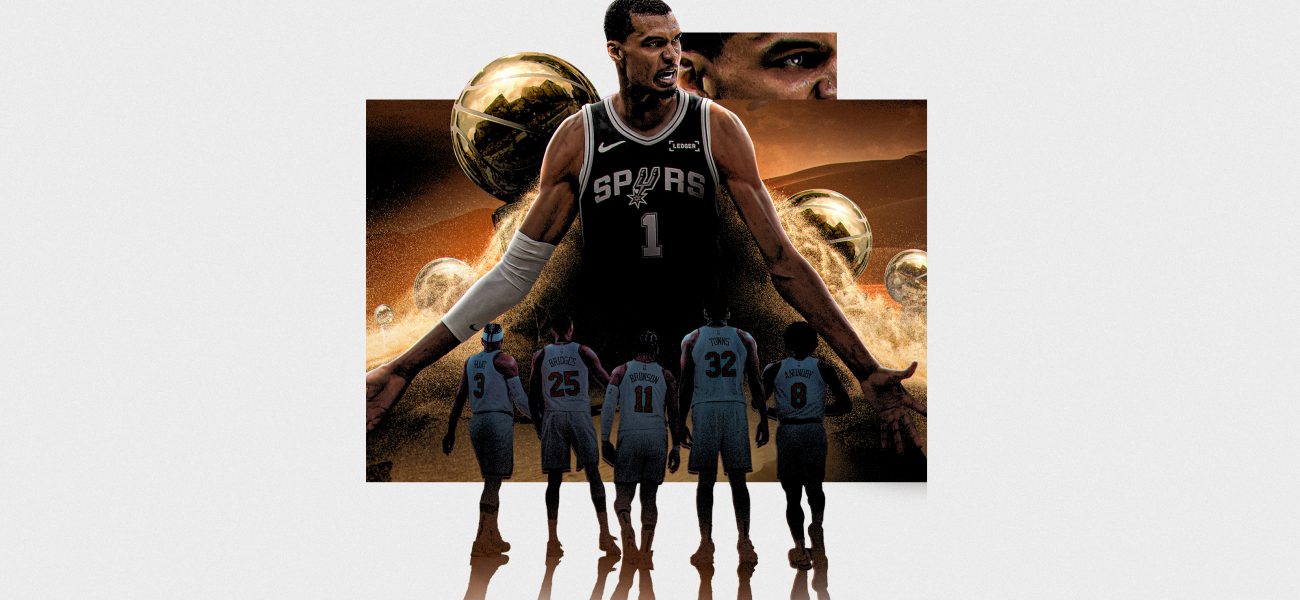
POLICY WIRE — New York, United States — Forget the strategic breakdowns, at least for a moment. Never mind the X’s — and O’s of coaches plotting global domination, er, basketball dominance. Look instead at the numbers painted on the scoreboard of American consumerism. Because when the Eastern Conference’s third-seeded New York Knicks square off against the Western Conference’s second-seeded San Antonio Spurs for the 2026 NBA Finals, we’re not just witnessing a basketball series. We’re staring down an economic earthquake, a cultural convergence, — and a narrative engine firing on all cylinders.
It’s about the cash, sure, but it’s also about the raw, unfiltered hunger. Long-suffering fans, many of whom haven’t seen a sniff of this stage in nearly a quarter-century, are proving their devotion in the most tangible way possible. The cheapest ticket to Game 3 in Madison Square Garden right now, according to Gametime, is $4,112. Think about that for a second. More than a month’s rent for a glimpse of men in short pants chasing a ball. The most extravagant seat? A cool $103,364. One struggles to imagine what kind of view that fetches, short of sitting on the bench next to the coach. But it sure paints a picture of a populace ready to splurge, or perhaps just finally exhale, after years in the wilderness. It feels almost absurd, doesn’t it? This isn’t just sports; it’s a spectacle, meticulously packaged — and sold at a premium.
This is, to be clear, a big freaking deal. The league must be licking its chops, what with New York, its largest media market, and Wembanyama, a 7-foot-4 self-described “alien,” who has a chance to be one of the most special talents the game has ever seen, headlining its championship series. But what’s truly astonishing isn’t just the monetary splurge. It’s the journey of the teams themselves. New York’s franchise, for decades, operated with all the tactical precision of a falling anvil. It’s been a long time, New York. They haven’t won a championship since 1973, when Willis Reed, Walt Frazier, Bill Bradley, Earl Monroe, Dave DeBusschere, Phil Jackson and Jerry Lucas — indelible Hall of Famers, none of whom, we imagine, ever had to pay for a drink in New York again — won a second title in a four-year span (the only two rings in Knicks history). Because following Ewing’s departure in 2000, the Knicks went almost a quarter-century with a single playoff series win (courtesy of Carmelo Anthony’s charges). They missed the playoffs every season from 2005-10 and again from 2014-20, often embroiled in controversy under team governor James Dolan’s stewardship.
Not until 2023, when this magical run with Jalen Brunson began, did the Knicks start regularly winning again. Now, still under Dolan’s governance, with a team as lovable as that 1973 crew, the Knicks are here again. These long-starved New Yorkers are right where any fan would want to be — in the Finals, with a shot at a championship for the first time in forever. The 1999 iteration, by the way, famously lost to the very same Spurs. That 1999 finals run had its own peculiar backdrop, mirroring, in a sports context, an unsettling global climate.
And then there’s San Antonio. The Spurs, having just defeated the defending champion Oklahoma City Thunder in the Western Conference finals, are rolling with a force of nature in Victor Wembanyama. A 22-year-old Wembanyama has a shot to do just that: win a title early. Since a rookie Bill Russell led the Boston Celtics to the first of his 11 championships in 13 seasons at the age of 22, few young superstars have taken their teams to titles in their first three seasons. The list, we’re reminded, is short — and full of all-time greats. It’s filled only with multi-time champions. But Wembanyama is on the precipice, an ‘alien’ from another planet, as the league itself calls him, set to rewrite history.
📄 POLICY WIRE WHITEPAPER PUBLISHED: PAKISTAN'S NATIONAL SECURITY POLICY PRIORITIES
👉 READ BY CLICKING HEREBut before anyone engraves Wembanyama’s name on the trophy, one must consider Jalen Brunson, the Knicks’ diminutive — yet mighty — wizard. Brunson carves his way into a defense, getting to a spot, firing off a step-back 3-pointer, a pull-up jumper or a creative layup that feels like a miracle, only it’s not, because he will do it time and time again, and he will create off of that. It’s a fascinating contrast: the 6-foot-2 brute against the slender Wemby. Brunson averaged a 26-4-8 on 42/42/88 shooting splits in their three meetings this past year, including the NBA Cup final. Oh, — and for the record, the NBA Finals will for the first time in its history feature a rematch of the NBA Cup final. The Knicks defeated the Spurs in the third annual regular-season tournament, 124-113, when Wembanyama was still working on a minutes restriction off the bench. So, the stage isn’t just set; it’s practically vibrating with anticipation. This echoes a deeper pattern: history’s penchant for reappearing acts.
What This Means
This 2026 NBA Finals isn’t merely a contest for a trophy; it’s a profound exhibition of the globalization of sports, market dynamics, and cultural resonance. Economically, this series, especially with New York’s re-engagement, represents a massive injection into local economies — ticket sales, merchandise, hospitality, broadcasting rights. It’s a multi-billion-dollar enterprise that feeds an ecosystem far beyond the hardwood. And it’s not just local; the narrative of the long-suffering Knicks or the rise of a phenomenon like Wembanyama travels. Global audiences, particularly in emerging markets like Pakistan, eagerly consume such narratives. Cricket reigns supreme in Pakistan, yes, but the global pull of NBA superstars like Wembanyama or LeBron James cuts through traditional loyalties. Just like in any region, fans are drawn to excellence, to narratives of struggle — and triumph. This widespread viewership isn’t just about entertainment; it’s about soft power, brand recognition for cities, and fostering a sense of shared human experience, even if that experience is watching someone slam a ball through a hoop. Think of the cultural inroads basketball is making in unexpected corners, propelled by global superstars who are recognized the world over, often generating social media buzz that eclipses political headlines. It reminds us that whether it’s cricket, football, or basketball, the passion of sport transcends national borders, proving a potent, if informal, economic and diplomatic tool in an increasingly connected, yet often fractious, world. And what it also means is, somebody’s going to be really, really happy come next week.