


Welsh Rugby’s Grand Illusion: Cardiff Defies Gravity as Financial Headwinds Gather
POLICY WIRE — Cardiff, Wales — They say nothing focuses the mind like a hanging, and for Welsh professional rugby, the axe of austerity has been swinging for ages. Amid a landscape increasingly...

POLICY WIRE — Cardiff, Wales — They say nothing focuses the mind like a hanging, and for Welsh professional rugby, the axe of austerity has been swinging for ages. Amid a landscape increasingly barren of sporting success and choked by systemic financial angst, Cardiff Rugby managed something resembling defiance, squeezing into the United Rugby Championship play-offs this season. It’s a silver lining, sure, but one tarnished by the overarching cloud of an ongoing, slow-motion administrative collapse that makes other regional disputes — like say, provincial squabbles in Punjab over resource allocation — look positively quaint by comparison. This isn’t just about scrums and tries; it’s about budgets, governance, and a peculiar brand of Welsh exceptionalism that consistently undermines its own potential.
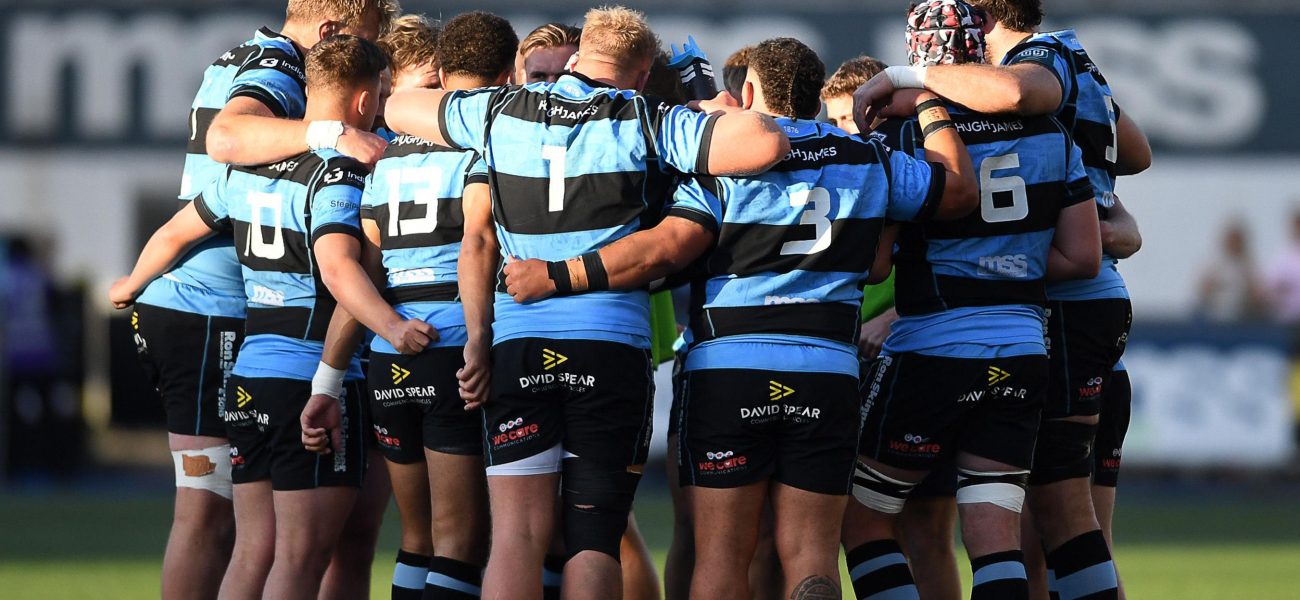
The capital’s squad wrapped up their campaign with a 44-21 trouncing by the Stormers in Cape Town, putting an end to an improbable journey that saw them finish sixth in the regular season. For a side continually battered by financial strictures and off-the-field dramatics—Welsh teams have been through the wringer, year after year—just making the top eight was, to borrow a phrase, [QUOTE_PLACEHOLDER] significant progress for the Arms Park side. And you know, they really earned it, given the context. The season itself was a mad dash for consistency, complicated by losing head coach Matt Sherratt just days before the season kicked off, with forwards boss Corniel van Zyl stepping up to fill the void.
There was a lot of talk afterwards about disappointment tempered by pride. Cardiff and Wales wing Josh Adams summed up the mood neatly, albeit with the standard athlete’s lament: [QUOTE_PLACEHOLDER] He then tacked on, “It’s been successful. We knew at the start of the season that we wanted to finish in the top eight, that was our target.” They finished sixth, you know, staying in the top tier for the whole run. That’s gotta count for something when everybody else expected them to crater.
Van Zyl, the stand-in chief, wasn’t wrong when he declared, [QUOTE_PLACEHOLDER] He added, [QUOTE_PLACEHOLDER] But that next step? A 6,000-mile flight to South Africa for an immediate playoff, facing a former tournament winner? Let’s just say that wasn’t exactly an even playing field. Their single URC win outside Wales all season didn’t exactly instill confidence they’d pull off a miracle there, either. It’s the kind of institutional naiveté that regularly defines these competitions.
And let’s not pretend every player was just basking in the glow of participation. Flanker Dan Thomas—one of the few truly bright sparks—acknowledged the club’s leap but remained suitably cynical. [QUOTE_PLACEHOLDER] A blunt truth, that one. He said, [QUOTE_PLACEHOLDER] But you always want silverware. It’s the simple human desire to win that sometimes cuts through all the management-speak. And with the looming shadow of reductions in team numbers from four to three by 2028 – a plan the Welsh Rugby Union has promised to outline by the end of June – one can’t help but think this ‘pride’ is very much a temporary reprieve.
The post-mortem was as predictable as the tide: set-piece fragility. Thomas didn’t mince words on that front, saying, [QUOTE_PLACEHOLDER] He followed with, “The Stormers were dominant and we didn’t cope. We knew it was coming and still couldn’t stop it.” That’s a stark admission, a real gut punch for any professional outfit. They’ve already lined up Australian veteran prop Scott Sio for next season, hoping he shores up what proved to be a leaking foundation. So, new blood then. But will it be enough?
📄 POLICY WIRE WHITEPAPER PUBLISHED: PAKISTAN'S NATIONAL SECURITY POLICY PRIORITIES
👉 READ BY CLICKING HEREWhat This Means
This tale isn’t just about a rugby club; it’s a micro-drama reflecting broader political economy. The struggle of Cardiff Rugby—and indeed all Welsh professional clubs—under an umbrella organisation like the Welsh Rugby Union (WRU), battling budget cuts and strategic missteps, is symptomatic of an old-world governance model cracking under modern commercial pressures. While nations like Pakistan grapple with infrastructure deficits hindering economic growth, or South Asian governments negotiate complex regional trade deals under tight budgets, Welsh rugby battles similar constraints. Its future is literally dictated by policy, as the WRU has pledged to cut its professional teams to three by 2028, fundamentally restructuring its entire top-tier sport. This isn’t mere adjustment; it’s a mandated culling, irrespective of on-field merit. This policy, designed to centralize resources (and arguably, control), carries profound political implications, raising questions about regional representation, fan loyalty, and player development pathways. For these clubs, financial constraints aren’t just obstacles; they’re existential threats, making Cardiff’s relative success this season less about winning a trophy and more about sheer, bloody-minded survival against a tide of administrative malaise.
Coach van Zyl captured this perfectly earlier in the year, stating, [QUOTE_PLACEHOLDER] He concluded, [QUOTE_PLACEHOLDER] That’s the sportsman’s idealism battling the bureaucrat’s pragmatism. Because off-field stuff always counts, doesn’t it?
As the squad eyes the next season, the same sentiments float around: youth, growth, ambition. Josh Adams declared, [QUOTE_PLACEHOLDER] He’s looking forward to next season, just like every player who’s tasted a bit of success. Skipper Liam Belcher mirrored that sentiment, saying, [QUOTE_PLACEHOLDER] And, with a hopeful glint, he observed, [QUOTE_PLACEHOLDER] It’s a good rallying cry. But for a league driven by cold hard cash and unforgiving policy directives, the taste of victory might soon feel a lot like borrowed time.