

Carson National Forest Yields Grim Answer: Remains of Missing Taos Woman Melissa Casias Identified
POLICY WIRE — TAOS, N.M. — The immense, stoic wilderness of Carson National Forest, where silence often reigns supreme, harbored a grim secret for months. Its deceptive tranquility, once a backdrop...

POLICY WIRE — TAOS, N.M. — The immense, stoic wilderness of Carson National Forest, where silence often reigns supreme, harbored a grim secret for months. Its deceptive tranquility, once a backdrop for casual recreation, became the unyielding vault of an answer many had desperately sought, yet simultaneously dreaded. Only when nature yielded a clue, a discovery not of planned investigation but serendipitous chance, did the long vigil for Melissa Casias finally shift from hope to a harrowing certainty.
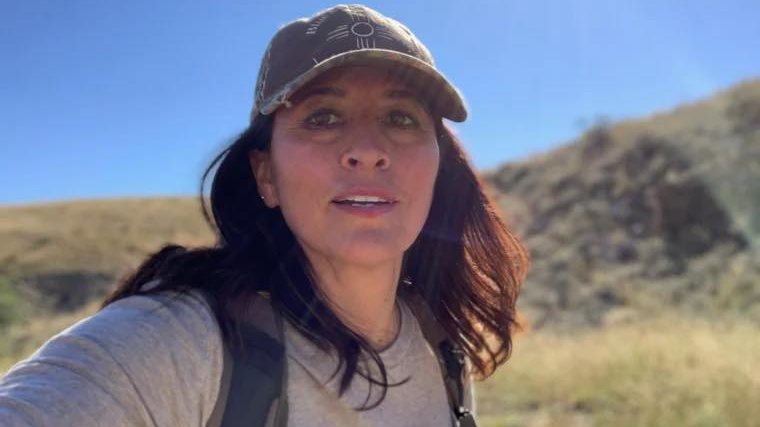
It wasn’t a crack team of forensic specialists or a high-tech drone search that delivered the first fragment of truth. No, it was a lone hiker, navigating the rugged terrain of the McGaffey Ridge area, who stumbled upon human remains and a handgun. That unsettling discovery, made on a relatively unassuming day – May 28 – kicked off the bureaucratic gears of identification, setting the stage for what New Mexico State Police formally confirmed recently: the remains belonged to Melissa Casias, a Taos woman reported missing almost a year prior. It's an end to one agonizing chapter, certainly, but it’s undoubtedly the start of another, far more complex, one for her family and investigators alike. [QUOTE_PLACEHOLDER]
Casias had vanished on June 26, 2025. This wasn’t some spur-of-the-moment departure. police said she didn’t arrive at work and didn’t return home after visiting her daughter at work.
This detail alone painted a picture not of willful disappearance, but of a life interrupted. Because it was the family who then found her personal effects – her purse, identification and cell phones left behind
– that raised immediate concern for her safety and led to the missing person case.
Those items, everyday anchors to one’s existence, becoming objects of chilling significance, left neatly, or perhaps hastily, behind.
For nearly a year, Casias's absence has hung heavy over the Taos community. New Mexico State Police had maintained investigators have continued an extensive investigation and that the case remains active and ongoing.
These aren’t mere bureaucratic affirmations. These are the boilerplate phrases that conceal countless hours of detective work, leads followed and abandoned, forensic tests, and the quiet despair of loved ones watching days bleed into weeks, then months, without a definitive sign.
But while the identification offers a modicum of closure, it throws open a chasm of fresh unknowns. The cause and manner of death haven’t been determined,
authorities stated, leaving the most agonizing questions unaddressed. Her remains, identified through coordination with the Office of the Medical Investigator,
will now undergo further anthropological examination by the Office of the Medical Investigator.
It’s a painstakingly slow process, often measured in geological time against the desperate urgency of a grieving family. Such prolonged ambiguities, where the mechanisms of justice operate with frustrating deliberation, echo the universal struggle for definitive answers faced by communities far and wide. From the contested valleys of Kashmir, grappling with unexamined mass graves, to families in Lahore seeking accountability for enforced disappearances, the wait for closure under the veil of official processes can feel interminable, sometimes a phantom pact with justice itself.
The state police extended their formal sympathy, noting, The New Mexico State Police extend their deepest condolences to the Casias and Mondragon families during this difficult time.
It’s a standard utterance, but it’s a necessary one. This case, still unfolding within the vastness of a protected forest, serves as a stark reminder of the complexities of loss, the tenacity of crime, and the silent narratives held by America's wild places. About 4,400 sets of unidentified human remains are recovered in the United States annually, according to the National Missing and Unidentified Persons System (NamUs), a federal program tracking such data. Each one a story; most without such clear initial answers.
📄 POLICY WIRE WHITEPAPER PUBLISHED: PAKISTAN'S NATIONAL SECURITY POLICY PRIORITIES
👉 READ BY CLICKING HEREWhat This Means
The formal identification of Melissa Casias’ remains does little to soothe the immediate anguish, instead, it reframes the hunt. The narrative shifts from a missing person to a death investigation—a far more resource-intensive, technically demanding, and often publicly opaque endeavor. For New Mexico State Police, this means a sustained commitment of specialized resources to a cold, remote site, working backward from decomposition to reconstruct events. It’s a costly, methodical pursuit, taxing both their budget and personnel, especially in rural areas where such specialized units are thinly spread.
Economically, there’s little direct impact on Taos, a community that thrives on its artistic allure — and natural beauty. Yet, lingering uncertainty over the cause — and manner of death can cast a pall. Is there a danger in the woods? Was it accidental? Foul play? These unasked-yet-present questions affect local perceptions of safety, subtly influencing tourism or local recreation for a populace inherently connected to the outdoors. for the Casias and Mondragon families, the economic burden of legal and emotional support services can be profound, often extending for years as they navigate a criminal justice system that moves at its own deliberate pace. And because this isn't neatly solved, it won't just fade away.
Politically, unresolved cases like Casias’ underscore the constant pressure on state and local law enforcement to deliver answers. When bodies are found and questions persist, it can erode public trust in institutions, particularly in tight-knit communities where everyone knows someone who knows someone. These events can quietly drive discussions about public safety funding, officer training for complex wilderness forensics, and the critical, sometimes invisible, role of agencies like the Office of the Medical Investigator. It’s a grim example of how human tragedy, even on an individual scale, can ripple outward, impacting community psyche and resource allocation. This particular ripple isn't over; it’s merely begun its journey across a wider, darker pool.