


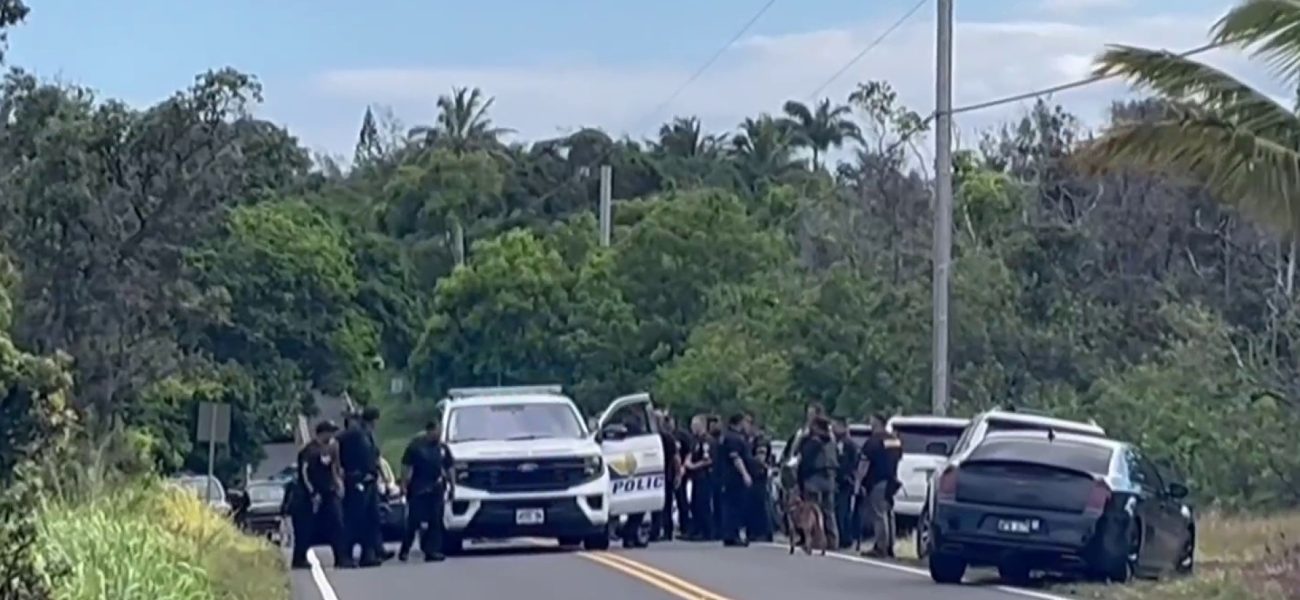
Islands Grapple with Grim Echoes as Honolulu Police Secure Alleged Killer
POLICY WIRE — Honolulu, HI — The verdant slopes of Hawaii, often envisioned as a paradise untroubled by the harsh realities of urban sprawl or international crises, have, in recent days, unveiled a...

POLICY WIRE — Honolulu, HI — The verdant slopes of Hawaii, often envisioned as a paradise untroubled by the harsh realities of urban sprawl or international crises, have, in recent days, unveiled a grimmer tableau. Beneath the sway of palms and the roar of the Pacific, an unsettling narrative has unfolded, one culminating in an arrest that feels both relieving and deeply disquieting. It’s a moment that rips open the fabric of perceived safety, revealing the often-unseen anxieties that simmer just beneath the postcard-perfect surface.
Honolulu authorities finally managed to apprehend a suspect thought to be connected to the tragic deaths of three individuals. No easy feat, mind you. This isn’t just about clearing a case off the desk; it’s about the unsettling reminder that even in locales marketed for their serenity, profound violence can shatter the peace. It forces us to ask: What do such ruptures really mean for a community? What does it say about the underlying pressures, unseen currents, that even a tropical idyll can’t keep at bay? And it’s not just a local problem, is it? [QUOTE_PLACEHOLDER]
Consider the broader implications. Such events, localized as they seem, often send tremors beyond immediate geography. They become talking points, fodder for both domestic discourse and international observation, much like how communities in, say, Pakistan or Malaysia might scrutinize crime trends in major Western hubs. Every incident of significant public safety concern, wherever it happens, feeds into a global consciousness, influencing perceptions of order, justice, and security. It’s a grim currency, exchanged globally, whether we acknowledge it or not. Remember, crime rates aren’t just statistics; they’re emotional indicators, shaping investor confidence, tourist numbers, and even diplomatic perceptions of a nation’s stability.
But back to Hawaii. The police department here, according to sources privy to internal operations—and let’s be honest, everyone knows someone on the force, especially on an island—was under considerable heat. Capturing this individual wasn’t merely procedural; it was about stemming a growing tide of unease, particularly in areas already grappling with heightened housing costs and a sense of shifting community dynamics. They needed a win. And they got one.
It’s worth noting the persistent hum of the internet as details, or often misdetails, spilled out. The digital age means a vacuum of information is quickly filled by speculation, anxieties, and, inevitably, misinformation. Imagine the local WhatsApp groups, the neighborhood forums—every rumor amplifying the existing tensions. It creates a sort of civic whiplash: relief at an arrest, but exhaustion from the information overload and emotional toll of the preceding days.
And yet, as one senior official, speaking off the record (because that’s how these things often happen), pointed out, this capture is but one chapter. The legal battles, the inevitable questions about motive, about prevention—those chapters remain unwritten. Justice isn’t a switch you flip; it’s a tortuous path, often marred by bureaucracy — and human frailty. You can almost hear the sighs of weary public defenders already.
📄 POLICY WIRE WHITEPAPER PUBLISHED: PAKISTAN'S NATIONAL SECURITY POLICY PRIORITIES
👉 READ BY CLICKING HEREThe FBI’s Uniform Crime Reporting (UCR) Program indicated that in 2022, there were approximately 6.8 violent crimes per 100,000 inhabitants nationwide. While regional variations are significant, incidents like the one in Hawaii remind us that the fabric of society can be vulnerable anywhere, underscoring the ongoing challenges law enforcement faces daily, whether it’s managing tourist hotspots or sprawling urban centers. It’s never just a simple math problem, is it? Every number represents a broken life, a shattered community.
For those living beyond the shores, perhaps in bustling cities across South Asia, news of such events can filter through an increasingly globalized media landscape, sometimes serving as cautionary tales or, unfortunately, fodder for narratives about perceived societal breakdown in the West. This arrest, then, isn’t just a Hawaii story; it’s another data point in a vast, interconnected tapestry of human experience that nations like Pakistan watch, digest, and often reinterpret through their own cultural and political lenses. Security concerns—both real and perceived—aren’t bounded by oceans.
What This Means
This arrest, while providing immediate relief to a shaken community, lays bare several unsettling truths. Economically, even a single high-profile criminal case can subtly erode tourist confidence, particularly in destinations that rely heavily on their reputation for safety and tranquility. Small businesses, the lifeblood of many island economies, can suffer disproportionately from even temporary dips in visitor numbers. Politically, the pressure on local governance to ensure public safety escalates exponentially, potentially diverting resources from other pressing issues—like infrastructure upkeep or addressing homelessness, a recurring challenge even in paradisiacal settings.
It also reignites discussions about community policing, mental health resources, and the persistent socioeconomic disparities that can fuel desperation, even crime. Law enforcement’s effectiveness here isn’t just about quick arrests; it’s about rebuilding trust and signaling stability, a subtle but persistent message that echoes globally. How Honolulu navigates the aftermath of this grim chapter could become a quiet case study for other communities trying to maintain their own fragile promises of civic harmony in an ever-turbulent world. It’s never just about who did what; it’s about what the community does next, isn’t it?