

Edge of Midnight: When F-16s Skirted Disaster Over Iranian Airspace
POLICY WIRE — Washington D.C., U.S. — It’s a gamble few planners openly discuss, a shadow play that keeps commanders sleepless. Sometimes, though, you just have to bet the house on sheer grit — and...

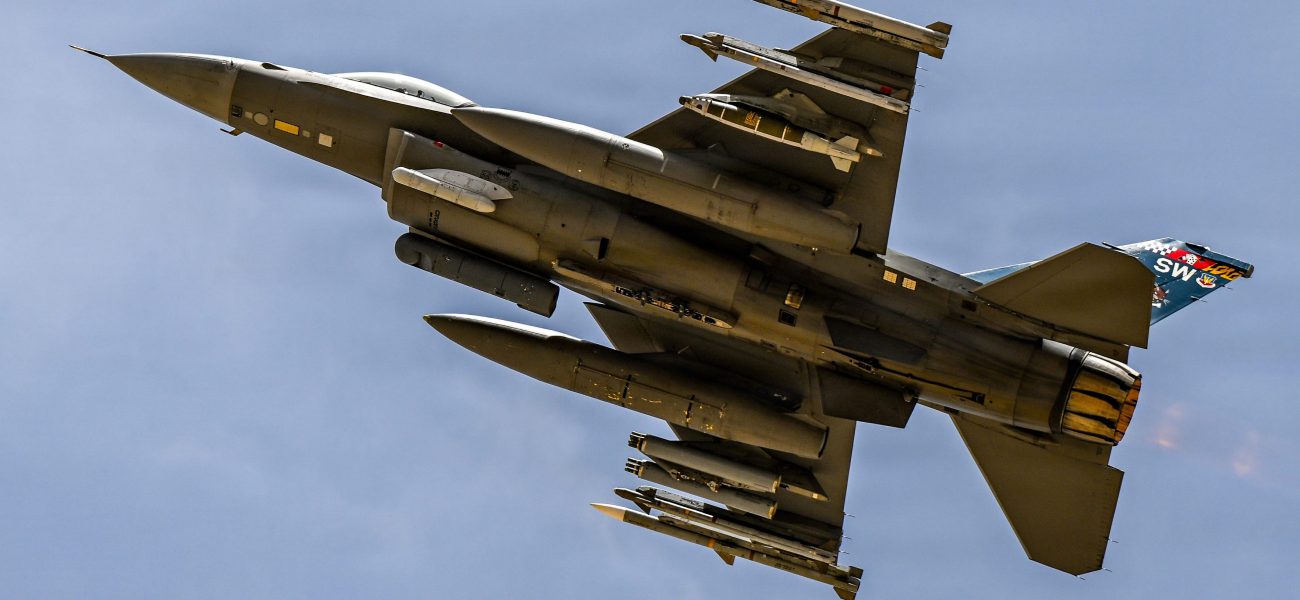
POLICY WIRE — Washington D.C., U.S. — It’s a gamble few planners openly discuss, a shadow play that keeps commanders sleepless. Sometimes, though, you just have to bet the house on sheer grit — and cold steel. Because a while back, some pilots did precisely that, steering their venerable F-16s—hardly cutting-edge stealth aircraft—into the heart of hostile skies over Iran, pulling off an audacious protective screen for larger bomber formations. And then, against every reasonable probability, they flew back out.
It’s an image burned into the lore of tactical aviation, one not officially detailed, but whispered in hangar bay debriefs and hushed conference calls. These weren’t quiet, radar-evading missions. This was a statement, executed with the kind of audacity that makes geopolitical analysts sweat. What’s more, the pilots faced the ultimate aviation nightmare on their return: critically low on fuel, they still found a way to navigate their way home.
Think about that for a second. Deep behind what could be enemy lines, outnumbered, outgunned by more modern systems— Iran’s got a dense air defense network, remember? — these weren’t fifth-generation stealth jets, not F-22s or F-35s designed for that kind of environment. These were the workhorses, the F-16s. Their success hints at something more profound than just pilot skill. It speaks to mission planning that bordered on reckless, or perhaps, simply desperate to convey a very firm message. One of those.
An F-16C, for instance, boasts a combat radius of approximately 550 nautical miles (630 miles) without external fuel tanks, according to a recent report by Janes Defence Weekly. Penetrating Iranian territory, particularly towards key strategic assets, pushes even that range to its absolute limit, demanding precise refueling and near-perfect execution. What sort of planning goes into deciding that the political or strategic objective outweighs the extraordinary risk of losing these assets and their crews?
But they were tasked. The [QUOTE_PLACEHOLDER] contingent flew their non-stealth jets deep into Iran protecting bombers. Protecting what exactly? That’s where the whispers get interesting. Was it a show of force over sensitive sites? A dry run to test Iran’s response? Whatever the bombers carried, or whatever message they conveyed, the F-16s provided a necessary, albeit precarious, shield. The pilots pushed their aircraft, — and themselves, beyond conventional operational parameters.
And let’s consider the regional optics. While Washington or Brussels might view this as a successful projection of power, the view from places like Islamabad is likely far more complex. Pakistan, a nation with its own delicate strategic balance and a sophisticated air force, would watch such a deep penetration mission with a different lens. They’re acutely aware of the capabilities—and risks—involved in such maneuvers within their neighborhood. It changes the perceived calculus of air superiority in an already volatile region. For countries in the broader Muslim world, it’s not just about American capabilities, but about regional stability—or the increasing lack thereof.
The mission itself suggests a calculated, perhaps desperate, willingness to escalate potential conflict without actually firing a shot. It implies that diplomatic avenues, if they ever existed, might have withered on the vine. These aren’t just military operations; they’re high-stakes political declarations made at 40,000 feet. You don’t send non-stealth jets on a high-risk interdiction unless the alternative is deemed even worse. It’s a harsh reminder that power isn’t just spoken, sometimes it’s flown, even on the ragged edge of physics.
Because ultimately, when they flew out critically low on fuel, it meant every contingency was nearly exhausted. There was no comfortable buffer, no easy margin for error. Just pilots, their machines, — and the vast, unforgiving emptiness of the sky separating them from certain trouble. It’s an incident that doesn’t just show what machines can do; it shows what humans are forced to do under extreme political pressure.
What This Means
This daring escapade, reportedly involving F-16 pilots penetrating Iranian airspace to protect a bomber force, carries profound implications that stretch far beyond a simple operational success. Economically, such high-risk posturing immediately impacts energy markets, already jittery with global demand and ongoing supply chain uncertainties. The mere rumor of a major incident in the Persian Gulf can send oil prices spiking, directly affecting consumer pockets from Karachi to Kansas. Businesses in the region, particularly those involved in maritime trade, are forced to consider increased insurance premiums and alternative routes, dampening economic activity.
Politically, the mission underscores a deeply fractured relationship and a stark erosion of trust between key global players. It signals that deterrence is actively being tested, possibly even redefined, in a dangerous cat-and-mouse game where the stakes couldn’t be higher. For regional allies of the U.S., like Saudi Arabia or the UAE, it can be both reassuring of American commitment and simultaneously alarming due to the inherent escalation risk. For rivals or adversaries, it’s a detailed map of operational daring, providing insights into limits and capabilities they would otherwise pay a fortune for. It creates a domino effect: increased tensions, more frequent ‘shows of force,’ and an ever-present threat of miscalculation leading to a wider conflagration that no one truly desires. The underlying message isn’t about precision; it’s about a willingness to stare down an opponent, no matter the immediate cost, or the very long odds.