

Children’s Photo Exhibit Shatters Complacency in Albuquerque’s Policy Halls
POLICY WIRE — Albuquerque, New Mexico — It’s not often that the harsh glare of public policy—all spreadsheets and statistics—finds itself outmaneuvered by the unvarnished perspective of a...

POLICY WIRE — Albuquerque, New Mexico — It’s not often that the harsh glare of public policy—all spreadsheets and statistics—finds itself outmaneuvered by the unvarnished perspective of a child. But that’s precisely what played out last Friday in Albuquerque, where a collection of photographs taken by children experiencing homelessness offered a potent, if accidental, rebuke to the conventional narratives surrounding urban destitution. These aren’t the images crafted by seasoned professionals, mind you. They’re a candid glimpse into worlds often kept carefully out of sight, worlds now projected large for anyone willing to look. And, frankly, policymakers ought to be taking note.
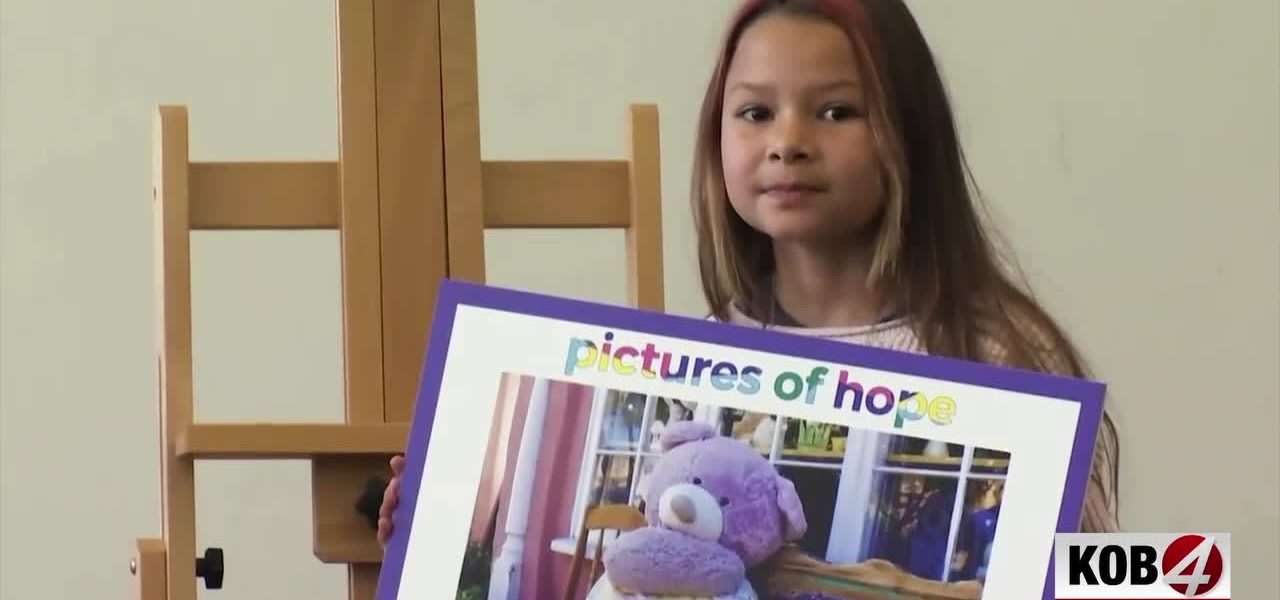
Guided, yes, by a seasoned photojournalist, Linda Solomon, but the lens itself was gripped by tiny hands, hands that often don’t have enough to hold onto. A local charity called Saranam—an organization not unfamiliar with the acute needs festering just beyond the city’s glittering veneer—had dished out digital cameras to these young people last month. The mandate was deceptively simple: capture their hopes — and dreams. It sounds like something from a school art class, doesn’t it? Except these aren’t kids debating whether to draw a dinosaur or a unicorn. They’re trying to frame a future, any future, that looks brighter than their present. [QUOTE_PLACEHOLDER]
The resulting exhibition, dubbed «Pictures of Hope,» isn’t just an art show. It’s an indictment, a quiet roar against the inertia that allows childhood homelessness to persist in one of America’s major cities. When Saranam printed the children’s photos on greeting cards, they didn’t just create keepsakes. They forged tangible links, invitations for a public detached from the daily grind of survival to actually engage. People can acquire these cards on Saranam’s website, a rather ingenious mechanism to funnel empathy into actionable support, but it also raises an uncomfortable question: why do we need children to bare their souls through art before we recognize their plight?
Globally, the challenges faced by children navigating poverty and displacement resonate deeply—a reality often more acute in parts of the world like Pakistan or elsewhere across South Asia. In a rapidly urbanizing landscape, cities from Lahore to Dhaka struggle with staggering internal migration and its attendant social pressures. There, too, nongovernmental organizations often step in to fill critical gaps left by overwhelmed or underfunded state institutions, employing similar community-based approaches to uplift marginalized populations. These efforts, whether in the deserts of New Mexico or the bustling alleys of Karachi, frequently highlight a universal truth: humanity’s resilience shines brightest when afforded the smallest flicker of hope or a chance for expression.
This Albuquerque initiative—because that’s what it’s, an initiative, a Band-Aid for a systemic wound—reflects a familiar pattern. Localized efforts arise to address immediate suffering when broader governmental machinery grinds slowly or not at all. Data, though often cold comfort, paints a stark picture. A recent analysis by the National Center for Homeless Education (NCHE) indicated that over 1.3 million public school students in the United States experienced homelessness during the 2021-2022 school year, a figure that’s notoriously difficult to capture accurately and likely represents an undercount. Imagine the myriad stories embedded in just that one statistic, each child a tiny world of hopes, fears, and underexpressed dreams.
It’s this undercurrent of individual human experience that art projects like Saranam’s attempt to surface. But it shouldn’t take a camera, placed in the hands of a child enduring hardship, to make us realize that shelter isn’t a privilege; it’s a foundational right. These photographs, vibrant and unsettling, act as a mirror, reflecting not just the children’s aspirations, but also society’s collective failures to guarantee basic needs. We’re great at generating policies, less so at translating them into immediate, meaningful relief for the most vulnerable. It’s a bitter truth, and one you don’t hear often enough from the air-conditioned offices where decisions are supposedly made.
These kids—they’ve done their part. They’ve captured moments, dreams, what they want to be or what they simply wish to have. They’ve handed us a portfolio of uncomfortable truths. Now it’s our turn to pick up the frame, perhaps change the angle, — and confront what it really shows about us. Policy Wire, for its part, remains keen on exploring how such grassroots initiatives can — and must — inform larger dialogues about societal welfare and systemic inequalities. (Read more about housing policy reform here.)
What This Means
The exhibition in Albuquerque, ostensibly a simple community event, carries rather substantial political and economic reverberations. Firstly, it spotlights the gaping holes in public social safety nets. When a charity like Saranam has to arm children with cameras to humanize a crisis, it implicitly critiques governmental bodies tasked with addressing homelessness. It means current approaches aren’t working well enough; the visible manifestations of their failures are staring back at the electorate through innocent eyes. There’s a direct economic cost, too. Addressing childhood homelessness isn’t just a humanitarian imperative; it’s an economic investment. Children experiencing unstable housing are more likely to have poorer health outcomes, struggle academically, and face long-term economic instability, creating a perpetual cycle that drains public resources for healthcare, education, and social services down the line. Preventative measures, even if expensive upfront, often prove more cost-effective than managing the chronic downstream effects.
Politically, the «Pictures of Hope» project offers a compelling visual narrative that cuts through bureaucratic jargon. It’s harder for a politician to dismiss abstract statistics when faced with the tangible expressions of a child’s dream for a safe bed. This could, theoretically, galvanize public pressure for increased funding for affordable housing, better-resourced shelters, and more robust support systems for families in crisis. But for that to happen, the discomfort generated by these images needs to translate into sustained political will, not just a fleeting moment of performative empathy. History, unfortunately, suggests this leap from exhibition to legislative action isn’t always a short one. Yet, these young artists have, in their own way, laid down a gauntlet. It’s up to those in power to pick it up, or risk being seen as indifferent to the quiet anguish within their own city limits. Because, let’s face it, sometimes it takes an unexpected visual punch to shake the policy establishment out of its routine complacency.