

Cannabis Taxes Fuel Unorthodox Basic Income Test in Albuquerque
POLICY WIRE — Albuquerque, New Mexico — A small, quiet revolution is unfolding in Albuquerque, fueled not by federal grants or philanthropic largesse, but by a decidedly earthier source: cannabis...

POLICY WIRE — Albuquerque, New Mexico — A small, quiet revolution is unfolding in Albuquerque, fueled not by federal grants or philanthropic largesse, but by a decidedly earthier source: cannabis taxes. While the nation squabbles over the precise alchemy required to lift its citizens out of penury, this Southwestern city has just quietly wrapped its first year of an experiment in unconditional cash, proving that sometimes, the most effective policy might just be the simplest.
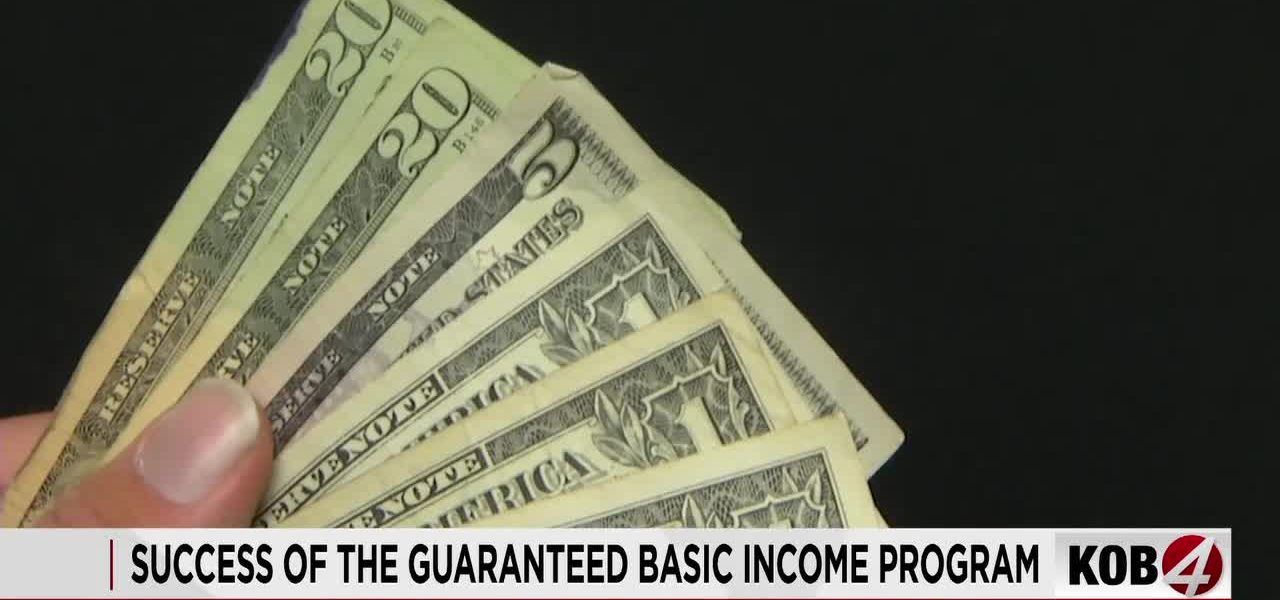
It’s a peculiar sight, leaders gathering at the Joan Jones Community Center in northwest Albuquerque, not for a grand announcement, but to deliver a progress report on a basic income program that began in April 2025. They’re essentially saying: [QUOTE_PLACEHOLDER] Fifty-nine families initially received $750 per month from the City of Albuquerque with no strings attached. No endless paperwork, no job training mandates—just cash. All these households had third graders at either Carlos Rey Elementary or Whitter Elementary, chosen because, well, that’s where the parents weren’t exactly swimming in cash.
Because things looked promising, the program didn’t just stop there. By December 2025, it expanded, pulling in another 42 recipients aged between 16 — and 24. And guess what? The city leaders claim this uncomplicated cash infusion has actually made families — and individuals more food secure. It’s even improved their credit scores, which is a surprisingly big deal for stability, right? Perhaps most startlingly, three families became homeowners. Think about that for a second. Three families. Property owners. Off what? Seven-hundred-and-fifty bucks a month.
Marina, a local mom, told KOB 4 a story that cut through the policy jargon. “I don’t have any more stress now because I know I have that income monthly to help him out. His grades have gone up. He’s been so good at school,” she reportedly said, beaming. She added that her son’s teacher even piped up, saying, “Hey, he’s really good now.” For Marina, that extra cash didn’t just vanish; it went straight to rent, groceries, and necessities—like glasses for her boy. He then snagged “two certificates for English and for Spanish because of [his] reading.” She connects that directly, attributing it to the glasses she could now afford. Small steps, big outcomes.
The numbers back up the anecdotes. Households participating saw a 26% increase in savings, according to a survey of recipients. And 45% of families reported feeling secure enough in their financial future to be able to enjoy life more. Mayor Tim Keller isn’t exactly calling it rocket science. He says the program has been working because of its overall simplicity. “So, instead of telling you what you have to do with funding that we’re giving you or requiring all sorts of strings to make sure that you’re the right person, we’re just gonna say, ‘Look, here’s a little bit of support. You decide what to do with it because you know best.’ It sounds so simple,” he stated, making it sound almost too obvious to be true in the byzantine world of public assistance.
Most guaranteed income experiments often rely on grant money, which is good but often transient. Albuquerque’s program, however, is fully funded through tax revenue on cannabis sales. This makes it, in Mayor Keller’s words, sustainable—at least until politicians decide they don’t like it anymore and pull it from the annual budget approvals. Dillon Shije, the deputy director for the Office of Equity — and Inclusion, spoke to something deeper. [QUOTE_PLACEHOLDER] It’s a sentiment about family connection that you don’t often hear from bureaucrats, but it’s resonant.
📄 POLICY WIRE WHITEPAPER PUBLISHED: PAKISTAN'S NATIONAL SECURITY POLICY PRIORITIES
👉 READ BY CLICKING HEREBut let’s be frank, this isn’t just about the money. City Councilor Nichole Rogers got “emotional in the back because this is exactly the work the government should be doing to stabilize families in our neighborhoods, period,” reflecting a perhaps surprisingly human touch from an elected official. It’s the kind of statement that warms the heart, or, if you’re a seasoned political observer, flags it as potent rhetorical fodder for future budget battles. Or campaign speeches.
What This Means
Albuquerque’s experiment, modest though its scale, tosses a gauntlet at long-held orthodoxies concerning poverty alleviation. If basic income, funded by a newly legal vice, can genuinely move the needle on financial security, credit scores, and even homeownership, then Washington’s labyrinthine approach to welfare deserves a thorough re-evaluation. It’s also a striking example of local-level policy innovation outmaneuvering national inertia, establishing a test case that many will either champion or lambaste. And what about that cannabis funding? It effectively bypasses a major political hurdle by using revenue that didn’t exist a few years ago, thus not directly burdening traditional tax streams—a clever sleight of hand that more municipalities might attempt.
From a global perspective, particularly in developing nations, or parts of the Muslim world—think Pakistan or even parts of Southeast Asia where informal economies dominate and social safety nets are often tenuous or tied to complex patronage systems—the simplicity of Albuquerque’s approach holds potential, albeit in very different contexts. Could unconditional cash transfers, unburdened by layers of bureaucracy or prescriptive spending rules, offer a more effective, less corruption-prone method of uplift? Poverty there often isn’t just about income; it’s also about access — and trust in institutions. Imagine such programs—if appropriately adapted and scaled—cutting through bureaucratic red tape that often entangles aid, providing a direct, dignified path to stability, much like what’s happening in this corner of New Mexico. It wouldn’t just stabilize families; it might just build broader societal confidence. Because, sometimes, people actually do know what they need best.