


Europe’s Grinding Conflict: Overnight Salvoes Lay Bare Lingering Brutality
POLICY WIRE — Kyiv/Moscow — The predawn hours are often when the quiet turns treacherous. And that’s exactly what played out across swathes of Ukraine last night, as a fresh wave of aerial...

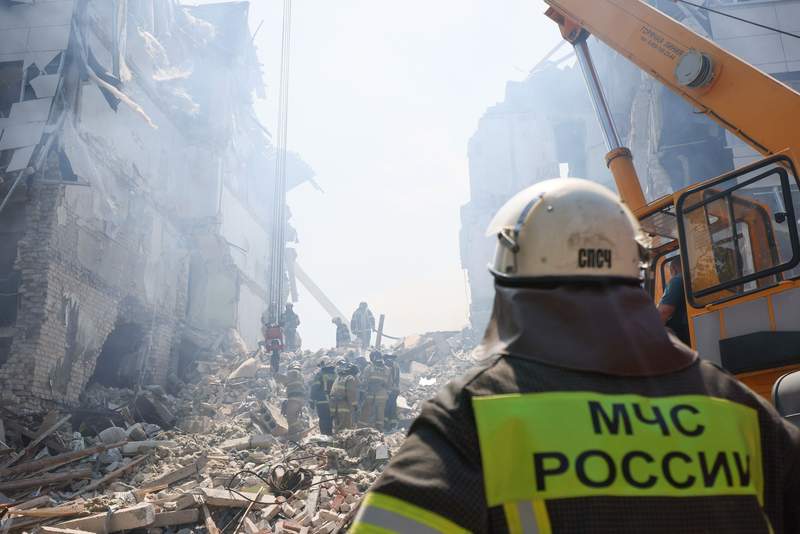
POLICY WIRE — Kyiv/Moscow — The predawn hours are often when the quiet turns treacherous. And that’s exactly what played out across swathes of Ukraine last night, as a fresh wave of aerial bombardments from Moscow’s forces struck towns and cities, prompting retaliatory fire from Kyiv. For the jaded inhabitants of this weary nation, it’s just another grim testament to the war’s stubbornly persistent, merciless cadence, where peace remains a whisper on a gale-force wind.
It wasn’t a blitz; it was a brutal, measured grind. Ukrainian defense officials reported intercepting a fair chunk of what was hurled their way—drones and missiles primarily aimed at civilian infrastructure, they claim. But some got through, inevitably. Residential areas, port facilities, the sorts of places where ordinary lives try, with decreasing success, to continue. Over in Russia, similar reports surfaced from border regions, suggesting Kyiv isn’t sitting idly by. Casualties? Always. Both sides issued updates on their respective fallen and wounded, those stark, clinical numbers that barely hint at the cratered lives left behind.
“They think these repeated, senseless attacks on our homes and our ports will break our spirit or starve us out,” commented Major Oleh Danyliuk, spokesperson for Ukraine’s General Staff. “But it’s just steeling our resolve. We’re not backing down; we can’t, not when our very existence is the prize.” Danyliuk’s tone, familiar to those who track these things, suggested more exasperation than genuine surprise—a hallmark of protracted conflict. Russia’s Ministry of Defence, for its part, released a terse statement early this morning. Lieutenant Colonel Dmitri Kozlov, a senior press officer, insisted, “All strikes were executed with high precision against legitimate military targets. Any collateral damage is solely the consequence of the Kyiv regime’s decision to hide weaponry amidst civilian areas.” It’s the usual rhetoric; nobody’s buying anything but their own government’s line anymore, not really.
Because, beyond the immediate devastation, the ongoing friction feeds a complex global machine. Grain, for instance, remains a hostage of this protracted confrontation. Pakistan, a country of over 240 million, traditionally relies heavily on imported wheat. When shipping lanes get tricky, or export quotas fluctuate, they don’t just fret in Islamabad’s planning committees; ordinary families in Karachi feel the pinch. Last year, the World Food Programme noted that global wheat prices rose by roughly 19% in the year following the full-scale invasion of Ukraine, impacting countries like Pakistan directly by inflating bread prices—a core component of the daily diet.
But the true weight of this endless attrition extends beyond commodities. It’s an economic bleed. For Russia, Western sanctions bite, albeit slowly. For Ukraine, the financial cost of defense is astronomical, sustained largely by international lifelines. But that aid—it isn’t without its own set of complex geopolitical equations, isn’t it? Countries choose their allegiances, or their silences, based on far more than moral outrage. There’s oil, arms, trade routes, historical grievances. It’s messy.
What This Means
These latest strikes, ostensibly minor in the grand scheme of a 700-plus-day conflict, carry disproportionate weight. Politically, they’re designed to demonstrate intent—Moscow’s continued capacity to project power, Kyiv’s persistent vulnerability, and its defiant ability to punch back. But tactically, they just highlight a dreary stalemate, a brutal cycle of attack and response that’s more about wearing down morale than achieving decisive strategic gains. For Western allies, it’s a stark reminder that the war isn’t winding down; it’s merely burrowing deeper into the global consciousness. And for nations outside the Euro-Atlantic bubble, particularly in South Asia and the Muslim world, these distant battles ripple outwards, shaking fragile supply chains and fueling inflationary pressures that they simply can’t afford. It’s not just a European problem anymore; it hasn’t been for a good long while.
Economically, the message is equally stark: volatility reigns. Any perceived escalation, any disruption to Black Sea trade, immediately sends jitters through commodities markets. Insurance premiums for shipping vessels climb, hedging strategies multiply, and the end result is almost always higher prices for consumers worldwide. For developing economies, that often means sacrificing other pressing needs, like healthcare or education budgets, just to keep food on tables. Militarily? We’re seeing an increasingly sophisticated drone war, a cat-and-mouse game of counter-battery fire that, frankly, few foresaw with such grinding intensity. This conflict has rewritten, — and is rewriting, a good many chapters in military doctrine.