

The Silent Language of Box Scores: Regional Fervor, National Ambition, and an Underdog’s Gamble
POLICY WIRE — Washington D.C. — Beneath the sterile numbers of a baseball box score, a fascinating collision of regional economic forces and athletic ambition often unfolds. Forget for a moment the...

POLICY WIRE — Washington D.C. — Beneath the sterile numbers of a baseball box score, a fascinating collision of regional economic forces and athletic ambition often unfolds. Forget for a moment the crack of the bat or the roar of the crowd; the true drama of collegiate athletics often plays out in ledger books and recruitment budgets, reflecting deep-seated policy priorities and contrasting societal investments. What transpired on the diamond during the 2026 NCAA Baseball Championship, as the Texas State Bobcats squared off against the mighty USC Trojans, was less a game and more a quiet parable of America’s evolving educational and economic landscape.
It’s rarely just about the game, is it? USC, hailing from the Pac-12 (at least for now, before its tectonic conference shifts), represents an established sporting aristocracy, boasting formidable resources and a historical lineage of athletic dominance. Texas State, however, a proud product of the Sun Belt Conference, rides into these big stages carrying the hopes of an institution — and indeed, a region — that often fights for every ounce of national recognition. The script, however predictable on the surface, tells a much richer story of strategy — and systemic challenges. It’s about prestige, sure, but also about the trickle-down economics to local communities and institutional fundraising.
This was described as an [QUOTE_PLACEHOLDER] which, let’s be frank, downplays the inherent symbolic weight. You’ve got an entrenched powerhouse facing down a formidable challenger with something to prove. [QUOTE_PLACEHOLDER] they’ll tell you. But the narratives don’t just spring from the coaches’ mouths; they’re woven into the very fabric of institutional funding and regional identities. The West Coast titan, 45-15 coming into the championship, as reported by The Sporting News, carries the weight of a long legacy of athletic and academic investment. Texas State, with its record-setting offensive season, arrived as [QUOTE_PLACEHOLDER]—a phrase that almost certainly translates to a formidable team punching above its perceived weight class.
And consider the global implications, even for a distinctly American pastime like collegiate baseball. While the average resident of Karachi or Lahore might find the intricacies of a balk or a sacrifice bunt somewhat esoteric, the very spectacle of American college sports – its vast infrastructure, its professionalized amateurism, the immense financial machinery behind it – stands as a peculiar kind of soft power. These highly publicized matchups, streamed and discussed across digital platforms, implicitly export a model of high-investment sports development that nations, particularly those grappling with their own athletic identities, occasionally study, adapt, or reject. It’s a lens through which differing views on national investment in physical education or entertainment are subtly communicated.
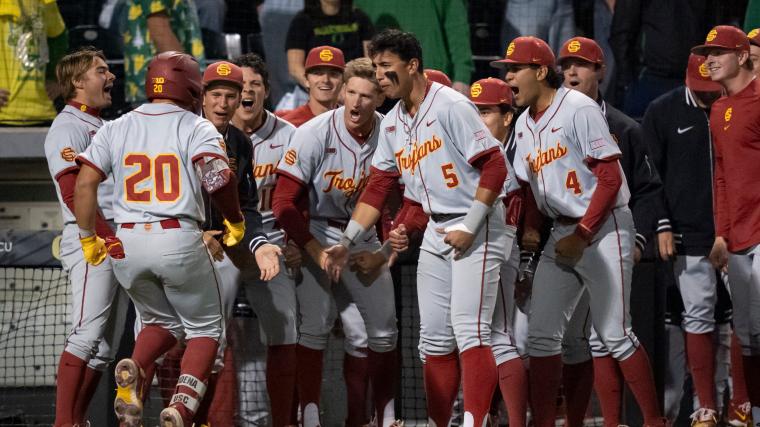
So, the game unfolded, pitching duels — and tactical maneuvers dictating fortunes. Early innings saw the scoreboard stay silent, a nervous truce. Texas State then notched a run, broken later by a solitary tally for USC in the bottom of the second. The Trojans then put up another point in the third, extending their lead into the middle innings. A Texas State rally, highlighted by clutch hitting, brought them back into contention, tying the score. But the Trojans answered back, managing to scratch across an additional point of their own. It went back — and forth, a real nail-biter, a testament to competitive play. Ultimately, three runs were pushed across by Texas State in their final turn at bat in the ninth, knotting the score at three apiece. USC, too, mustered three total runs. You see, the box score: Texas State (36-24) finished with 3 runs, 6 hits, and 2 errors. USC (45-15) tallied 3 runs, 9 hits, and 0 errors. A stalemate in score, then. The outcome of a specific game matters, yes, but its broader message often endures far longer than the final out. These numbers, cold and hard, tell you there was a fight, not a rout. The individual contributions, like Rashawn Galloway’s hit for Texas State or Abbrie Covarrubias’s strong performance for USC, build the tapestry of these programs.
📄 POLICY WIRE WHITEPAPER PUBLISHED: PAKISTAN'S NATIONAL SECURITY POLICY PRIORITIES
👉 READ BY CLICKING HEREWhat This Means
This deadlocked contest, ultimately needing more than just nine innings to resolve (the given box score ending in a 3-3 tie, pushing the drama further), isn’t just about baseball; it’s a microcosm of power dynamics. Policy-wise, it underscores the intense financial arms race within American higher education’s athletic departments. Large, established programs like USC, often privately endowed with immense wealth, continue to attract top talent and maintain facilities that smaller state-funded schools can only dream of. The disparity in resources means that a [QUOTE_PLACEHOLDER] team’s success often reflects superior coaching, sheer grit, and an almost improbable alchemy of talent development rather than a level playing field.
But. A tight game, even against a perceived titan, amplifies the calls for equitable resource distribution in collegiate sports, especially in an era of exploding broadcast rights and conference realignments. Because when Sun Belt teams can hang tough with the Pac-12, it showcases an intrinsic competitiveness that market forces alone sometimes ignore. This narrative of the challenger rising—or at least holding their ground—against the entrenched establishment can resonate far beyond the sports pages, influencing debates on economic regionalism, public versus private institutional funding, and the very philosophy of collegiate athletic investment. The fact that a ‘no decision’ emerged from this specific box score might even symbolize the ongoing, unresolved tension in these broader economic and political spheres, suggesting that the balance of power remains contested, always pushing toward an unpredictable extra inning.