


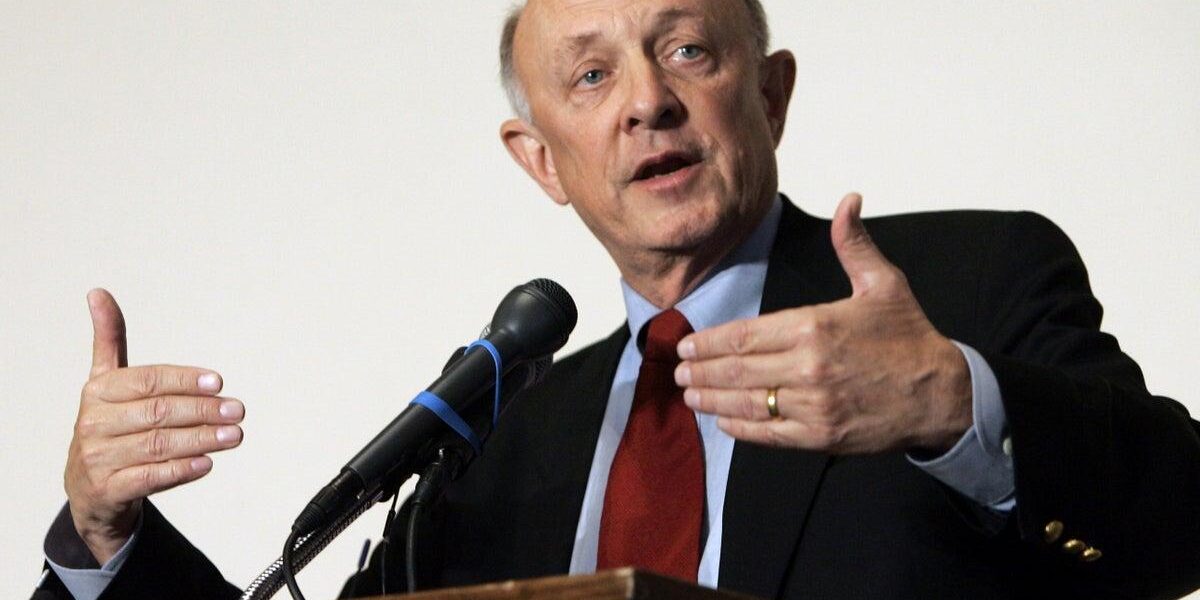
Former CIA Director James Woolsey Passes Away at 84
James Woolsey, former CIA director known for his role in a major espionage scandal, has died at 84. His wife attributes his death to Havana syndrome.

POLICY WIRE — Washington, D.C. — James Woolsey, the former director of the Central Intelligence Agency (CIA) who played a pivotal role during one of the agency’s most significant espionage scandals, has died at the age of 84. His wife, Susan Woolsey, indicated that his prolonged struggle with Havana syndrome significantly contributed to his declining health.
Woolsey served as CIA director from 1993 to 1995 under the Clinton administration. His tenure was marked by efforts to reform the agency following the Aldrich Ames spy scandal, one of the most damaging espionage cases in U.S. history. Woolsey was instrumental in implementing changes aimed at enhancing the CIA’s counterintelligence capabilities.
“Jim was a dedicated public servant who believed deeply in the mission of the CIA,” said a former colleague who requested anonymity. “His leadership during a tumultuous time helped steer the agency toward greater accountability — and transparency.”
Havana syndrome, a mysterious illness characterized by symptoms such as headaches, dizziness, and cognitive difficulties, has affected numerous U.S. diplomats — and intelligence officers worldwide. Susan Woolsey revealed that her husband had been suffering from the condition for several years, which she believes exacerbated his health issues.
“The toll it took on him was immense,” she said. “He was a strong man, but this syndrome wore him down more than anything else.”
Woolsey’s career in public service extended beyond his CIA directorship. He held various positions in government, including serving as Under Secretary of the Navy and as a member of the President’s Blue Ribbon Commission on Defense Management. His insights into national security and intelligence matters were frequently sought after in both academic and policy circles.
📄 POLICY WIRE WHITEPAPER PUBLISHED: PAKISTAN’S NATIONAL SECURITY POLICY PRIORITIES
In recent years, Woolsey remained an active commentator on national security issues, often appearing in media outlets to discuss topics ranging from cyber threats to geopolitical tensions. His death marks the end of an era for those who have followed his career — and contributions to U.S. intelligence.
Reporting by Policy-Wire (PW)