


Cannabis Cash & Compassion: Albuquerque’s ‘No Strings’ Income Shakes Up Welfare Debates
POLICY WIRE — Albuquerque, New Mexico — For decades, the notion of unconditional aid to the financially struggling has been little more than a whisper in utopian manifestos, often dismissed as naive...

POLICY WIRE — Albuquerque, New Mexico — For decades, the notion of unconditional aid to the financially struggling has been little more than a whisper in utopian manifestos, often dismissed as naive at best, reckless at worst. Critics conjure images of wasted funds and a disincentive to work—predictable, dire outcomes. But quietly, beneath the rugged Sandia Mountains, Albuquerque has spent the last year proving a different narrative, leveraging an unlikely revenue stream to offer its most vulnerable citizens a measure of dignity, and perhaps more importantly, stability.
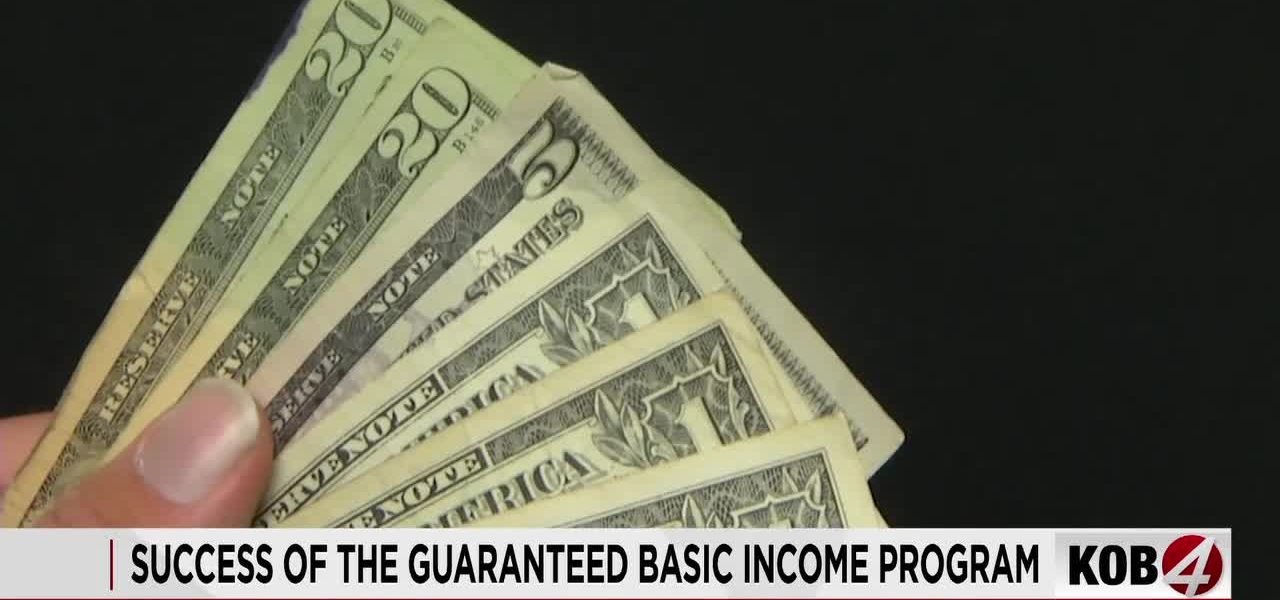
It’s not federal largesse or a complicated web of philanthropic grants propping up this pilot; it’s cannabis tax revenue. And wouldn’t you know, it’s working. The program, which started in April 2025, hands $750 each month to 59 families, all parents of third-graders at specific elementary schools, chosen based on parental income. In December 2025, it swelled to embrace 42 young adults aged 16 to 24. No bureaucratic hoops, no mandated spending reports—just cash, disbursed.
This ‘no strings attached’ approach, a radical departure from traditional welfare models that often paternalistically dictate spending, stands as a stark contrast to poverty alleviation efforts seen across many parts of the globe. In regions like Pakistan and throughout South Asia, where development aid frequently arrives laden with conditions and administrative overheads, Albuquerque’s model suggests a powerful alternative. Imagine the impact of direct, unconditional transfers on families battling intergenerational poverty in Karachi or Dhaka, empowering them to address immediate needs without external arbitration. Such simplicity cuts through red tape, a burden that often stifles the very progress aid aims to achieve.
The city’s leaders weren’t shy about touting successes at a recent Joan Jones Community Center gathering. They described a population now more food secure, boasting improved credit scores, and—in three astonishing cases—even transitioning into homeownership. Dillon Shije, the deputy director for the Office of Equity and Inclusion, highlighted a profound, less quantifiable benefit. “Rather than working multiple jobs at a time, they’re there to be with their families, to learn from one another, and to have that time at the dinner table,” he said. That’s not just economic improvement; it’s a restoration of communal fabric.
The data doesn’t lie either. Households participating in the pilot saw a 26% increase in savings, according to a survey of recipients. A whopping 45% of families reported feeling secure enough in their financial future to be able to enjoy life more. It’s hard to argue with people reporting genuine happiness.
Mayor Tim Keller seemed almost surprised by the program’s efficacy, acknowledging its straightforwardness. “So, instead of telling you what you have to do with funding that we’re giving you or requiring all sorts of strings to make sure that you’re the right person, we’re just gonna say, ‘Look, here’s a little bit of support. You decide what to do with it because you know best.’ It sounds so simple,” he quipped. Sometimes the obvious solutions are the hardest for governments to swallow.
One local mom, Marina, painted a picture of newfound peace. Her stress, she says, has plummeted. “I don’t have any more stress now because I know I have that income monthly to help him out. His grades have gone up. He’s been so good at school,” she told local media, recalling her son’s teacher’s praise. Because she could afford glasses for him, he earned two certificates for English — and Spanish reading. A pair of glasses, a bit of cash, — and suddenly a child’s future brightens. This isn’t charity; it’s an investment, a direct challenge to the often-Byzantine processes meant to support those teetering on the edge.
Other cities might dabble in similar experiments, but they’re often underwritten by ephemeral grants. Albuquerque, however, draws its funding from its self-generated cannabis tax revenue. Mayor Keller noted that this makes the program [QUOTE_PLACEHOLDER] a refreshing word in the context of social services. But that money, he acknowledged, still needs annual budget approval, a political hurdle always looming, much like the literal fires that occasionally rage across New Mexico’s arid landscapes—they both require constant monitoring.
But how long will political will—or cannabis tax revenue—hold up? City Councilor Nichole Rogers, who confessed to getting “emotional” while observing the program’s outcomes, summed it up perfectly: [QUOTE_PLACEHOLDER]
What This Means
Albuquerque’s modest, yet profoundly impactful, guaranteed income pilot isn’t just a feel-good story; it’s a policy blueprint. Its reliance on dedicated, local tax revenue—specifically from cannabis sales—demonstrates a potentially groundbreaking path to funding social welfare programs, circumventing reliance on volatile federal grants or state appropriations. Politically, the demonstrable success in credit improvement and even homeownership provides a powerful counter-narrative to opponents of basic income who fear dependency or fiscal imprudence. This shifts the debate from abstract ideology to concrete results. Economically, empowering families with direct cash infusions stimulates local economies, potentially more efficiently than complex programs with high administrative overheads. the ‘no strings attached’ model fosters an autonomy often denied to low-income populations, suggesting a new paradigm for anti-poverty strategies globally. If families can become homeowners and students can excel, perhaps the greatest policy lever available is the simplest one: trust.
For societies grappling with income inequality and complex social welfare challenges—from the industrialized West to the burgeoning economies of South Asia where a large portion of the population hovers near the poverty line—Albuquerque’s experiment offers invaluable lessons. It suggests that empowering individuals with agency over their own financial destiny can unlock solutions far more effectively than prescriptive, top-down mandates, or even complex international aid packages often entangled in their own set of strings. It also poses a challenge to traditional approaches; how much is lost when talent and potential are constrained by economic precarity? Maybe it’s time we rethought whose best judgment counts.