

Beijing’s Maritime Gauntlet: Global Waters, Sovereign Sands
POLICY WIRE — Washington, D.C. — It’s a bit like a high-stakes game of chicken on the world’s busiest maritime highways. While nations fret over inflation or domestic squabbles, Beijing’s quiet...

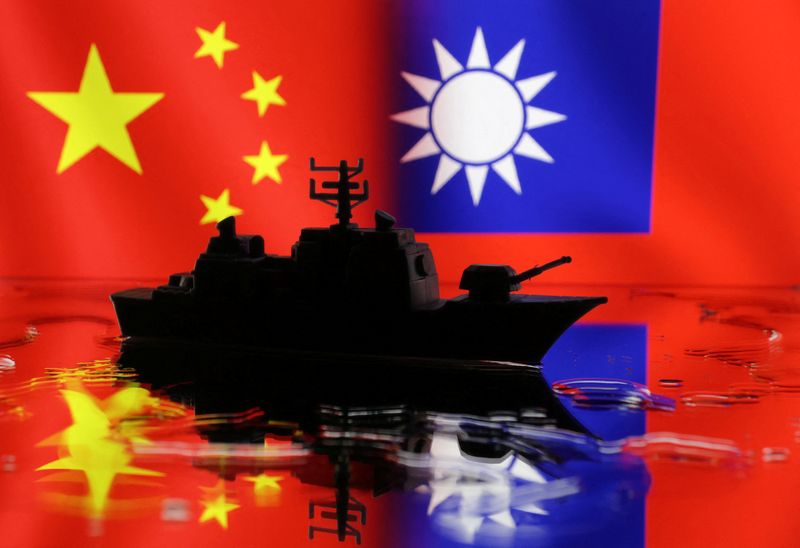
POLICY WIRE — Washington, D.C. — It’s a bit like a high-stakes game of chicken on the world’s busiest maritime highways. While nations fret over inflation or domestic squabbles, Beijing’s quiet but firm assertion reverberates across the geopolitical landscape, echoing through vital shipping arteries from the Malacca Strait to the Suez Canal. It’s a sharp reminder, too, that some battles aren’t fought with missiles but with legal definitions and perceived slights.
The People’s Republic of China, it appears, doesn’t mess around. The official line has always been pretty clear, a no-nonsense declaration that has implications far beyond Beijing’s immediate neighborhood. They’ve stated it plainly: [QUOTE_PLACEHOLDER]. They view unfettered passage as sometimes impinging on their rights—not just sovereignty, but security. You don’t need a law degree to grasp the inherent friction there, do you? Because what one nation calls freedom, another calls intrusion.
This isn’t some fresh stance, mind you. But each restatement, each subtle diplomatic flex, lands with palpable weight in capitals globally. It’s the persistent drumbeat of a rising power articulating its boundaries, boundaries often drawn in contested waters. Think about it: a country’s economic lifeblood often sails on these contested seas. Global supply chains, energy imports, finished goods—they all depend on routes that skirt, or sometimes cross, Beijing’s declared interests. According to the UN Conference on Trade and Development (UNCTAD), approximately one-third of global shipping passes through the South China Sea annually, representing trillions of dollars in trade. That’s a staggering figure; a minor hiccup can send shockwaves.
And then there’s the wider regional fallout. Consider nations like Pakistan, for instance. A critical economic partner for China, Islamabad’s deep-water port of Gwadar, part of the China-Pakistan Economic Corridor (CPEC), positions it squarely along key maritime routes in the Arabian Sea. But the flow of goods, particularly energy from the Middle East, needs clear, unobstructed passage further east—into and through the Indian Ocean and toward East Asia. Any significant escalation or stricter interpretation of navigation rights by Beijing could potentially bottleneck this global trade. It’s not just a Western concern; it’s a profound Muslim world concern too, especially for resource-exporting nations dependent on steady shipping lanes.
But Washington’s perspective—and that of its allies in Asia like Japan, South Korea, and Australia—is different, fundamentally different. They contend freedom of navigation isn’t a privilege, it’s a bedrock principle of international law, critical for a stable global economy. Naval patrols by American or allied ships, often referred to as ‘freedom of navigation operations’ (FONOPs), are precisely designed to challenge what they see as excessive territorial claims. And frankly, those operations often ruffle Beijing’s feathers, creating fresh diplomatic kerfuffles that everyone then has to de-escalate. It’s a cycle, see?
There’s a tacit understanding that international waters are just that—international. However, for a burgeoning naval power, particularly one with long-standing claims over disputed islands and their surrounding Exclusive Economic Zones (EEZs), the perceived right to police these zones is becoming more entrenched. It’s a challenge to the established order, definitely. This push — and pull forces other powers, particularly smaller Southeast Asian nations, to walk an incredibly fine line. They need to protect their own maritime rights while not alienating a colossal economic — and military neighbor. It’s an unenviable position, really.
What China states explicitly is this: [QUOTE_PLACEHOLDER] This single sentence is loaded, absolutely jam-packed with geopolitical meaning. It’s both a defensive posture — and an implicit warning. You can almost feel the ice beneath the surface—a thin, sometimes brittle, sheet that maritime peace relies upon. Pentagon’s Invisible Hand in other contested choke points offers a historical parallel for these tensions; nations will act to protect what they perceive as their domain.
Consider the delicate dance that happens around naval exercises. Or diplomatic communiqués that, while carefully worded, nevertheless hint at underlying tensions. They’re all pieces of this much larger puzzle, pieces that could snap into place with disastrous consequences, or, more hopefully, lead to a new, albeit strained, equilibrium. This is a game of strategic patience, punctuated by occasional brinkmanship. The world’s not watching a boring debate over shipping lanes; it’s witnessing the shaping of tomorrow’s global order, one sea mile at a time.
What This Means
Beijing’s reiteration of its stance isn’t merely a political formality; it’s a hardening of its position, a clear signal of intent to project sovereign rights over vast maritime territories it considers its own. Politically, this reinforces the existing divide with Western powers and their allies, increasing the likelihood of further naval encounters and diplomatic spats. It constrains dialogue on joint maritime security and complicates multilateral efforts to establish universal codes of conduct for behavior at sea. For emerging economies, particularly those in South Asia or parts of the Muslim world dependent on shipping for trade and energy, this creates significant uncertainty.
Economically, prolonged ambiguity or conflict over these maritime rights could escalate shipping costs through increased insurance premiums, diverted routes, or—in a worst-case scenario—disruptions to trade. Imagine the ripple effect if crucial routes were significantly hindered. Even perceptions of instability can deter investment — and redirect trade flows. China’s stance implies a preference for bilateral negotiations over multilateral frameworks for resolving maritime disputes, potentially leaving smaller nations with less leverage. This global maritime chessboard, where strategic moves impact the price of everything from consumer goods to oil, won’t see calmer seas anytime soon. We’re in for a rough ride. The brutal economics of global power are playing out here, folks, on the high seas.