


The Shifting Sands of Roland Garros: A Teenager’s Uprising Topples a Titan
POLICY WIRE — Paris, France — For generations, the tennis elite — that rarified club of legends whose names become shorthand for athletic immortality — seemed immune to the cruel certainties of time...

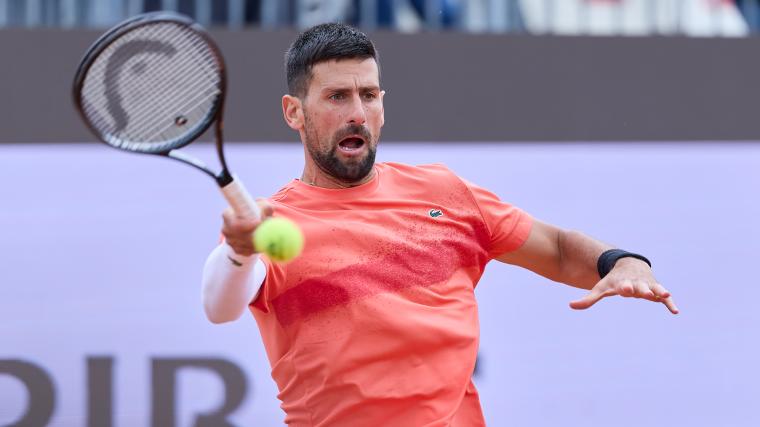
POLICY WIRE — Paris, France — For generations, the tennis elite — that rarified club of legends whose names become shorthand for athletic immortality — seemed immune to the cruel certainties of time and unexpected ambition. But last Friday at Roland Garros, Father Time, aided by a fearless teenager, finally served notice. Not with a whimper, but with a series of thunderous aces that didn’t just end a match; they might just have signaled a paradigm shift.
It wasn’t merely Novak Djokovic, the man with more Grand Slams than you can shake a racket at, who was dethroned. It was the collective assumption that some players, somehow, exist outside the fray of ordinary competition. Jannik Sinner, another contemporary giant, had already found himself dumped from the tournament a day prior, the brutal Parisian clay and stifling heat conspiring against him. And then came Djokovic, holding a comfortable two-set lead over 19-year-old Brazilian newcomer Joao Fonseca.
Nobody saw it coming, not really. We’ve seen these comebacks before, sure. But not against *him*. Not when he was 289-1 in matches where he’d taken the first two sets, a statistic almost as legendary as the man himself. (The Tennis Letter, for the record, confirmed that utterly ridiculous number.) Yet, there it was. Fonseca clawed his way back, 6-3, then 7-5, — and finally, another 7-5, sealing the victory with three straight aces. That’s a mic drop, folks. That’s a ‘remember where you were’ moment in sports, an act of sheer audacity that defied the very nature of probability.
Djokovic, ever the stoic, later conceded to reporters, a slight tremor in his voice, “You feel these days coming, don’t you? It’s like a tide, really. This young man, he played with no fear, no reverence for the situation. He absolutely deserved it. My chapter isn’t finished, not yet, but the book? It’s getting new characters, fast. You gotta respect that.”
It’s hard to imagine the world without Djokovic looming large over every Grand Slam. But Fonseca, hailing from Brazil – a country more famous for its footballing prowess and the rhythm of samba than its clay court conquerors – didn’t care for narratives. He cared for hitting the lines, for gutting out impossible points, for ignoring the aura that has intimidated countless opponents. This isn’t just a sports story, is it? It’s a testament to the unpredictable nature of ambition, regardless of where you come from.
The upset isn’t just a footnote; it’s an earthquake. For years, the same few faces have dominated the highest echelons of tennis. Now? Now it feels like a whole new ball game. It feels chaotic, doesn’t it? Wonderful chaos. We haven’t had this kind of raw, unfettered shake-up in a long while. You look at countries, developing nations particularly, where resources are tighter, and talent pools aren’t always given the same spotlight. Yet, every so often, a prodigious talent emerges, carving their own path. It happens in Pakistan with their cricket sensations, in Brazil with a Fonseca, in obscure corners of the globe where a champion isn’t born but forged through sheer will.
And that’s why this upset matters beyond the lines of Roland Garros. This wasn’t merely a tennis match; it was a changing of the guard, stark — and absolute. It sends a message globally: the top isn’t untouchable, and the next wave isn’t just coming; it’s here, armed with audacious serves and unyielding grit.
Because every global stage, be it a political arena or a sports court, craves these tales of ascension. They invigorate the spirit. They make us all believe that the impossible is, in fact, just another Tuesday for some kid who refuses to acknowledge limits. Brazil’s Minister of Sport, Ana Cristina Mendes, wasted no time echoing the sentiment: “Joao’s victory is more than just a tennis triumph for our nation. It’s a loud, clear inspiration to every young Brazilian, to every aspiring athlete across South America, across the Muslim world—anywhere really—that hard work and belief can open doors you didn’t even know existed. We’re immensely proud of our young Lion.”
What This Means
The geopolitical and economic ripples from such a high-profile sporting upset are often underestimated, but for a nation like Brazil, Fonseca’s unexpected triumph holds considerable weight. A victory like this isn’t just about sporting glory; it’s a massive injection of national pride — and soft power. Suddenly, Brazil, already a heavyweight in other sports, sees its flag fly high in a new, traditionally European-dominated domain. This can translate into increased interest in tennis nationally, potentially boosting government funding for youth sports programs and talent development pipelines.
Economically, there’s an immediate surge in sponsorships and endorsement opportunities for Fonseca himself, which filters down through the Brazilian tennis infrastructure. His success serves as an aspirational narrative, not dissimilar to how underdogs have captured the imaginations in events like the IPL, galvanizing national sentiment and even commercial interest for teams challenging long-established powerhouses. But more broadly, it reinforces the narrative that meritocracy isn’t just for established powers. It’s a compelling message for other developing nations watching – from Jakarta to Lahore – reminding them that their homegrown talent can, and will, eventually upset the global order.
It also alters the landscape for the Grand Slams themselves. Without Djokovic — and Sinner, two titans, the tournament’s storyline shifts dramatically. While the draw might be more open, the sudden vacuum at the top could also mean a dip in predictable viewership initially, before new rivalries ignite. It’s a brave new world for tennis, — and this Friday’s stunner? It was the big bang.